
Library Closing: Sunday, April 5
Richland Library logo
  • Events
  • Locations
  • Get Email Updates
  • Contact Us
Library Policies© 2026 Richland Library, Richland County, South Carolina

Search Site

  • Events
  • Locations
  • Get Email Updates
  • Contact Us
Richland Library logo
    • Cardholder Services
      • Get a Library Card
      • Get a Recommendation
      • Get a ConnectED Student Card
    • Spaces & Equipment
      • Reserve a Room
      • Print Documents
      • Creative Spaces & Equipment
      • Library of Things
    • Community Services
      • Request an Obituary
      • Social Work
      • Community Resources
      • Earn Your High School Diploma
      • Library Residents
      • Educational Resources
      • Book an Appointment
      • Career Services
      • Writers & Local Authors
    • View All Services
    • Most Popular
    • Articles, Journals & Newspapers
    • Books & Literature
    • Business & Careers
    • Children
    • En Español
    • Genealogy & Local History
    • Health & Medical
    • History & Biography
    • How-To
    • Study & Test Prep
    • View All Research Resources
    • Resources A-Z
    • Recommendations
      • Suggest a Title
      • Broader Bookshelf Challenge
      • Book Club Resources
      • Help with eBooks & Digital Platforms
      • Local History Digital Collection
    • Staff Picks
      • Coming Soon
      • Just Checked In
      • Get a Recommendation
      • Browse Staff Picks
    • Browse by Type
      • Books
      • eBooks
      • Audiobooks
      • Movies & Television
      • Music
      • Library of Things
    • Browse by Audience
      • Adults
      • Children
      • Teens
    • Catalog Search
    • About Us
    • Give, Support & Volunteer
    • Work With Us
    • Our Team
    • Locations
    • Blog
    • Our Work & Programs
    • Newsroom
    • Equity, Diversity & Inclusion
    • Library Policies
    • Contact Us
Forgot your card number?
Forgot your PIN?

  • Reset your password

Get A Library Card

Breadcrumb

  • Home  
  • Blog  
  • Remembering Atlantic Beach, S.C.
BLOG

Remembering Atlantic Beach, S.C.

  • Margaret D.
  • Thursday, February 08, 2024
Share:
Share on Facebook Share on X Share on LinkedIn

Take a look back at scenes from Atlantic Beach, also known as the Black Pearl, a historic vacation destination for African Americans on South Carolina’s coast.

Columbians have long taken an annual summer trip to the coast to escape the ‘famously hot’ weather here and to enjoy the beautiful beaches we have along the Grand Strand. But during the Jim Crow era, the beaches, hotels, house rentals, restaurants, and even the SC State Parks were closed to Black visitors. So, back then, many Black vacationers went to Atlantic Beach.
Image
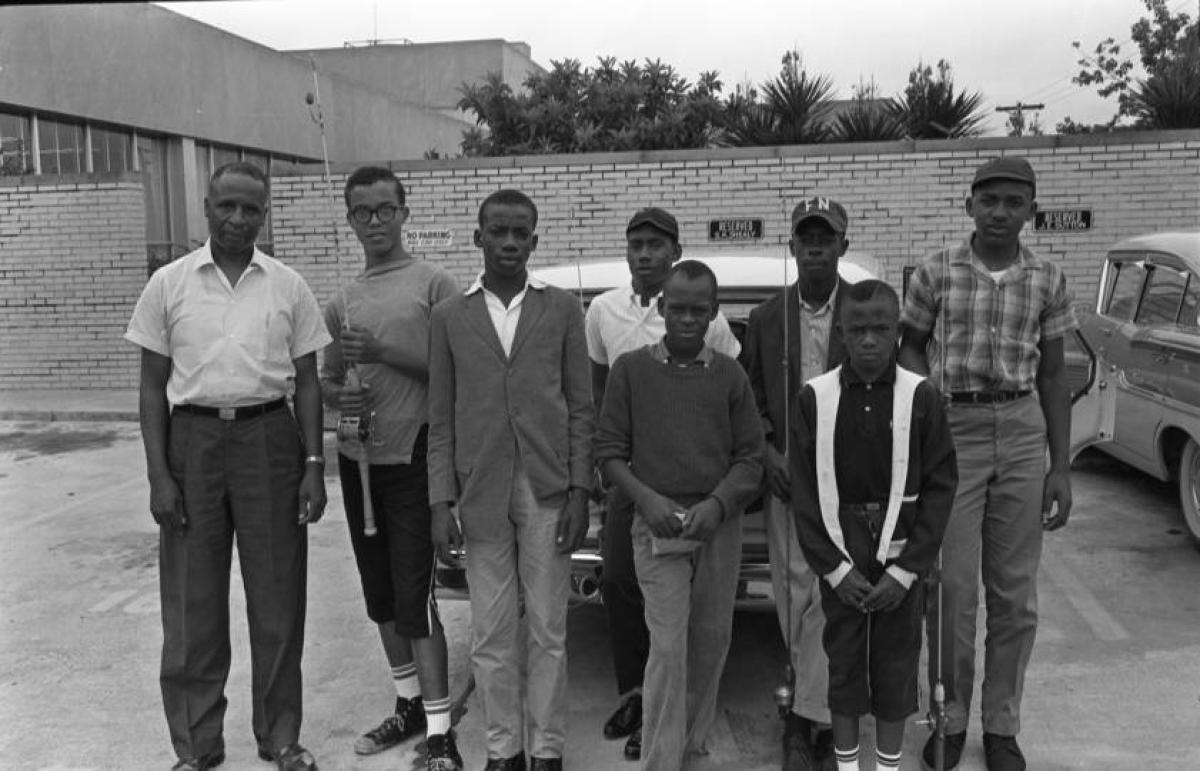
Newspaper carriers prepare for a road trip to Atlantic Beach, July 19, 1961. Image from The State Newspaper Photograph Archive.
The State newspaper carriers prepare for a road trip to Atlantic Beach, July 19, 1961. The boys are chaperoned by C. W. Fields. Image from The State Newspaper Photograph Archive.

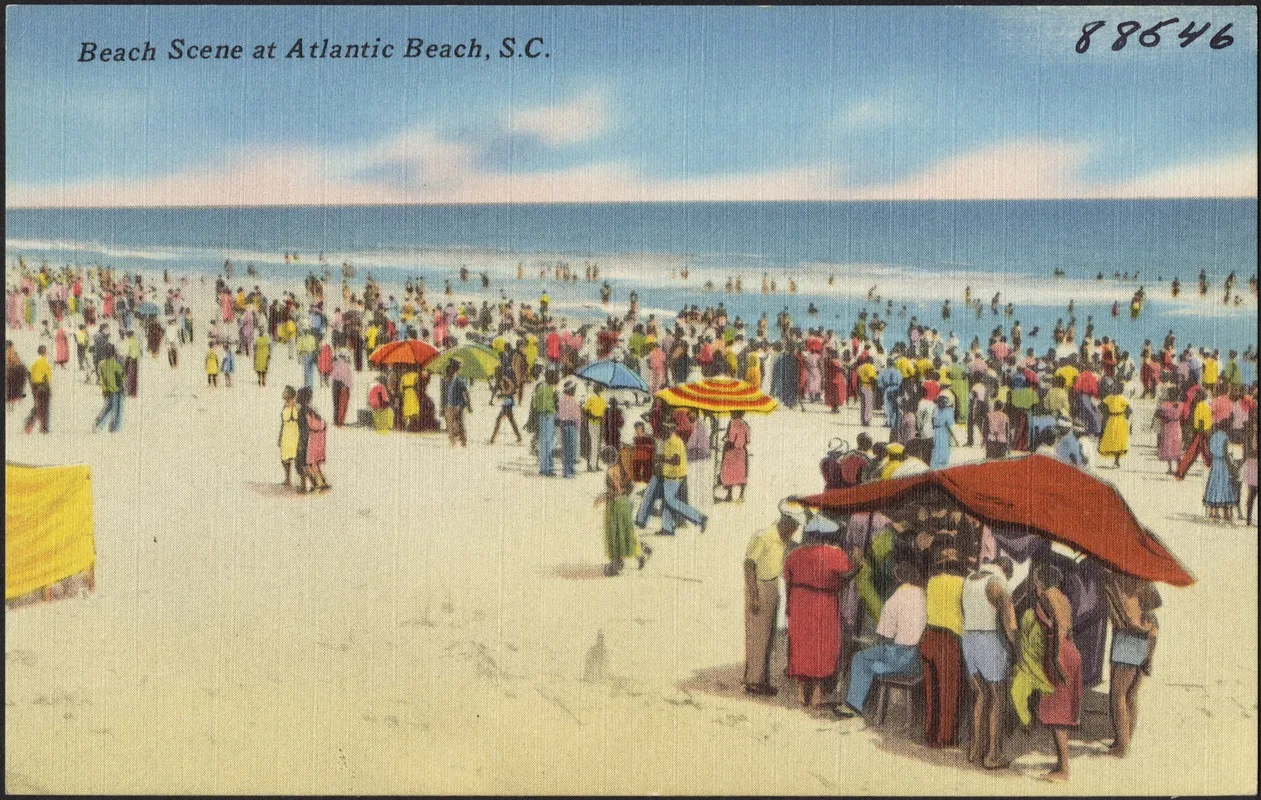
The “Black Pearl,” or Atlantic Beach, is slice of land comprising 4 blocks next to the sea north of Myrtle Beach. There, African American proprietors operated bars, restaurants, hotels, and rental houses that catered to African American vacationers. Atlantic Beach provided its visitors with access to sea breezes, lively entertainments, and a chance to relax and mingle with other families from various parts of the state. A community of Black year-long residents kept the place in order in the off-season. Additionally, Black entertainers hired to perform in Myrtle Beach or other coastal communities also found a welcome place to stay at Atlantic Beach while in the area.
Beach Scene At Atlantic Beach, Boston Public Library
Beach Scene at Atlantic Beach, S.C. Tichnor Postcard Collection, Boston Public Library. Available online at Digital Commonwealth.

Catering to families and single tourists alike, the seaside community of Atlantic Beach rose to prominence in the 1940s and 50s, when other beaches in the area were exclusively for the enjoyment of white families. It all began in 1934, when Black business owner George Tyson of Wilmington, N.C. purchased 47 acres of beachfront property just north of Myrtle Beach, which he originally called Tyson's Beach. However, Tyson soon fell on hard times, and he sold this property to a group of Black professionals who wanted to create an oasis for Black families along the coast. These investors formed the Atlantic Beach Company and included Dr. J. Ward Seabrook, president of Fayetteville State College, Dr. Robert Gordon of Dillon, who later built the Gordon Hotel, Dr. Leroy Upperman, a retired physician from Wilmington, Dr. Peter Kelly of Conway, and others. Many individuals later purchased lots and vacation homes within the 4 block limits of Atlantic Beach, making it one of the few Black-owned seaside resort areas in the United States.
Image
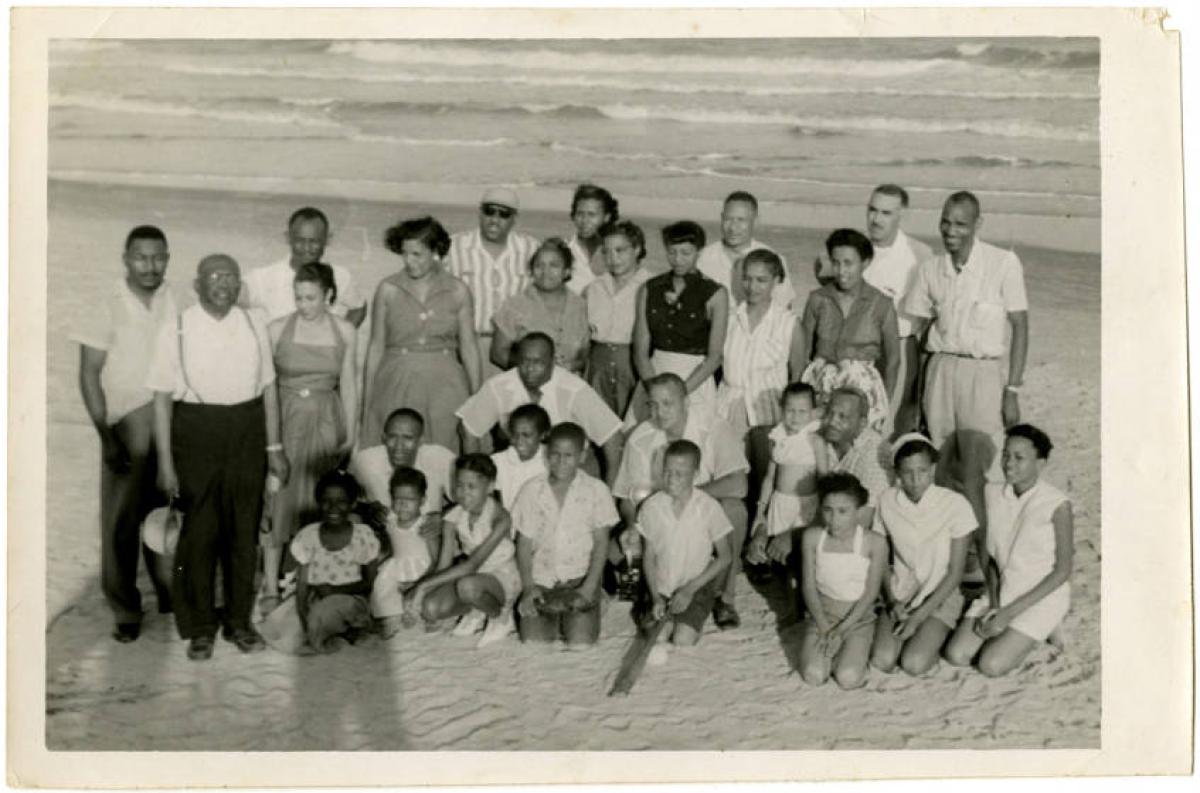
Party at Atlantic Beach, 1953. Image from the I. DeQuincey Newman Papers at the University of South Carolina.
Party at Atlantic Beach, 1953. Image from the I. DeQuincey Newman Papers at the University of South Carolina. I. DeQuincey Newman is pictured third from left.

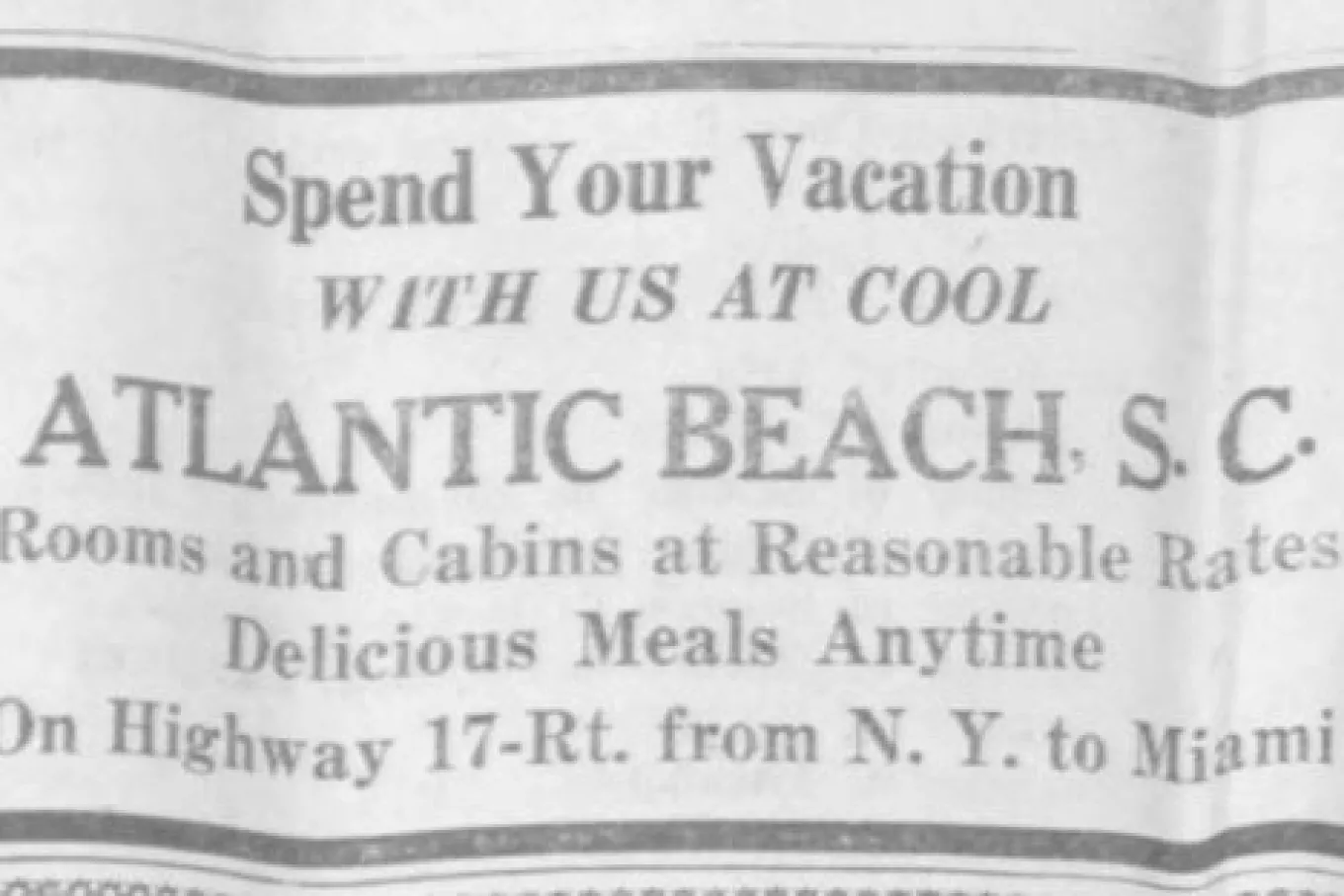
In its heyday, Atlantic Beach welcomed tourists from up and down the eastern seaboard, as it was conveniently located along well-traveled Highway 17. Advertisements for Atlantic Beach cottages and restaurants were placed in Black-owned newspapers, such as Columbia’s Lighthouse and Informer and the Palmetto Leader. Some early establishments included the Bluebird Inn, the Gordon Hotel, and the Cotton Club. Black entertainers like Ray Charles, James Brown, The Drifters, Tina Turner, and many others would perform at the Cotton Club after their engagements in white clubs ended and they returned to Atlantic Beach for the night. Atlantic Beach was so popular that on holidays one resident recalled there was hardly enough room to walk.
Atlantic Beach ad_Lighthouse_July 31, 1954 p6

--Click the arrows for more advertisements and postcards of Atlantic Beach.--

Atlantic Beach advertisement, Lighthouse and Informer, July 31, 1954.

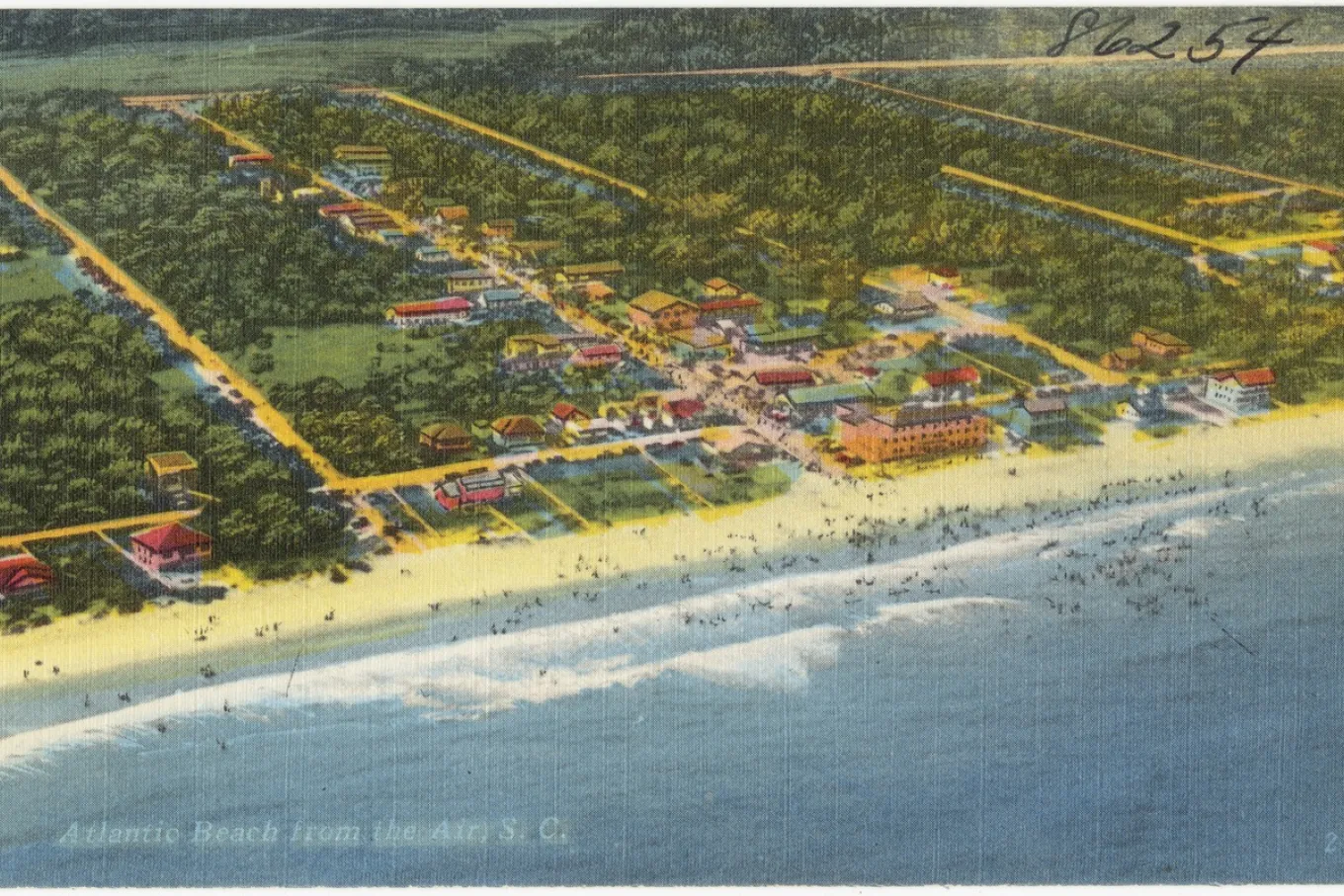
Atlantic Beach from the Air, SC BPL

Atlantic Beach from the Air, S. C. Tichnor Postcard Collection at Boston Public Library.

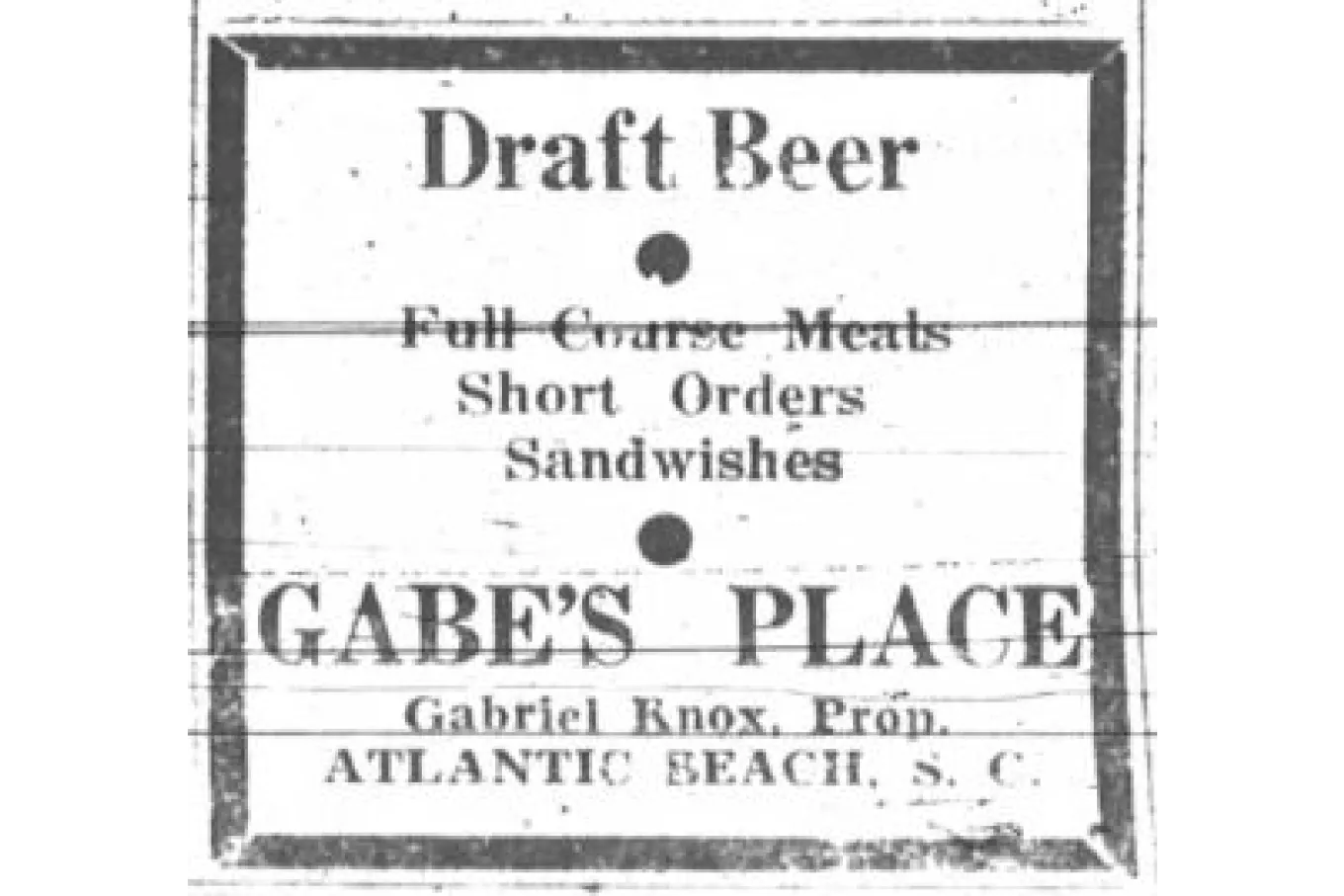
Gabe's Place ad Lighthouse and Informer 1951

Gabe's Place advertisement, Lighthouse and Informer. July 14, 1951.

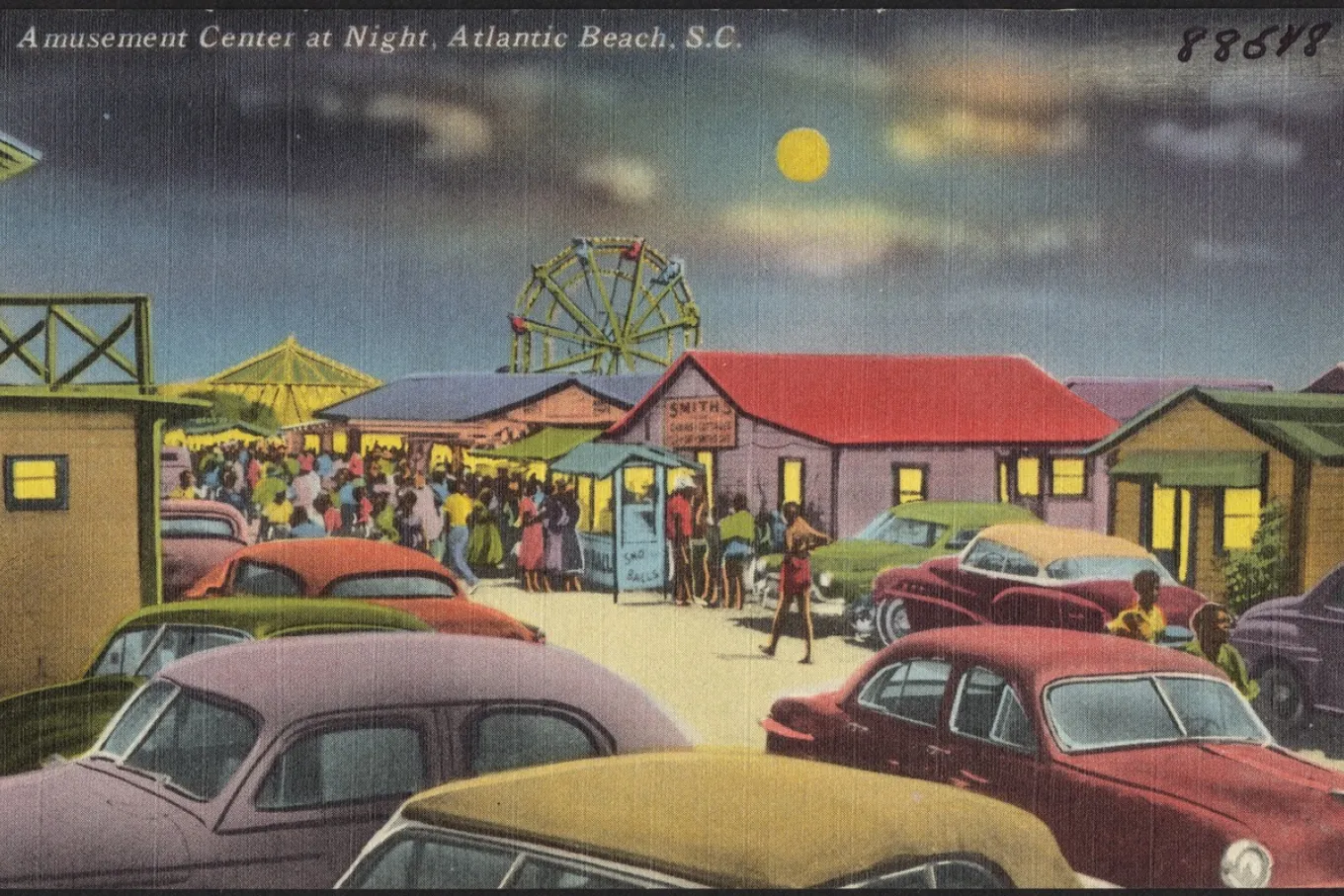
Amusement Center at Night, Atlantic Beach, S.C. BPL

Amusement Center at Night, Atlantic Beach, S.C. Tichnor Postcard Collection at Boston Public Library.

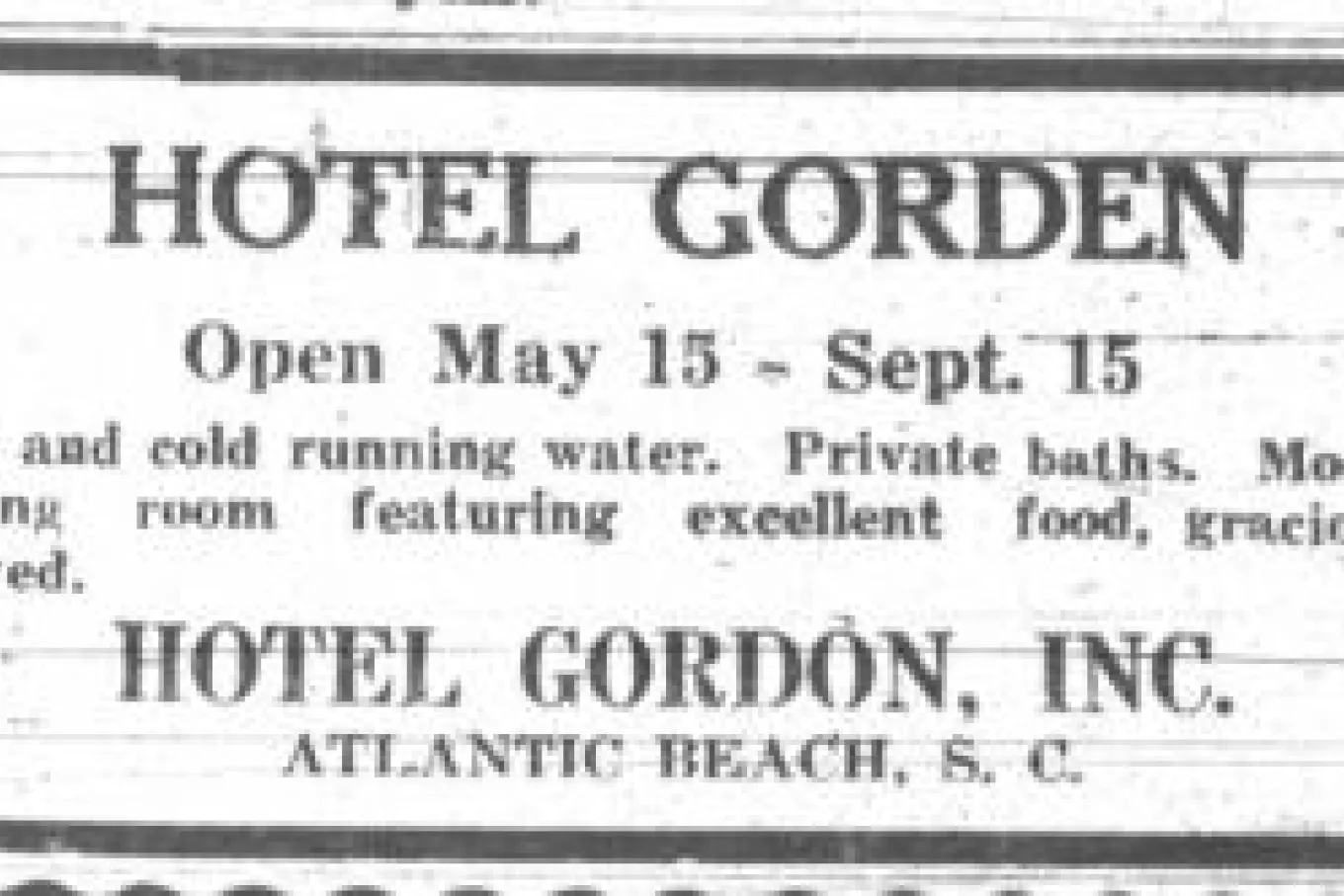
Hotel Gordon ad_Lighthouse_July 14, 1951 p3

Hotel Gordon advertisement. Lighthouse and Informer, July 14, 1951.

Hotel Gordon Beach front hotel, Atlantic Beach postcard

Hotel Gordon - - Beach front hotel, Atlantic Beach, Ocean Drive, S.C. Image from Tichnor Postcard Collection at Boston Public Library.

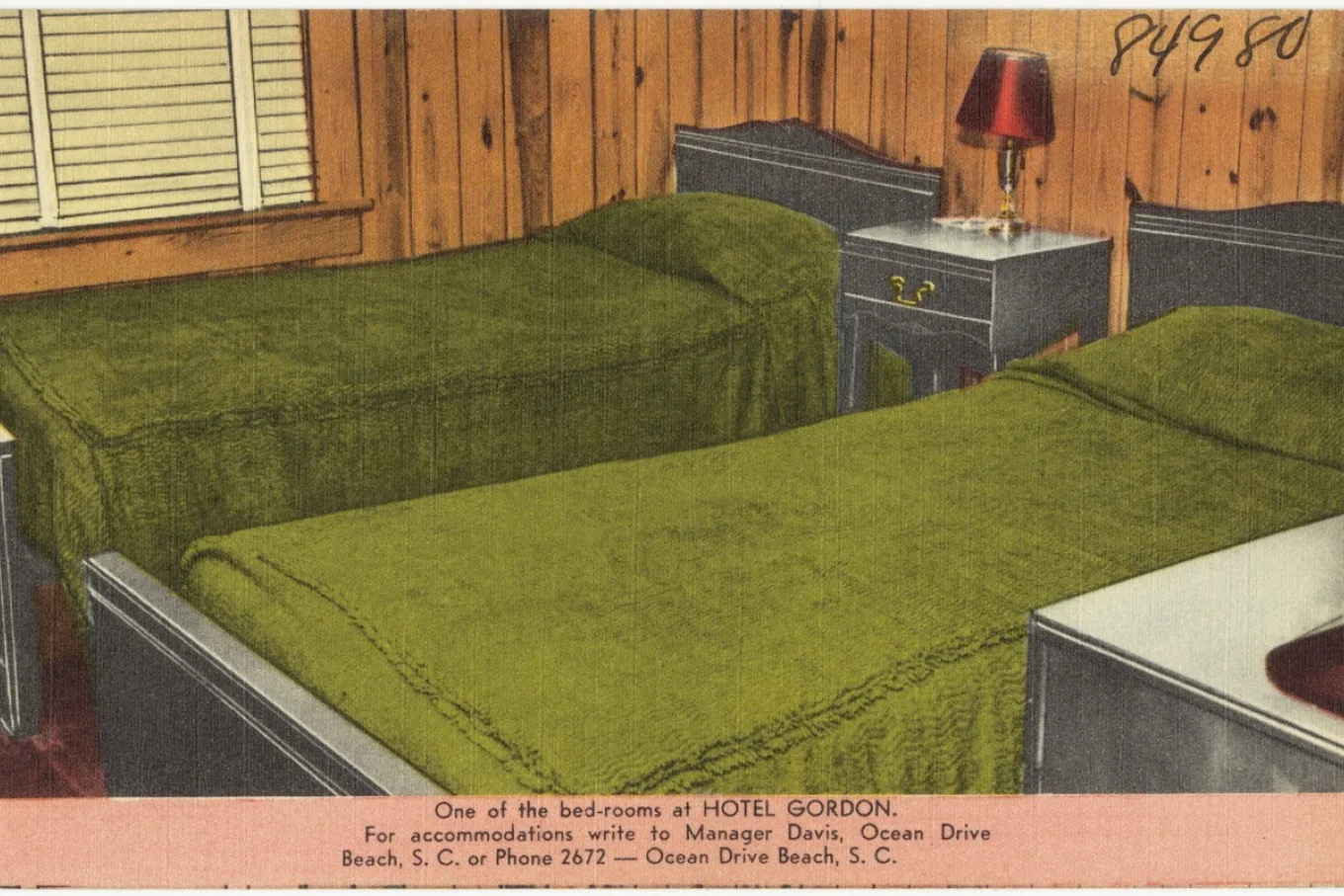
Room in Hotel Gordon Atlantic Beach Ocean Drive SC

Room at the Hotel Gordon, Atlantic Beach, S.C. Tichnor Postcard Collection from Boston Public Library.

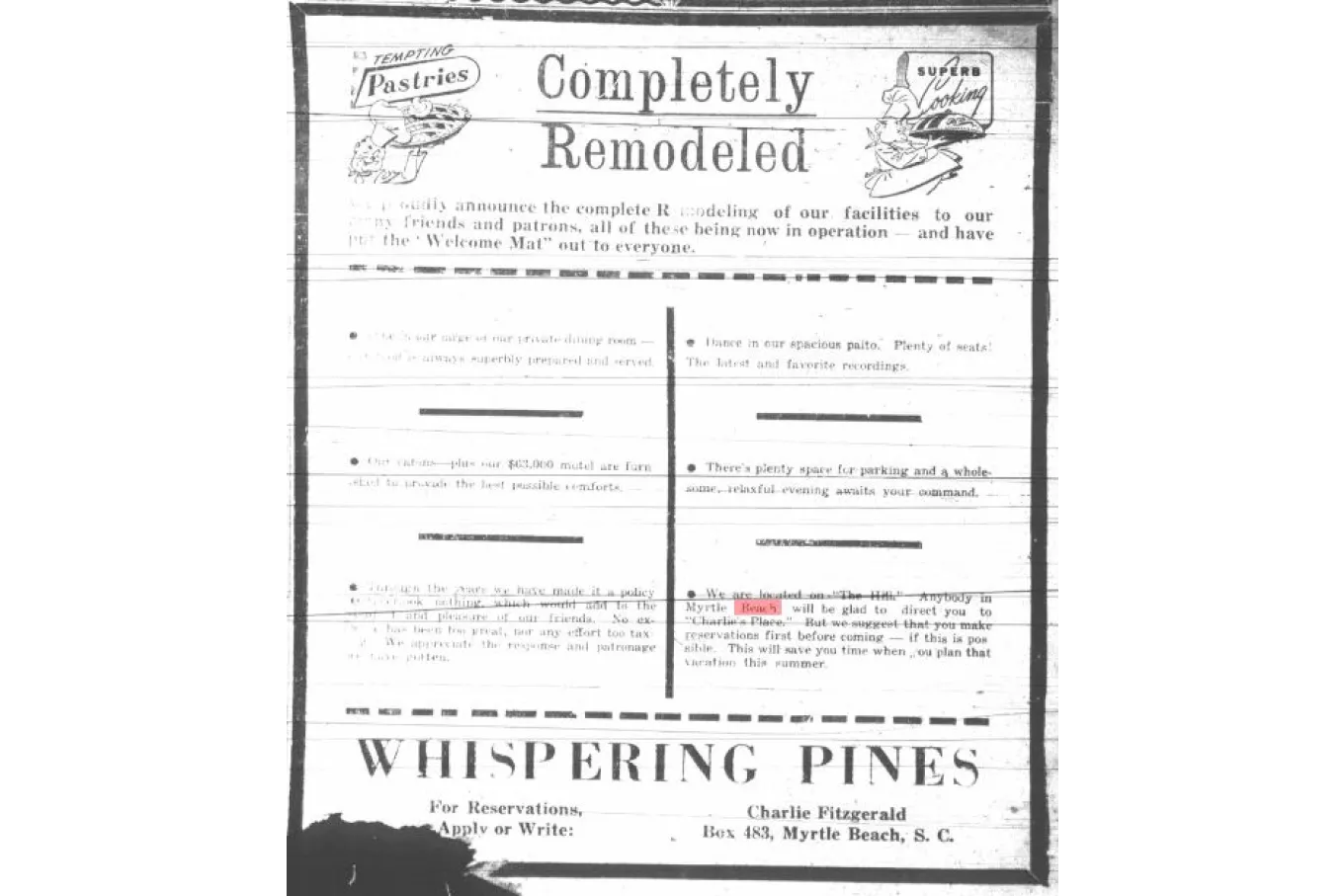
Whispering Pines ad Lighthouse and Informer 1951

Whispering Pines advertisement, Lighthouse and Informer, July 14 1951.

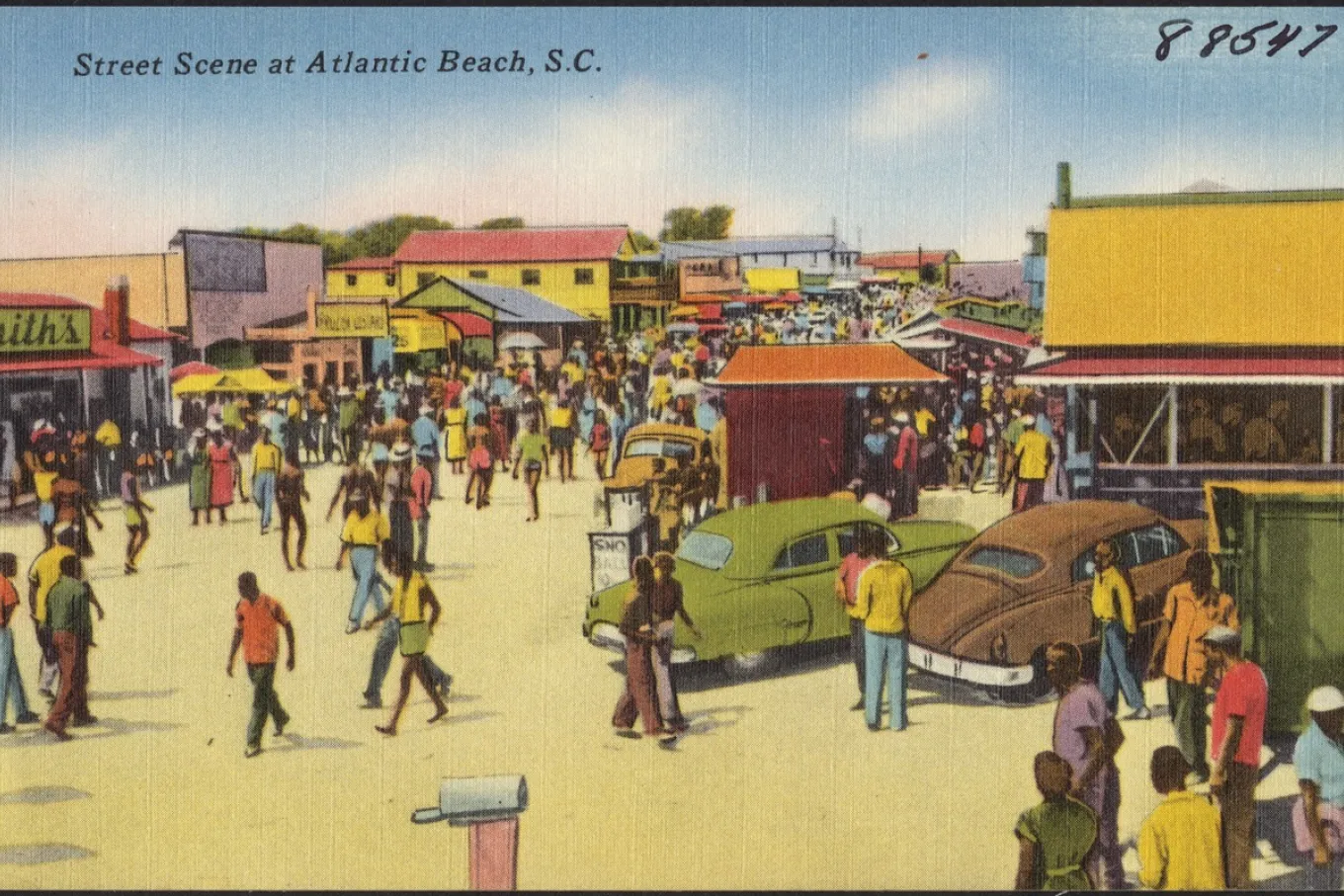
Street scene at Atlantic Beach, S.C.

Street Scene at Atlantic Beach, S.C. Tichnor Postcard Collection at Boston Public Library.

At times, trouble disrupted the calm at Atlantic Beach. In the summer of 1950 members of the Ku Klux Klan stormed through Atlantic Beach and then forced their way into the Whispering Pines club located in a nearby Black neighborhood called The Hill about a mile away. The Klansmen had heard that white men and women were entering the club to watch Black dancers and listen to the music. The owner of that club, Charlie Fitzgerald, ended up getting tossed into a car by the Klansmen and injured, and later it was Fitzgerald who was arrested and sent to the State Penitentiary in Columbia for some unrelated charge. This shocking series of events is an ugly reminder of the racial violence and inequalities of that time. Also notably, I learned that the Whispering Pines nightclub is credited as one of the birthplaces of South Carolina's state dance, the Shag.
 

Image
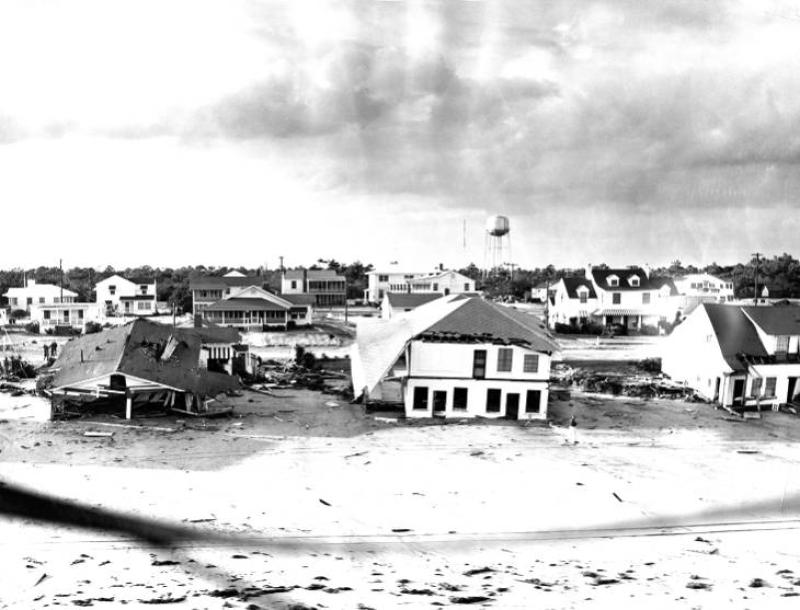
Damage from Hurricane Hazel, October, 1954
Damage from Hurricane Hazel, October 1954. Image from The State Newspaper Photograph Archive.

Then, on October 14, 1954, Hurricane Hazel came ashore near Myrtle Beach as a Category 4 and wiped out at least 10 homes and several businesses in the Atlantic Beach community, including the renowned Gordon Hotel and the beach house of a Columbian named Dr. H. H. Cooper. The property owners did not have insurance, and many could not rebuild. 

Yet, others came in and filled in the spaces with new structures. The 1960s were a time of regrowth for the area. And in 1966 the town of Atlantic Beach was chartered.
Image
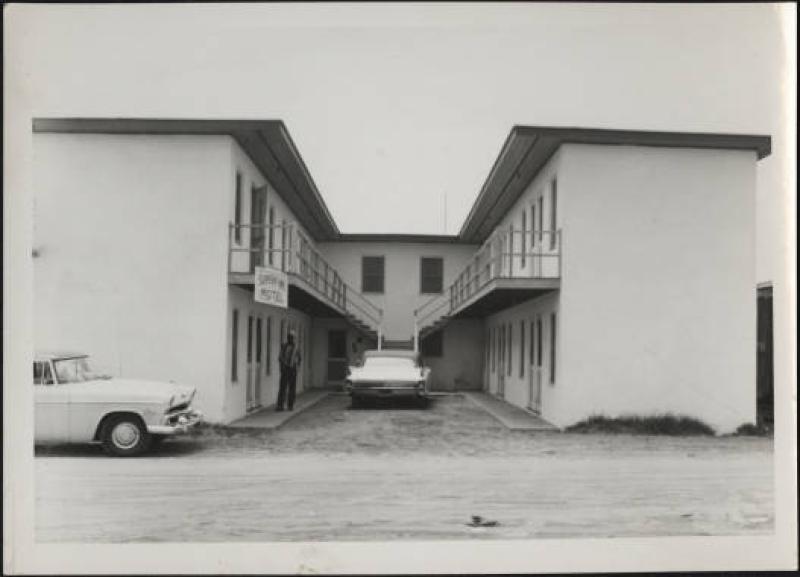
Superfine Motel at Atlantic Beach
Superfine Motel, Atlantic Beach, S.C. From the John H. McCray Papers at the University of South Carolina.

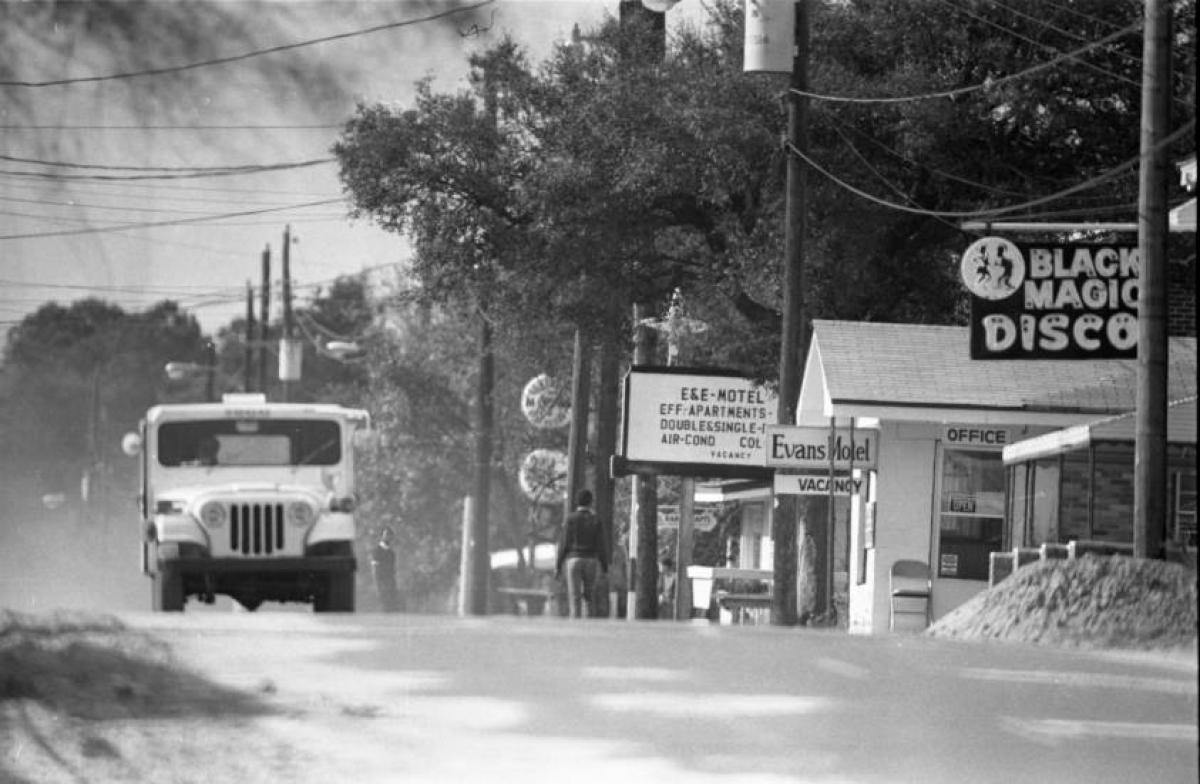
But after 1970 African American tourists had other options for their vacations and Atlantic Beach began to decline. When a photographer from the Columbia Record newspaper visited the area in 1982, Atlantic Beach was not what it once was. But we can view glimpses of its livelier past in these images. 
Image
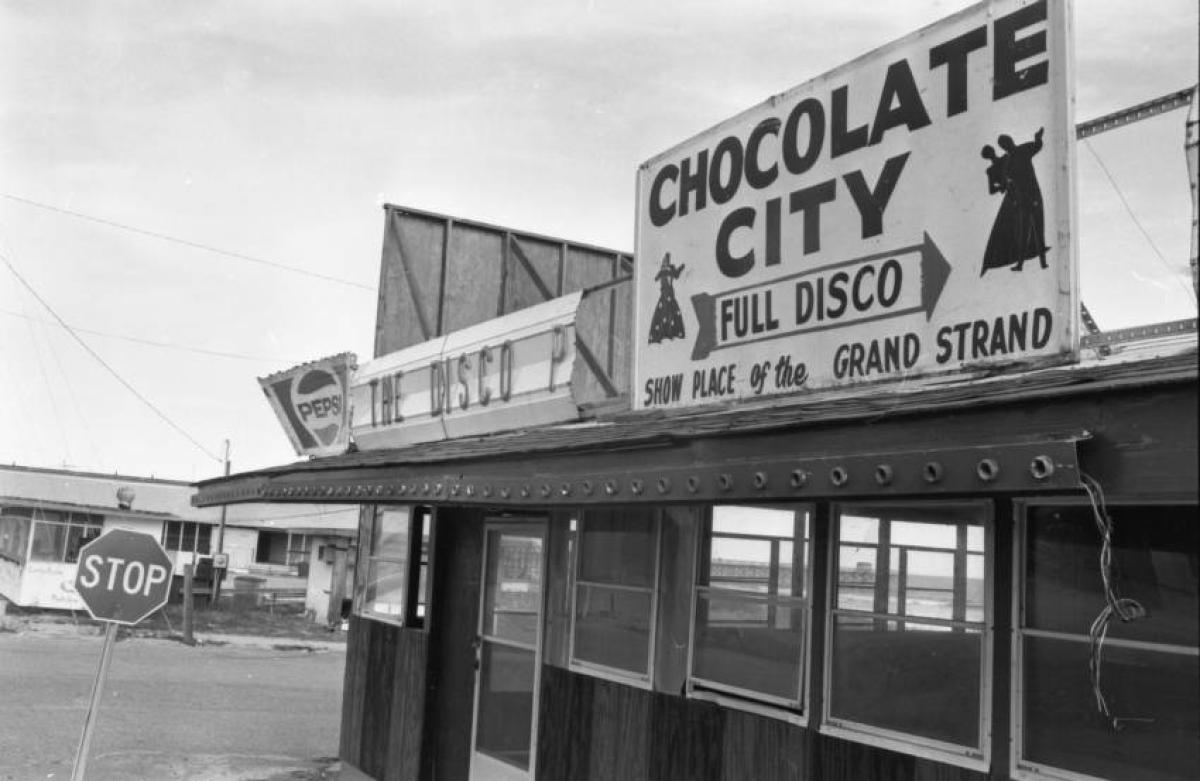
Atlantic Beach Disco_April 6, 1982
Disco at Atlantic Beach, April 6, 1982. Image from The State Newspaper Photograph Archive.


Image
Atlantic Beach scene
Atlantic Beach, S.C., April 6, 1982. Image from The State Newspaper Photograph Archive.

In 2005, a historic marker was placed at Atlantic Beach. Today, Atlantic Beach still offers sea breezes and a relaxing space along the Grand Strand. Residents hope to bring back development while continuing to honor its past.

Further Reading and Sources:

  • “Atlantic Beach was a ‘Black Pearl,’” The State, July 16, 2023. Access via NewsBank.
  • "A gamble on prosperity," by Jeffry Dyer, photographs by Donna Bise, Columbia Record, April 18, 1982. Access via NewsBank.
  • Greetings from Myrtle Beach : A history, 1900-1980, by Barbara F. Stokes, University of South Carolina Press, Columbia, S.C., 2007. Access at Richland Library.
  • Myrtle Beach and the Grand Strand, by Susan Hoffer McMillan, Arcadia Publishing, Charleston, S.C., 2007. Access at Richland Library.
  • Toward the Meeting of the Waters: Currents in the Civil Rights Movement of South Carolina during the Twentieth Century, edited by Winfred B. Moore, Jr. and Orville Vernon Burton, University of South Carolina Press, Columbia, S.C., 2008. Access at Richland Library.
Author

Margaret D.

Local History Manager

Audience
Adults
Like this
 7

Related Blog Posts

Book collage. Titles included: Unorthodox Love by Heidi Shertok, My Big Fat Fake Marriage by Charlotte Stein, Fly With Me by Andie Burke, Can't Help Faking in Love by Swati Hegde, For One Night Only by Jessica James, and The Broposal by Sonora Reyes
Blog
Like this
 1
A Year of Tropes: Fake Dating
black and white photo of the Greenville 8
Blog
Like this
 2
Jesse Jackson and the Greenville 8
Library card and keychain card depicting Nimona, a character designed by ND Stevenson with the text "A Card with Character"
Blog
Like this
 1
Limited Edition Library Card Features ND Stevenson's Original Art

Need Help?

Get in Touch
Give

Footer Menu

  • About
  • Work With Us
  • Blog
Library Policies© 2026 Richland Library, Richland County, South Carolina
To Top

Social Media Menu

  • Facebook
  • Twitter
  • Instagram
  • YouTube
  • LinkedIn