
Richland Library recently received and digitized two rare voice recordings from 1936. Discover more about this project and listen to the recordings below.
Columbia's Sesquicentennial Celebration
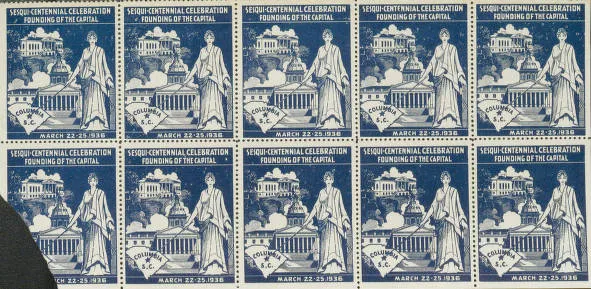
In 1936, Columbia’s leaders went all out on the sesquicentennial, or 150th, anniversary celebration of the city’s founding as the capital of South Carolina. And by all out, I mean they planned a lot of events. They published a finely-bound book on Columbia’s history, staged a historical pageant with 2,000 cast members, reenacted the 1786 signing of legislation founding the city in the State House, put together art exhibits and concerts, held a parade, minted special silver coins, hung posters all over town, color-coordinated shop windows on Main Street, and buried a “cache,” or time capsule, to be opened in 50 years at the city’s bicentennial.
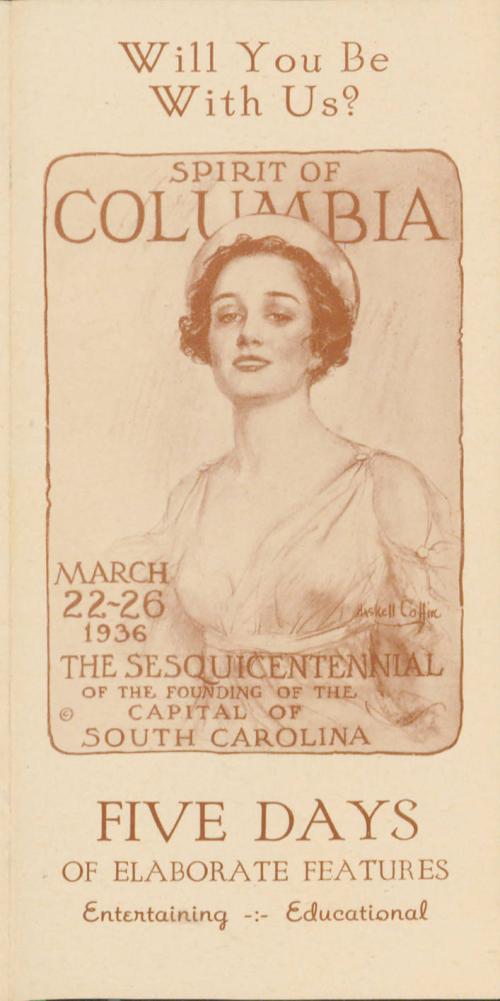
The Columbia Sesquicentennial Celebration Committee had such success with the festivities that they actually earned money from the commemorative coins and patronage drummed up for the celebration and were able to sponsor the establishment of Sesquicentennial State Park near Columbia. So, thanks to their efforts, we Columbians can still enjoy visiting “Sesqui” today.
Time Capsule Buried
But let’s get back to the time capsule. On March 22, 1936, city leaders buried a cache of materials under the floor of the new Richland County Court House, which was then under construction at the corner of Washington and Sumter Streets. This cache included letters to future relatives, a Sesquicentennial Celebration souvenir program and other items related to the celebrations such as banners and posters, commemorative coins, newspaper clippings, copies of Columbia’s finely bound new history book, wooden nickels, tickets, invitations, menus, and two wax cylinders with recorded voice messages for future Columbians.
The time capsule lay quietly under the floor of the courthouse for 42 years. But in 1980 the cache needed to be moved because the burgeoning city had outgrown the old courthouse on the corner of Washington and Sumter and it was to be demolished. The time capsule was next placed in the new Richland County Judicial Center on Main Street and locked away until it was officially opened in 1986 at a celebration at the Marriott Hotel in downtown Columbia.
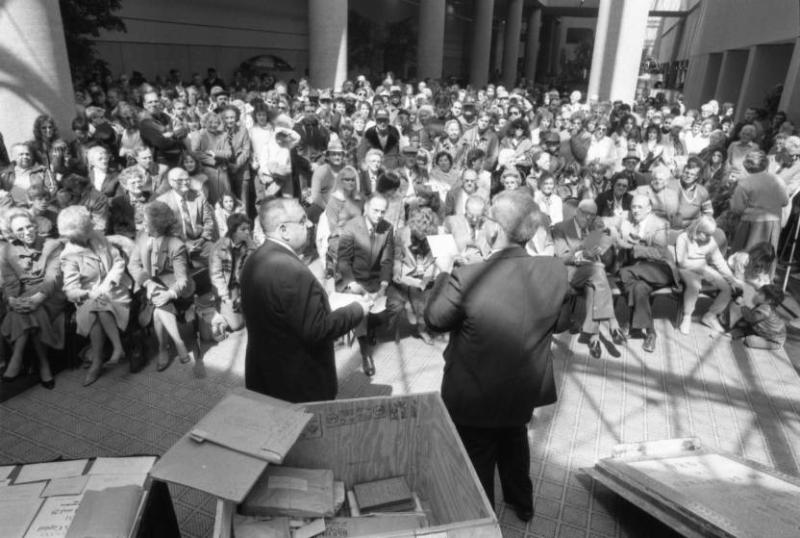
During the celebration, the letters to future relatives were delivered and the rest of the contents were admired and then donated to the McKissick Museum, located on the campus of the University of South Carolina. The museum displayed the materials and kept them with great care, but recently the McKissick announced it would undergo renovations and, to make best use of space, they transferred the small Columbia Sesquicentennial collection to the Walker Local & Family History Center at Richland Library. We were delighted to receive this collection, which is all about Columbia, and we have already begun the work of digitizing select materials for the Local History Digital Collections.
Voices in Wax
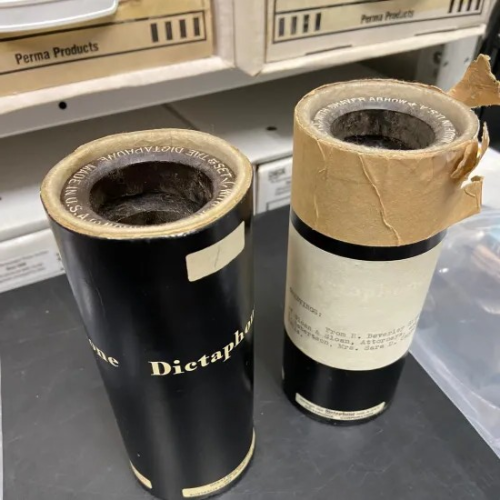
But, what about those voice recordings on wax cylinders? When the time capsule was opened in 1986, the wax cylinder was an obsolete format for sound recordings. Not many people had any old players around. And when Richland Library received the collection at now over 90 years on, no one had yet played the messages.
Even in 1936 the wax cylinder was already an old-fashioned technology. Most musical sound recordings had moved on to flat, disc-shaped vinyl records by this time. But labels on the wax cylinders indicated that the messages in the time capsule were recorded on Edison dictation machines. Cylindrical dictation machines were still commonly used in business offices around the country for recording speech and dictation up through World War II, so Columbia’s business offices had these recording devices handy at the time of the Sesquicentennial celebrations. They probably never imagined that it would be very difficult to play their recorded messages in the future. But though we had no players for these outmoded devices, I simply had too many questions. What did their voices sound like? What did they have to say? Who is on these recordings? I was just too curious to let them stay silent.
A Long-Lost Message Heard
I reached out to a conservator who could safely play and capture digital recordings of the messages from the cylinders. I couldn’t help but hope we could finally hear these voices from the past and receive the messages, which were directed, really, to us, Columbia’s residents of the future. Even if we found that the cylinders did not contain any great words of wisdom, the fact that the people of 1936 recorded a message directly for us, the people of today, made it worthwhile to try and hear it.
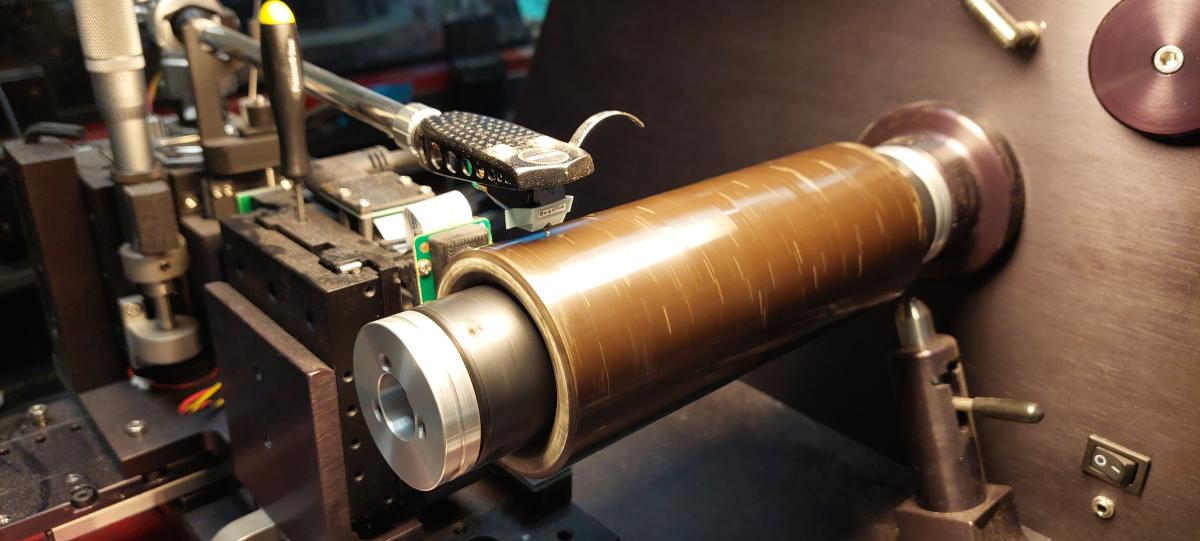
When the recordings were finally played, we found that the Columbia heat had likely caused damage to the wax surface of the cylinders. There are loud cracks and pops throughout the recording. But, behind the scratching, I distantly heard the voices of several men and women and, with patience and effort, plus a little research, I could make out what they had to say. A careful and close listen allowed me to prepare a transcript which should greatly assist in the comprehension of the recordings.
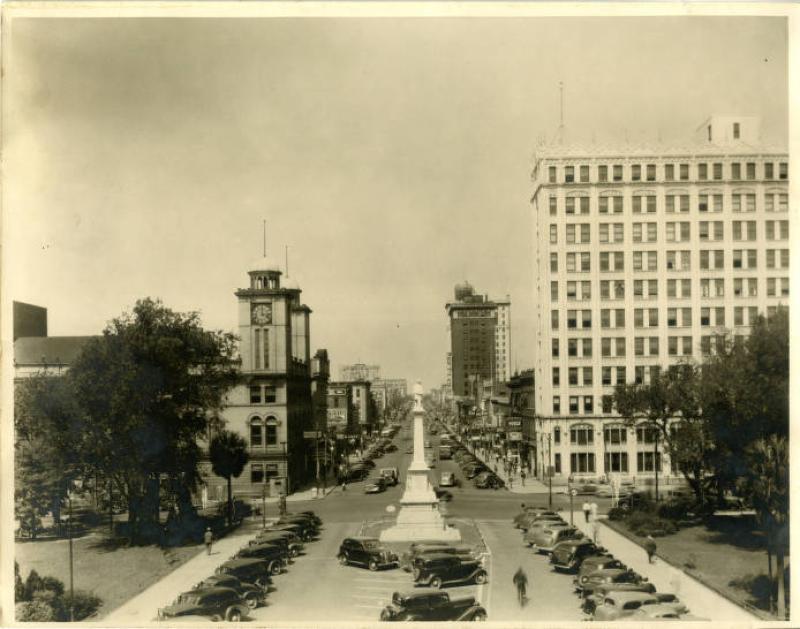
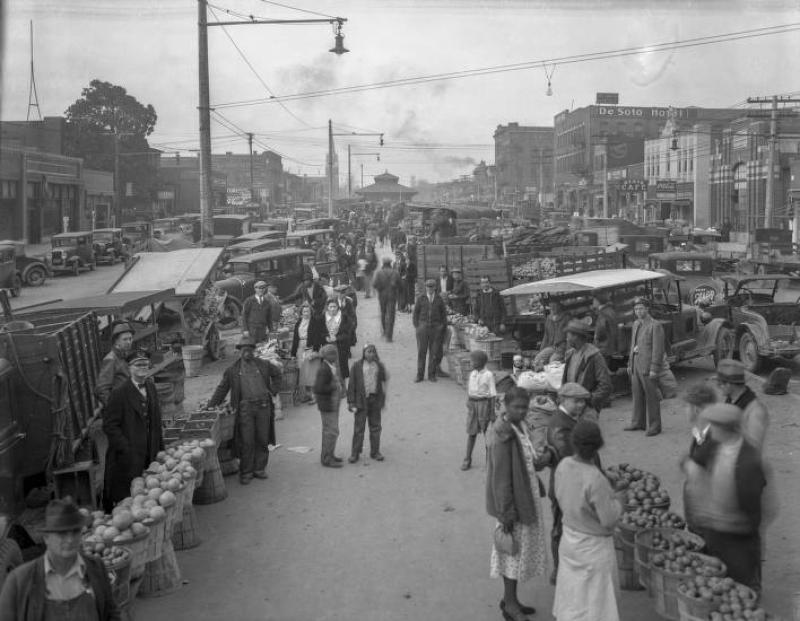
Also, while thinking about these messages, I wondered about how much Columbia has changed since 1936. At that time, the city had 3 “skyscrapers” and an estimated population of 62,000. This was during the Great Depression, when downtown Columbia was crowded with substandard housing and many people still used outhouses. The events that brought America into World War II would also greatly expand our nation’s worldview, and today there exists much more social equality and opportunity in Columbia than existed before the war. I imagine it would be shocking for the men and women who recorded these voice memos to see us today. The city’s population has more than doubled since 1936, outhouses are a thing of the past, and our downtown skyline is growing taller by the day. And I'm sure they would be amazed at the ways our recording technologies have changed in the last 90 years.
At the same time, there is a sense of continuity here as well. The library stands just two blocks away from where these recordings were made. The voices may even be those of your ancestors, or the friends and associates of your ancestors. You may still hear some of these Southern accents around here today.
Finally, enjoy hearing these voices from 1936, when Columbia celebrated its connection to the past as it looked to the future.
Listen Now
Click the link below and click the play arrow to play the recording. Click the blue arrow beside the word Transcript to read along while you listen.
- Cylinder Recording One: Greetings from R. Beverley Sloan, John T. Sloan and their employees.
- Cylinder Recording Two: Greetings from the law firm of Benet, Shand and McGowan.
View the entire Sesquicentennial Time Capsule collection online in the Local History Digital Collections.