
Library Closing: Sunday, April 5
Richland Library logo
  • Events
  • Locations
  • Get Email Updates
  • Contact Us
Library Policies© 2026 Richland Library, Richland County, South Carolina

Search Site

  • Events
  • Locations
  • Get Email Updates
  • Contact Us
Richland Library logo
    • Cardholder Services
      • Get a Library Card
      • Get a Recommendation
      • Get a ConnectED Student Card
    • Spaces & Equipment
      • Reserve a Room
      • Print Documents
      • Creative Spaces & Equipment
      • Library of Things
    • Community Services
      • Request an Obituary
      • Social Work
      • Community Resources
      • Earn Your High School Diploma
      • Library Residents
      • Educational Resources
      • Book an Appointment
      • Career Services
      • Writers & Local Authors
    • View All Services
    • Most Popular
    • Articles, Journals & Newspapers
    • Books & Literature
    • Business & Careers
    • Children
    • En Español
    • Genealogy & Local History
    • Health & Medical
    • History & Biography
    • How-To
    • Study & Test Prep
    • View All Research Resources
    • Resources A-Z
    • Recommendations
      • Suggest a Title
      • Broader Bookshelf Challenge
      • Book Club Resources
      • Help with eBooks & Digital Platforms
      • Local History Digital Collection
    • Staff Picks
      • Coming Soon
      • Just Checked In
      • Get a Recommendation
      • Browse Staff Picks
    • Browse by Type
      • Books
      • eBooks
      • Audiobooks
      • Movies & Television
      • Music
      • Library of Things
    • Browse by Audience
      • Adults
      • Children
      • Teens
    • Catalog Search
    • About Us
    • Give, Support & Volunteer
    • Work With Us
    • Our Team
    • Locations
    • Blog
    • Our Work & Programs
    • Newsroom
    • Equity, Diversity & Inclusion
    • Library Policies
    • Contact Us
Forgot your card number?
Forgot your PIN?

  • Reset your password

Get A Library Card

Breadcrumb

  • Home  
  • Blog  
  • Save Those Socks! How To Darn Anything
BLOG

Save Those Socks! How to Darn Anything

  • Zita R.
  • Saturday, February 03, 2024
Share:
Share on Facebook Share on X Share on LinkedIn

Don’t throw away your favorite pair of socks just because they have a hole. 

If you are like me, you hate spending money and love learning new skills to make life cheaper and easier. Darning your holy clothes is a great way to save them from the landfill. And if you can sew a stitch by hand, then you can darn anything!

Some holes are small enough to just sew the edges together, but some garments, especially knits, can unravel and stretch open. Sometimes you need a small patch of fabric to cover the hole. That's all that darning is. It's just filling in a hole with new fabric that you weave yourself out of thread.

It sounds difficult and like it might take all afternoon, but I darned the blue sock below in less than 35 minutes on my lunch break.

Fixing a hole in a sock is easy, cheaper than buying new socks, and once you have the hang of it, you will be able to mend anything in your closet. 

Supplies

  1. Needle.  
  2. Thread or Embroidery Floss split in half
  3. A small round object to stretch the sock over.
  4. Rubber band (optional) to hold the fabric tight on your round object
     

Image
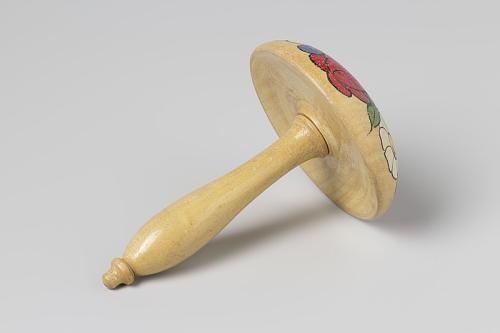
Wooden hand tool shaped like a mushroom. The top is painted with flowers and the handle is plain
Dutch darning tool 1920

Traditionally, we use a darning egg or mushroom. These were designed to help hold fabric in place while hand mending. But You don’t need to buy a darning egg. There are plenty of objects you can use.  

  • Tennis Ball 
  • Small Jar 
  • Apple 
  • Light Bulb (if you've got the guts!)
Image
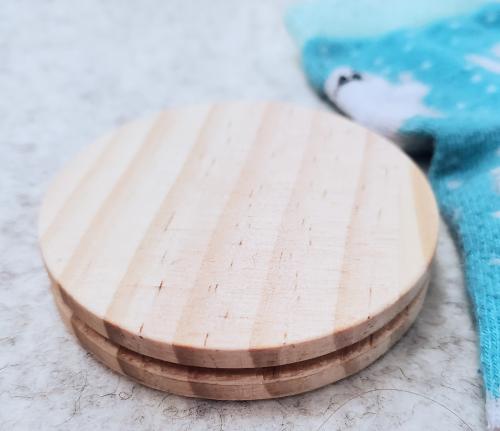
wooden disc 1 inch thick with groove with rubber band
Fiberworks loom darning disc

I’m using this piece of wood from the loom darning kit in the Fiberworks Studio.


Method 

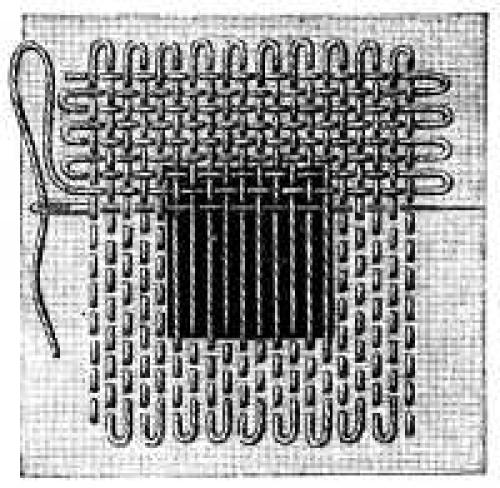
We are creating fabric to fill the hole.  

Fabric is made of two layers of fiber woven together. One is called the Weft and the second is called the Weave
Image
illustration of verticle stitches woven with horizontal weave of thread
Illustration for section "Mending" in Encyclopedia of Needlework. Fig. 41. Linen darning. 

Basically, you are weaving a tiny tapestry into your sock hole. 

  1. Turn your sock inside out 
  2. Stretch it over your round object. 
  3. Secure it with a rubber band. 
  4. Start your first stitches at least 1cm away from the edge of your hole so it has something to grab onto. 
  5. Stitch clear across the hole and into the other side after clearing another cm.  
  6. Repeat this back and forth until you cover the hole. You have now created your weft!
  7. Your next stitches with be perpendicular (left to right rather than up and down) to your first set of stitches. 
  8. Get ready for the fun part! 
  9. After you secure the thread an inch away from the hole, you are going to pass your needle through every other stitch so that you create a weave. 
  10. Once you've covered every last bit, tie it off and marvel at your craft.

    (see photos of my blue sock below)
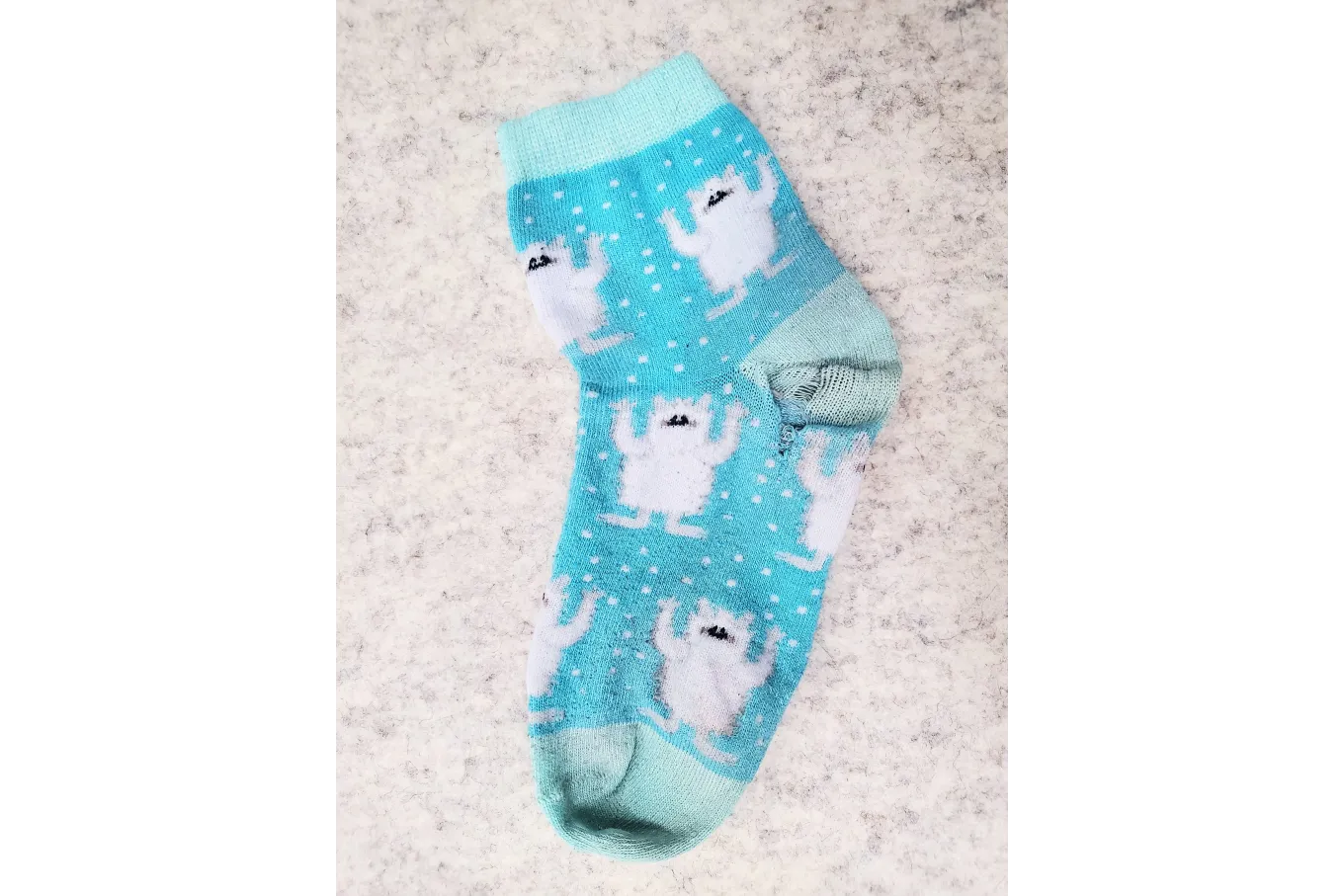
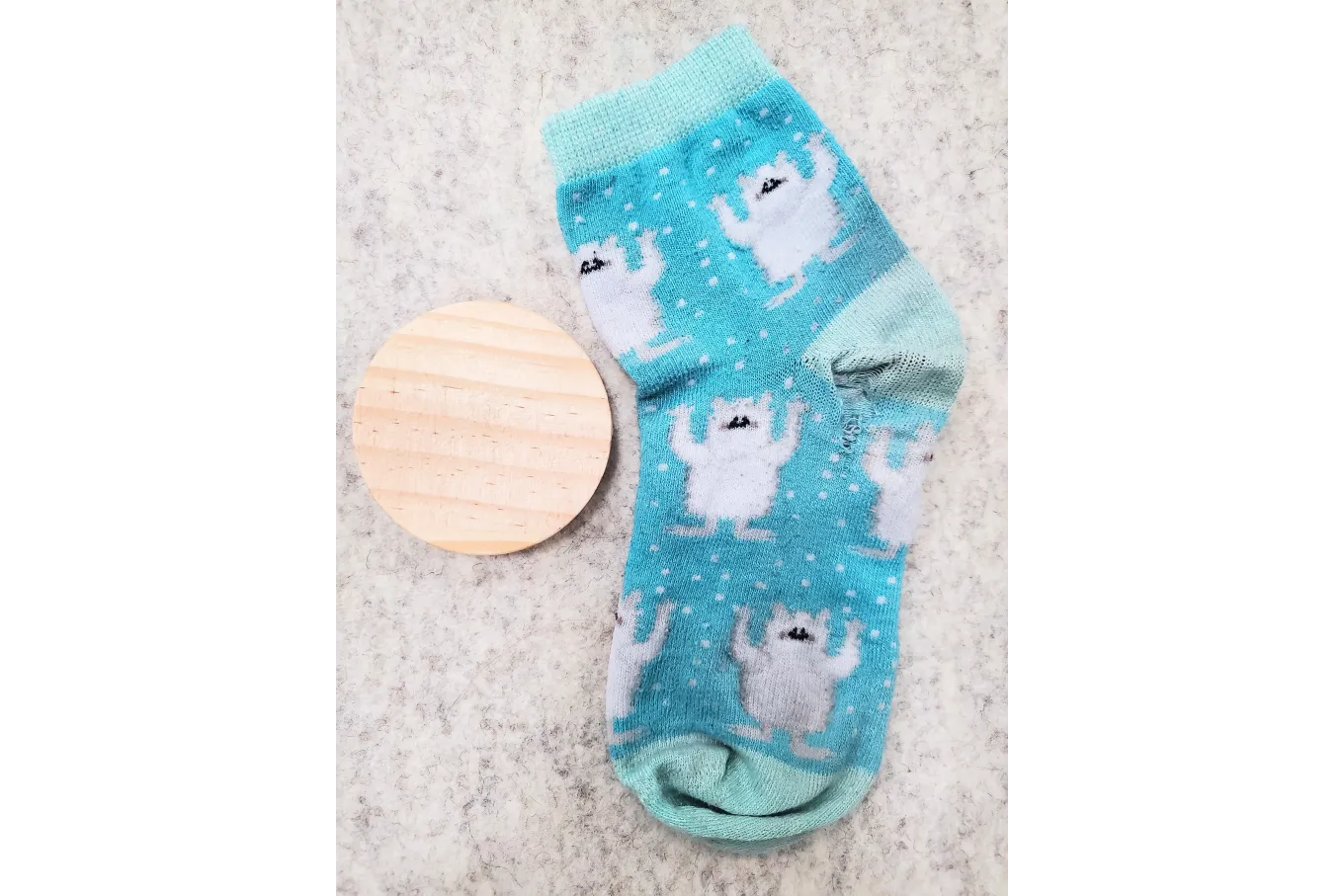
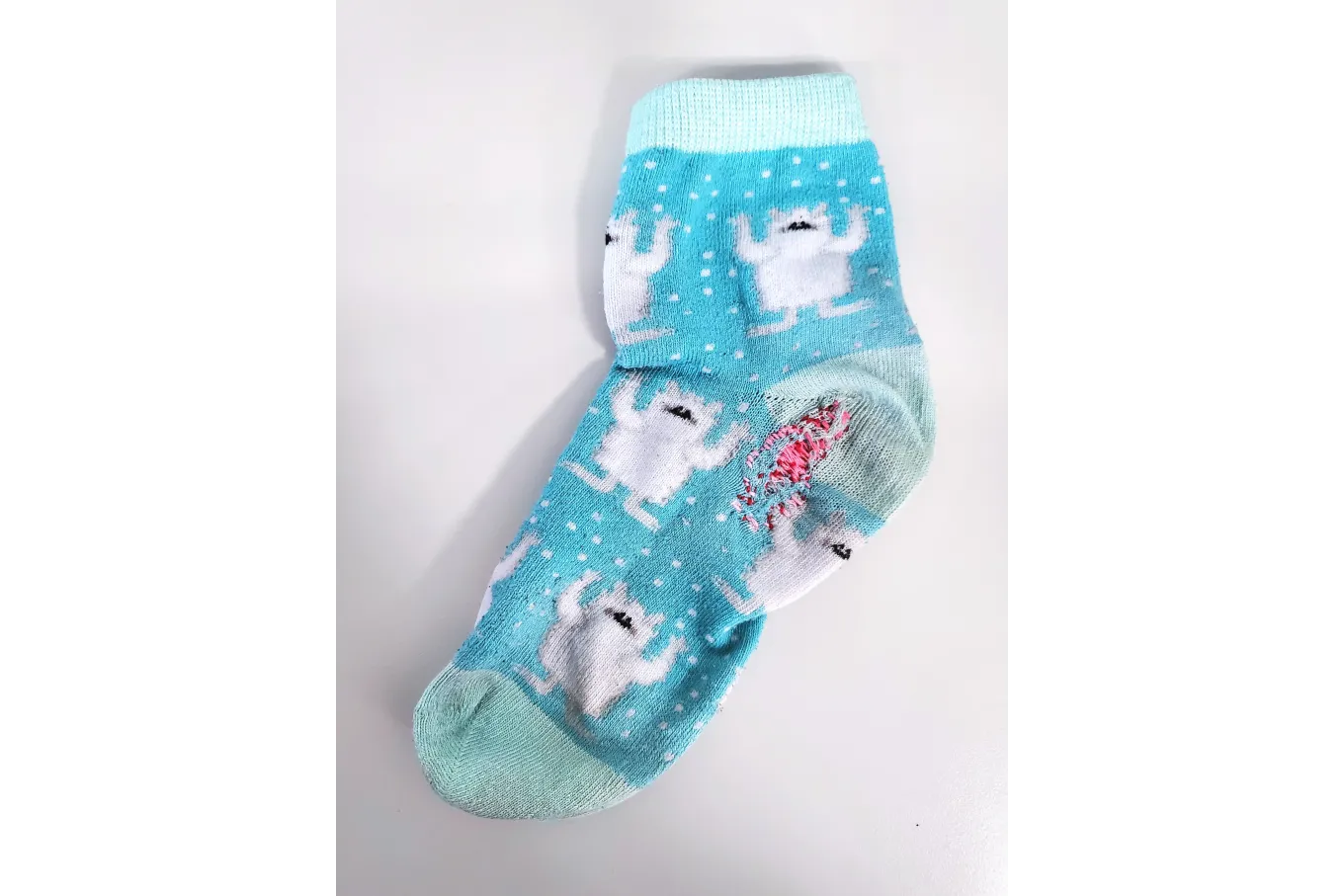
Baby blue polyester socks with yeti print and a hole in the heel

This is the offending sock. I chose to darn up the hole with pink thread so you can see it but if you match the colors, you'll find your mending barely visible. 

wooden disc next to blue sock with hole in heel

This is the wooden disc I will put inside the sock. It will help hold the hole open like it would on a foot. If you are following along at home, don't forget to turn the sock inside-out first!

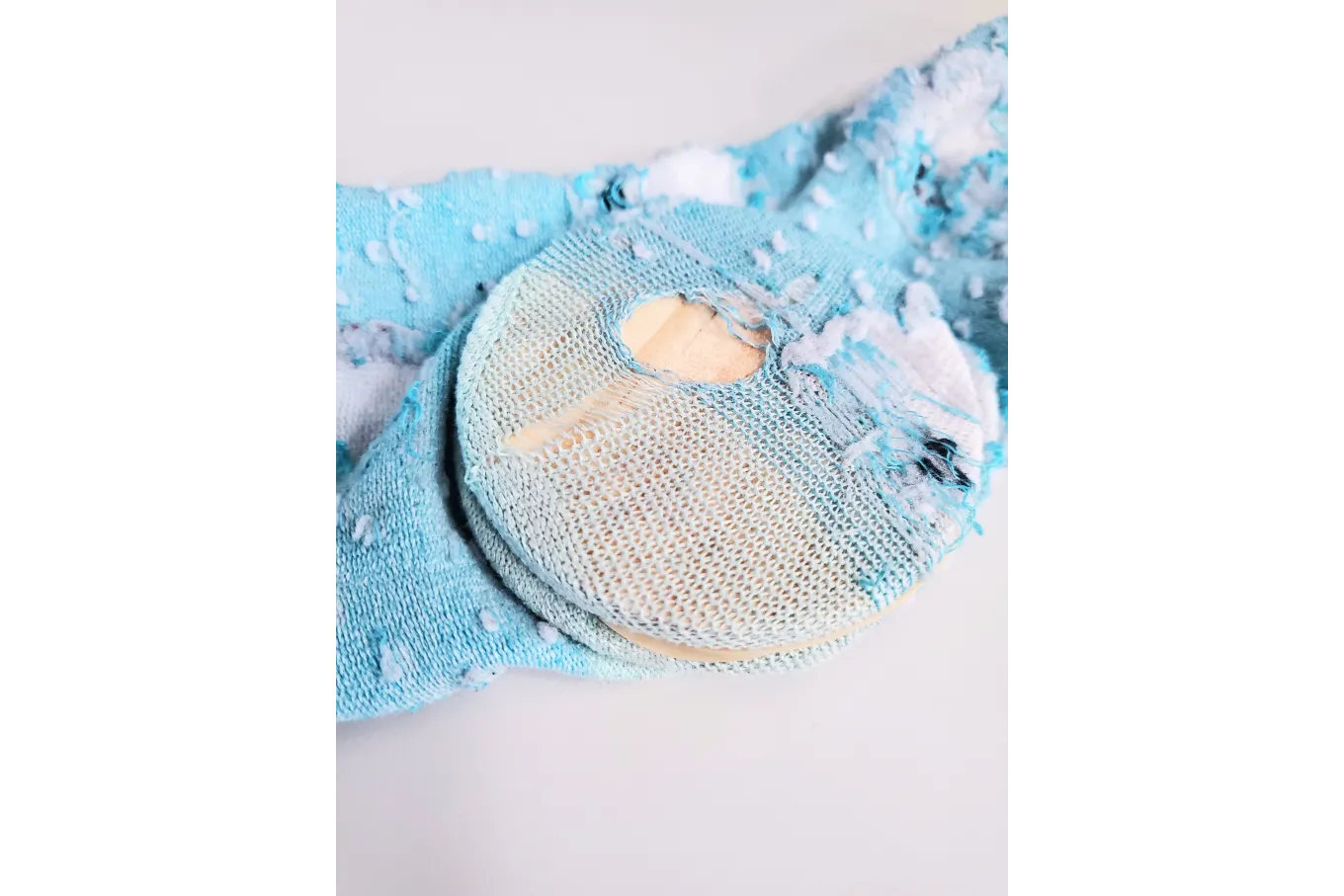
inside out sock is stretched over wooden disc to reveal the full shape on the hole in the heel

With the inside-out sock stretched over the disc, and rubberbanded tight, we see the right size and shape of the hole. This way as we start sewing, it won't move around on us. 

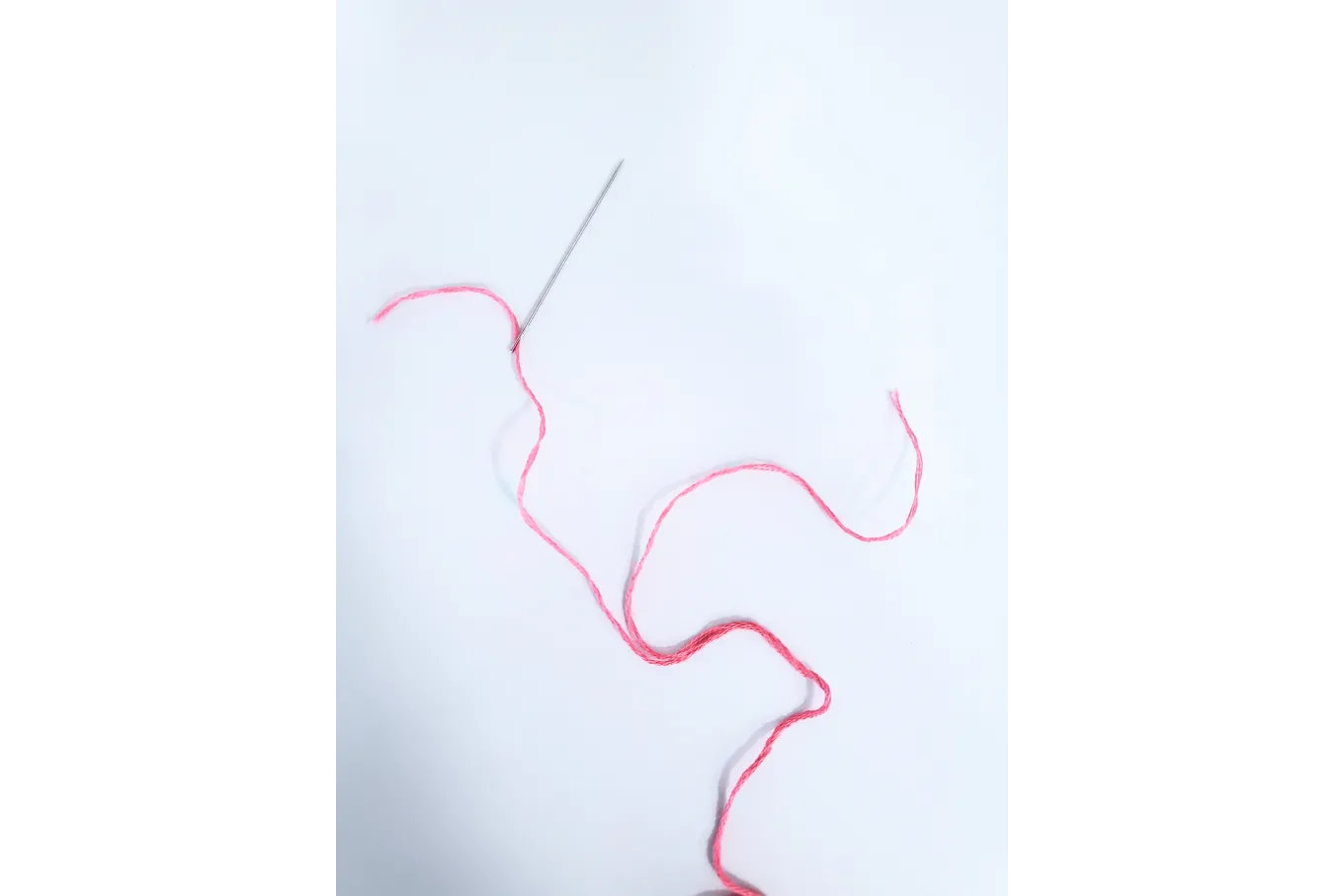
Pink embroidery floss split in half for needlework

If you are using embroidery floss, be sure to split it in half. You only need two or three threads. You can thread your needle and tie a regular knot at the end like you usually would for a hand stitch. 

pink thread sewn back and forth over a hole in a blue sock

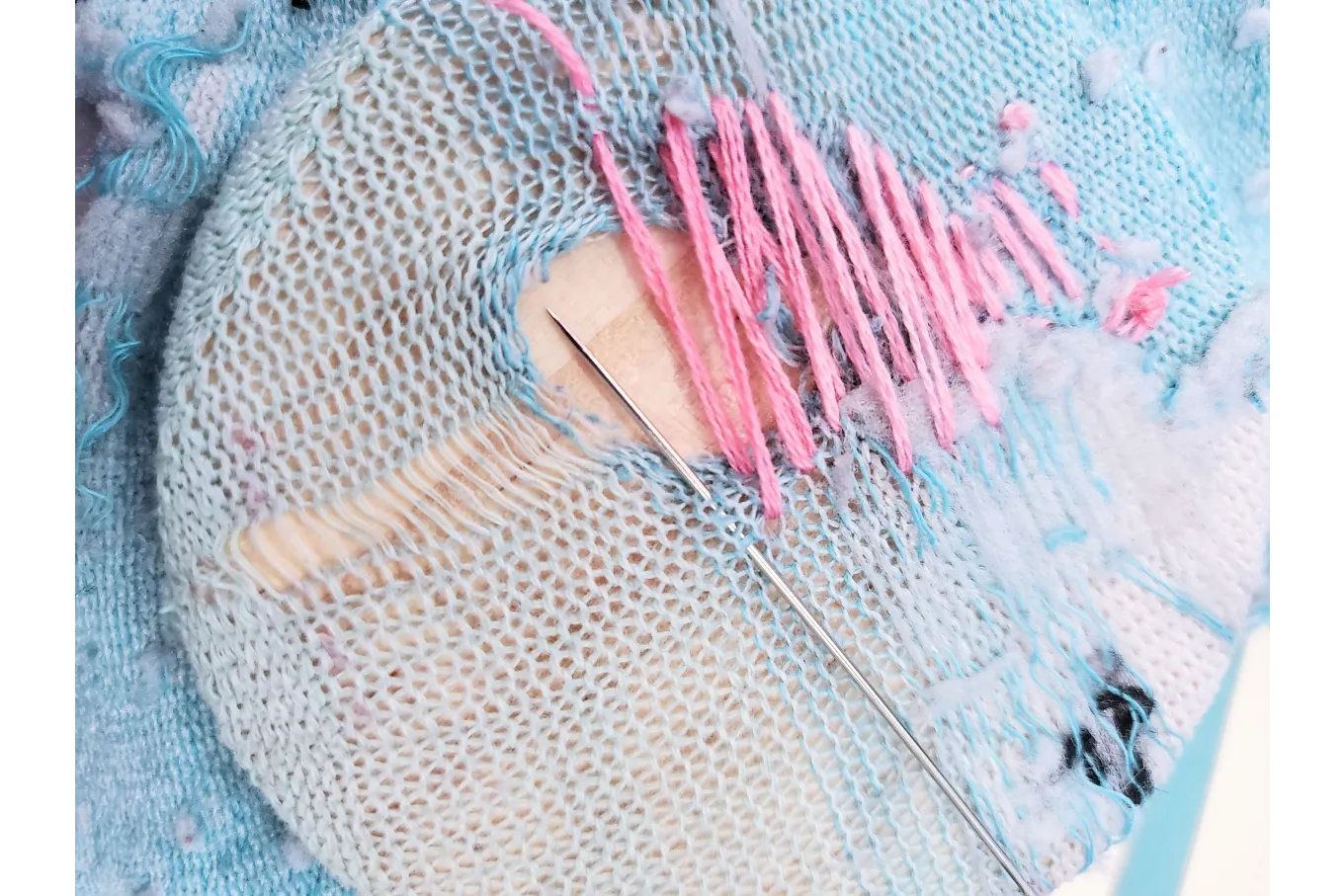
Create the weft by sewing straight lines back and forth over the hole. Be sure to start each one well past the hole so it has enough to hold onto. 

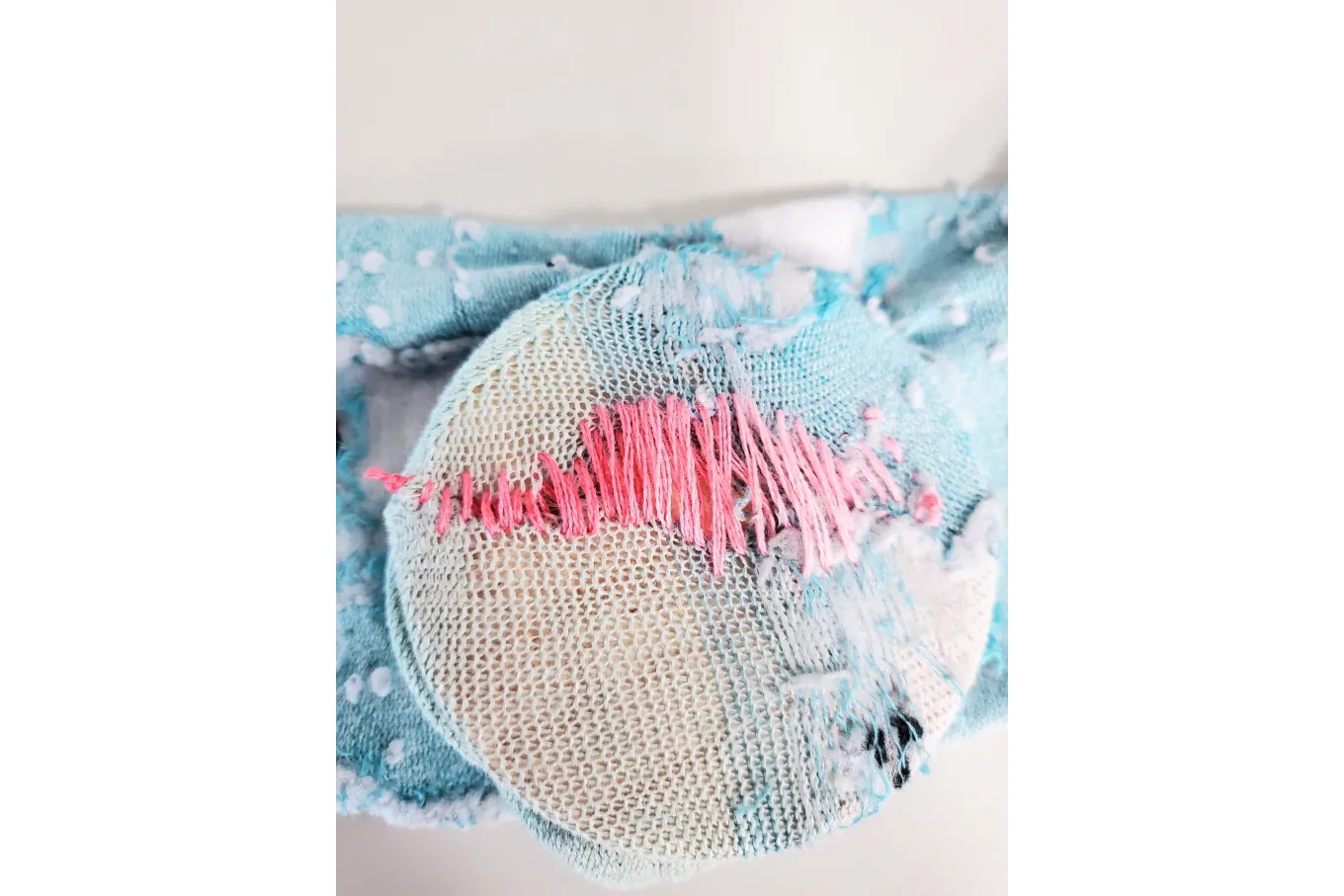
Pink thread stitched back and forth over the heel of a blue sock

Remember you are creating the frame to weave the new fabric over the hole so be sure to cover a little more than you need. 

My stiches are closer together than I needed but it can be fun to see how each project comes out a little different as you start getting into DIY. 

Needle weaves in and out of pink stiches over a blue sock.

Now it's time to weave! 

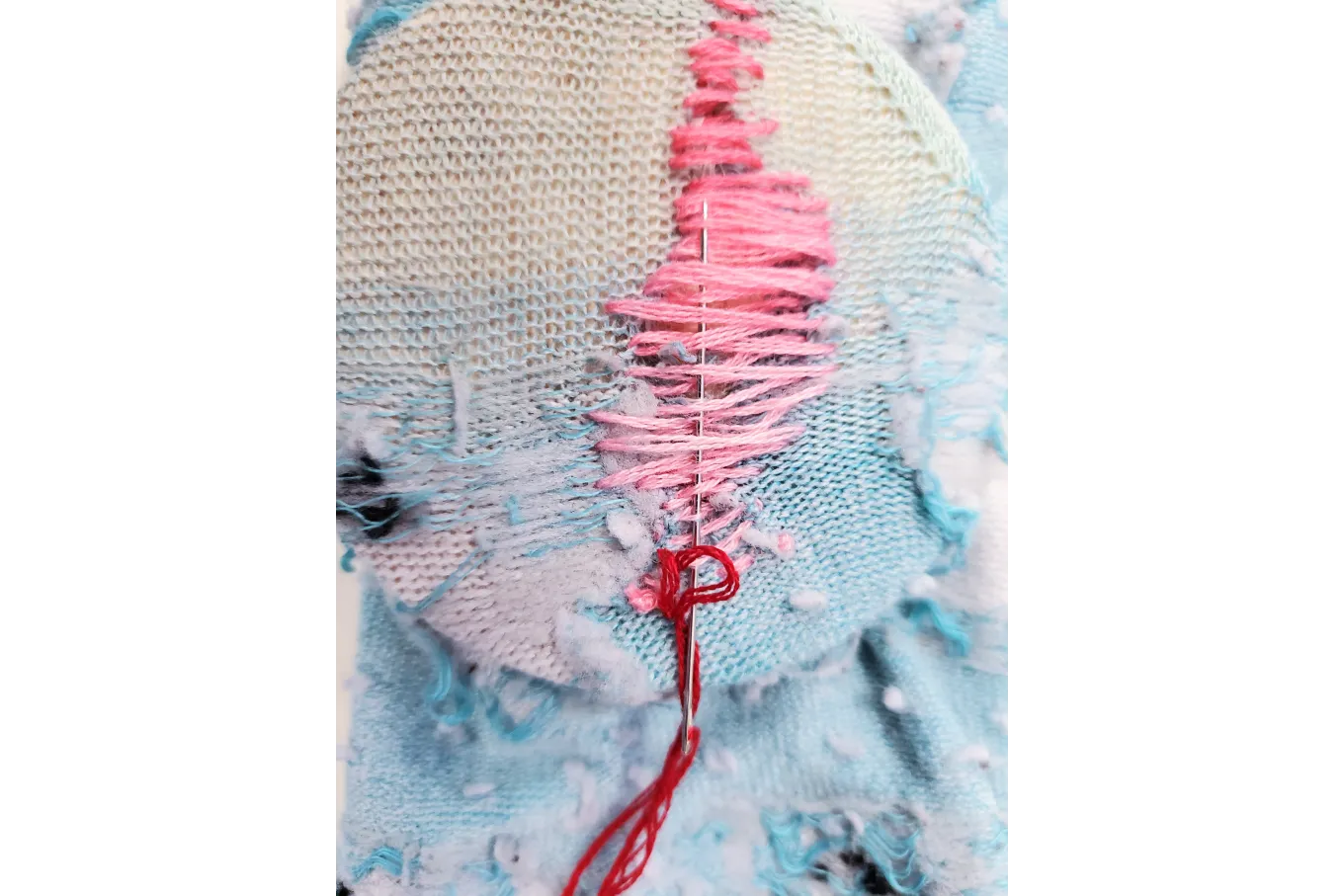
Turn your work 90 degrees and take your threaded needle and pass it over and then under each of your original stiches. 

One red thread passes over and under many pink stiches across a blue sock

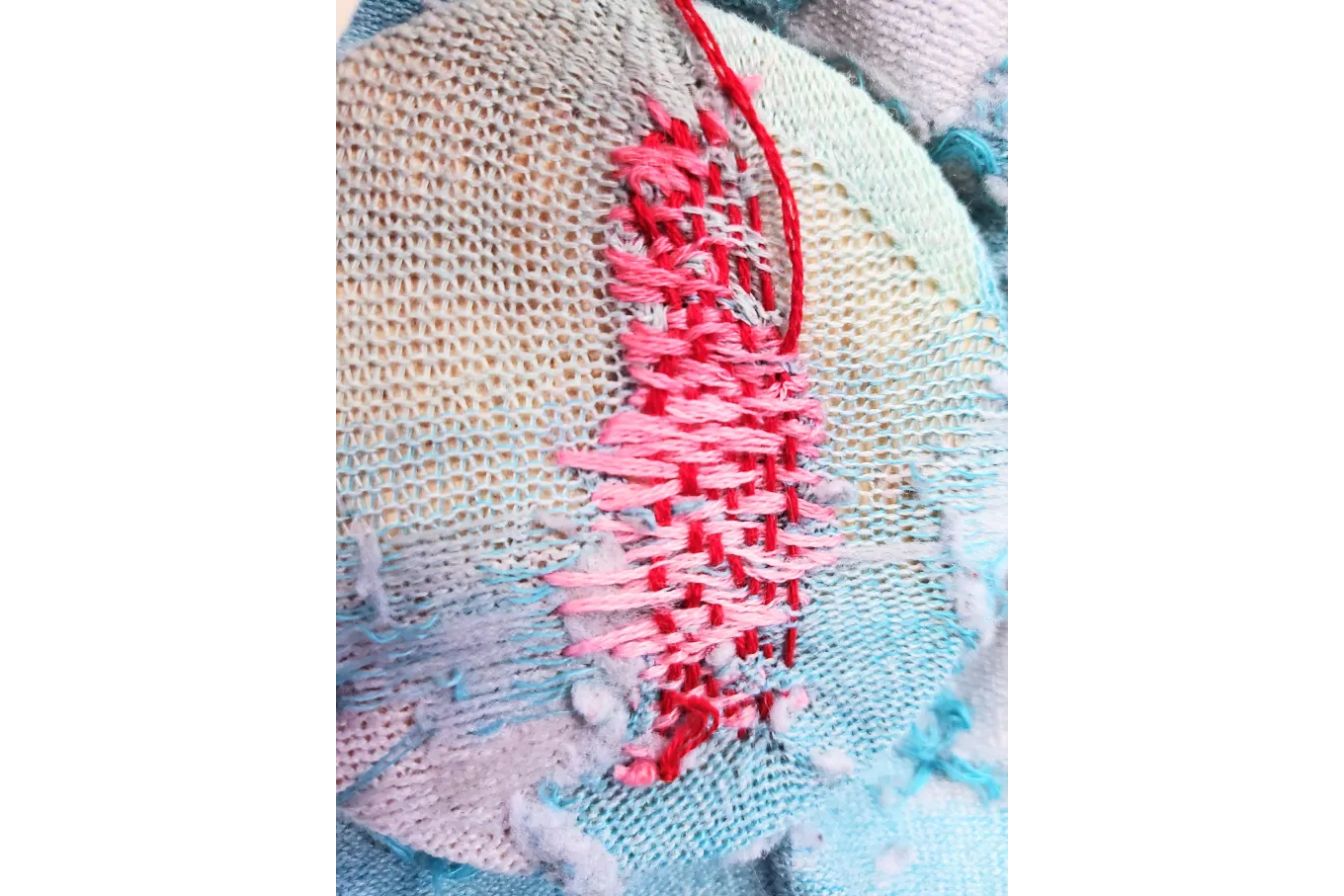
Pull that thread through and see your first weave! You can work your way across your weft stitches and come back and fill in gaps as needed. 

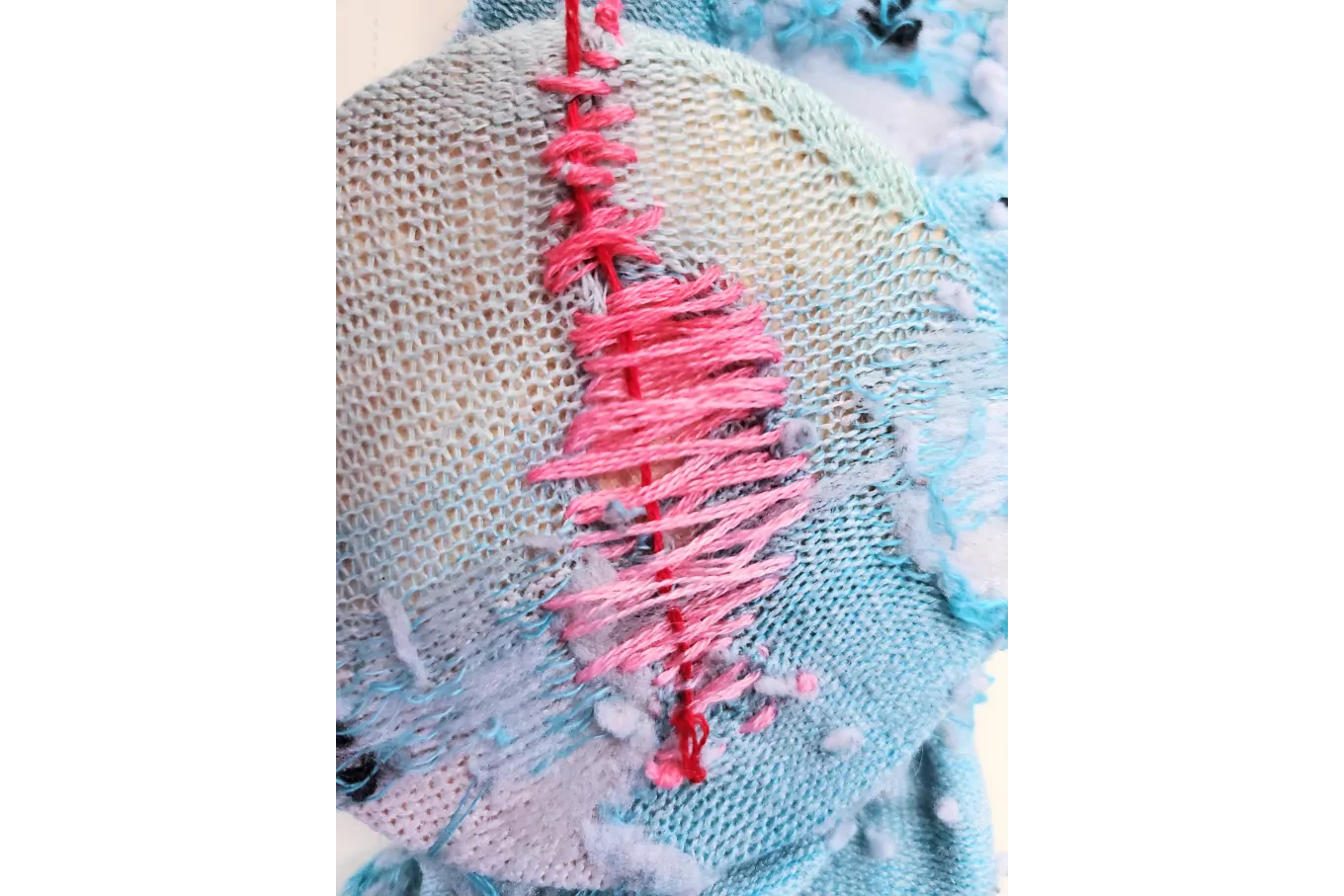
many red threads weave through pink stiches in a blue sock but one group of pink stiches remain

Here you can see I wove across from left to right but since I started in the middle, I left an area unfinished on the left.

That's okay! I just went back and filled it in. Remember that part of the spirit of DIY is letting go of perfection and getting the job done your way.

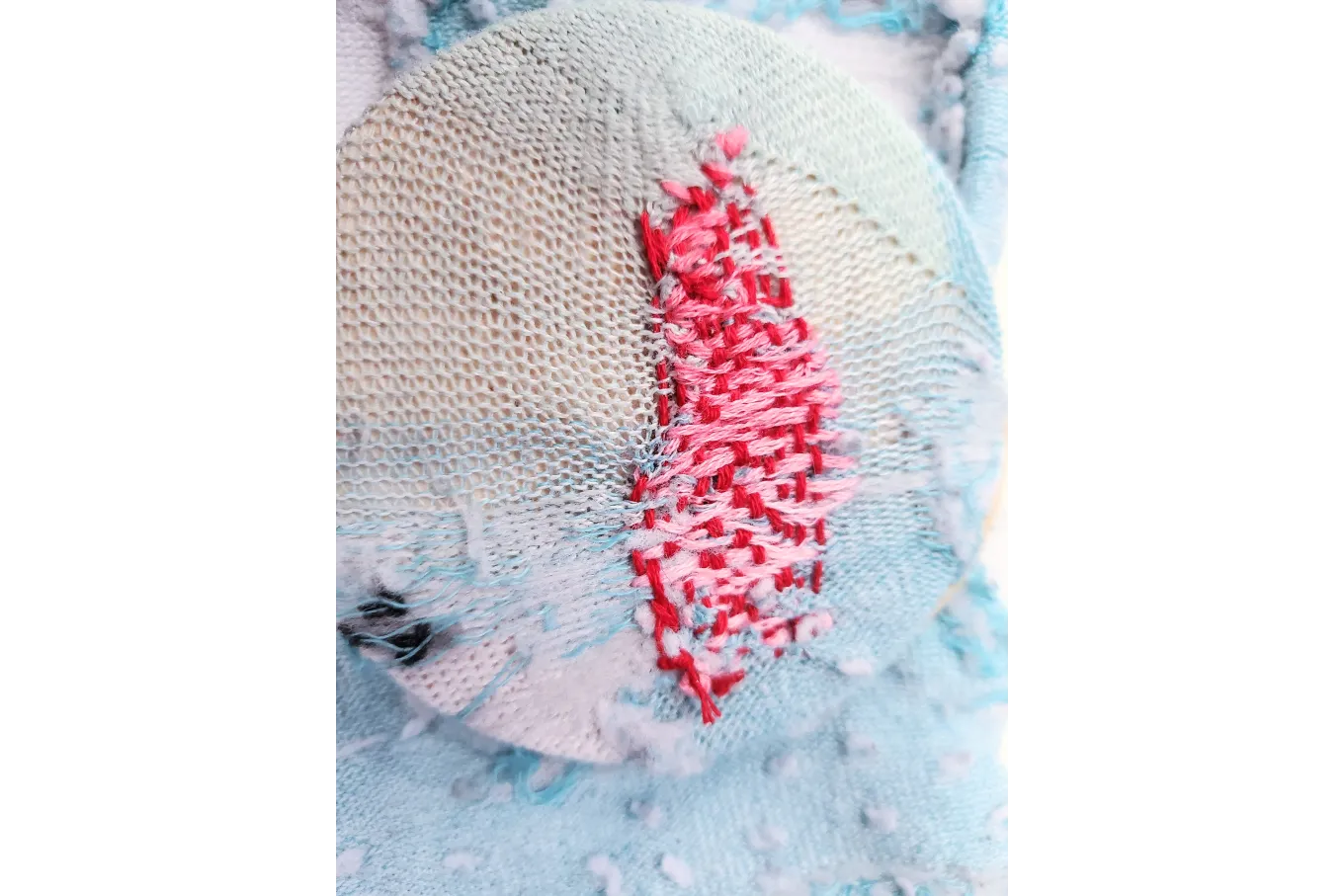
Blue sock with pink and red thread weave covering a hole

All done! Now it's time to turn it back right-side-out....

Blue polyester sock with yeti print have pink stitching in heel

Now that we are right-side-out, so much of all that work disappears in the original sock! You can imagine how invisible this type of mending can become when you color match the thread!

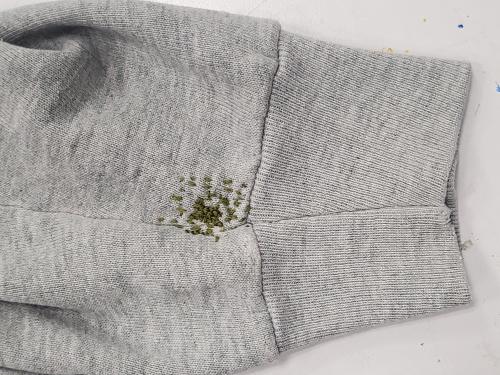
You can use the same technique on just about everything that might have a hole in it.
Image
Grey hoodie sleeve with green stitches mended over a hole

You won't need to throw away any more jeans that actually fit, flattering tops, or perfectly soft hoodies. Those things can be precious and even if they aren't, it's good for your wallet, soul, and planet to keep using them.
Image
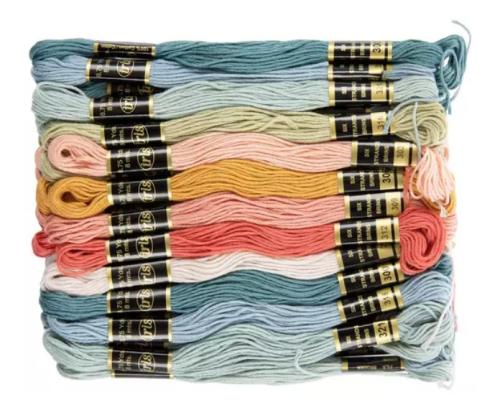
over a dozen skeins of embroidery floss in multiple colors

I recommend buying a multicolored set of embroidery floss. It can cost less than a cup of coffee and it's easy way to stay ready for the next hole you need to mend. Having color options may also inspire you to create something new and unique.
Image
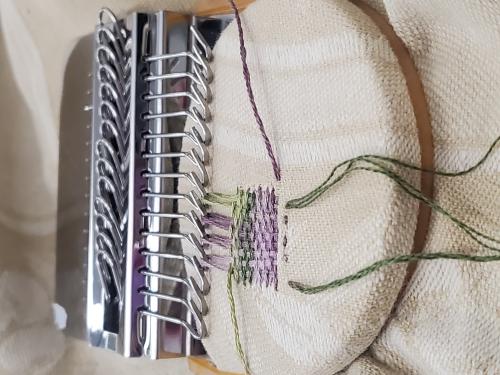
metal darning loom holds green and purple stitches on cream fabric


Our Fiberworks Studio has a darning loom that you can use to create a picture-perfect weave. You can sign up to attend our Loom Darning Class next week to learn how it works and try it out for yourself!

Want to just come in and get some in-person help?  Check out our upcoming Mending Class or contact our Fiberworks expert for a one-on-one session.

Visible Mending

Visible Mending

Artful Stitchery to Repair and Refresh Your Favorite Things
Cardon, Jenny Wilding, author.
Published in 2018
"Imagine a world where every rip in a pair of jeans, every snag in a sweater, and every tear in a tea towel becomes an opportunity for one-of-a-kind creativity. With this fun introduction to unconventional mending techniques in a format that's half how-to guide, half idea book, anyone can give worn and torn items a new life. Start by learning hand-mending methods, including boro (an age-old Japanese mending technique), embroidery, patching, and darning; then rev up the sewing machine for fast mends that put the pedal to the metal. With limited supplies, a limited budget, and limited time, anyone can create attention-grabbing details with visible mending--35 examples and more than 300 photos make it easy to get started!"-- Provided by publisher.
Find
Book
 
Creative Mending

Creative Mending

Noguchi, Hikaru, author.
Published in 2022
Mend, rethink, transform, recreate! Mending your favorite fabric items-from jeans to sweaters to sofa covers-becomes a true art form in Creative Mending. In this book, mending guru Hikaru Noguchi shows you her entire range of valuable techniques-from embroidery and patching to darning and felting-that are just challenging enough for experienced menders. Noguchi's basic rules of mending are that the repair should suit the fabric and its user, and that there are lots of creative ways to create beautifully customized repairs-some subtle, others making a statement. She provides 13 techniques that show you how to: - Apply creative repairs to both knitted and woven fabrics - Use yarn, floss, ribbon, and fabric to reinvent well-loved garments - Make understated repairs that add just a touch of contrast, color, or texture - Use visible mending techniques for bold repairs - Darn with felt to add body and dimension to a repaired item - Match your repairs to the damage, the fabric, and the wearer - Maneuver through tricky places like inseams and underarms - And more! The 13 illustrated lessons and over 300 color photos in this book provide detailed examples for all the basic techniques. Lots of variations plus plenty of tips and examples (67 in all) provide you with all the guidance you need to rethink and repair beautifully. The stunning photos will inspire you to get creative on that fraying neckline or worn elbow!
Find
Ebook
Darning

Darning

Repair Make Mend
Noguchi, Hikaru/ Baba, Wakana (PHT)
Published in 2020
Find
Book
 
Mend It Better

Mend It Better

Roach, Kristin M.
Published in 2012
Find
Ebook
Author

Zita R.

Check Out Associate

Zinester, NaNoWriMo Winner, and DIY Advocate.


Tags
DIY
Sewing
Like this
 5

Related Blog Posts

Library card and keychain card depicting Nimona, a character designed by ND Stevenson with the text "A Card with Character"
Blog
Like this
 1
Limited Edition Library Card Features ND Stevenson's Original Art
ABC group
Blog
Like this
 1
What’s new at Northeast Audiobooks and Craft Group?
Matt Rivera
Blog
Like this
 1
Be Business Smart: Community Partner Spotlight: How CommunityWorks Can Help Your Small Business.

Need Help?

Get in Touch
Give

Footer Menu

  • About
  • Work With Us
  • Blog
Library Policies© 2026 Richland Library, Richland County, South Carolina
To Top

Social Media Menu

  • Facebook
  • Twitter
  • Instagram
  • YouTube
  • LinkedIn