
This 18-acre plot of sloped land has played an interesting role in Columbia’s history.
Finlay Park is located in downtown Columbia and covers over 4 city blocks between Gadsden Street to Assembly Street and from Taylor Street to Laurel Street. The park includes a valley surrounded on three sides by a high ridge.
Located above the Broad River near its confluence with the Saluda, this ridge was home to Native Americans, such as the Congaree, for thousands of years. This site was enriched with fresh water and located close to a well-worn trading path. No doubt, people visited the spring on this hillside to rest and replenish time and again. But let’s jump forward and explore the written history of this ridge and valley that today comprises Finlay Park.
Columbia's Founding
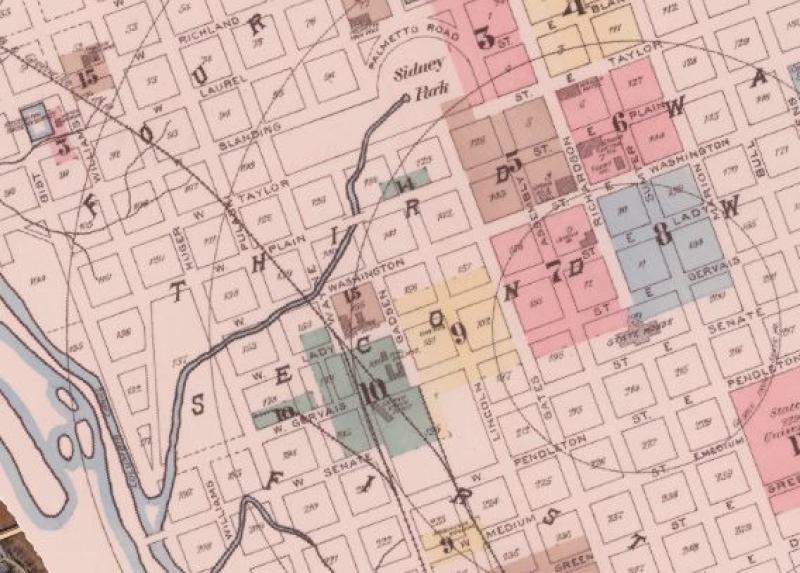
It was known by several names over this time, first as Taylor's Hill, then Blanding’s waterworks, then Sidney Park, which changed to Seaboard Park, then back again to Sidney Park, and finally, to Finlay Park. Below is a brief timeline researched and illustrated with materials from the Walker Local & Family History Center’s collections at Richland Library.
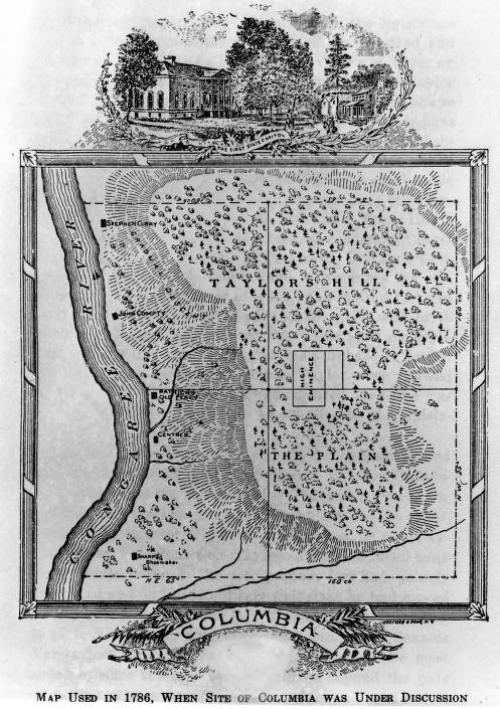
In 1786, Columbia was designated as a new, planned city and state capitol. City lots were drawn up on a grid from land formerly owned by Thomas and John Taylor and sold to the public during an auction in Charleston. The plots of land west of Assembly Street from Taylor to Laurel Streets were first owned by a B. Harrison and Purvis & Co.
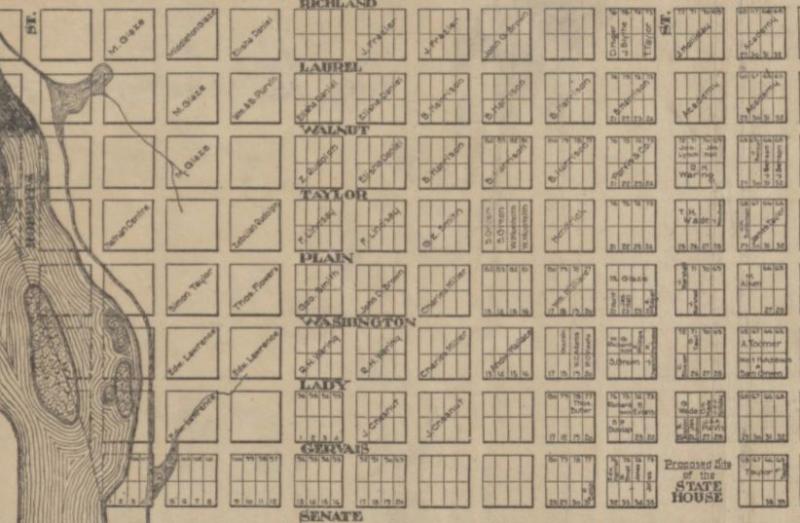
However, the city’s original planned grid failed to account for the natural slope of the landscape, and some lots ended up being too wet or too sloped to usefully build on. The Harrison and Purvis & Co. plots were, unfortunately for the owners, not suited for construction and eventually returned to city ownership.
In 1819, Columbia resident Col. Abram Blanding contracted with the city to erect a waterworks system on this sloped lot powered with a new-fangled steam pump. The spring reportedly pumped 300 gallons of crystal-clear water per minute, and Blanding captured this water to pump to nearby city homes and businesses. He also operated a public bath next to the waterworks’ steam engine room which allowed residents to take baths with both hot and cold running water. A luxurious novelty at the time. In 1838, Blanding sold his waterworks to the City of Columbia.
Antebellum Period
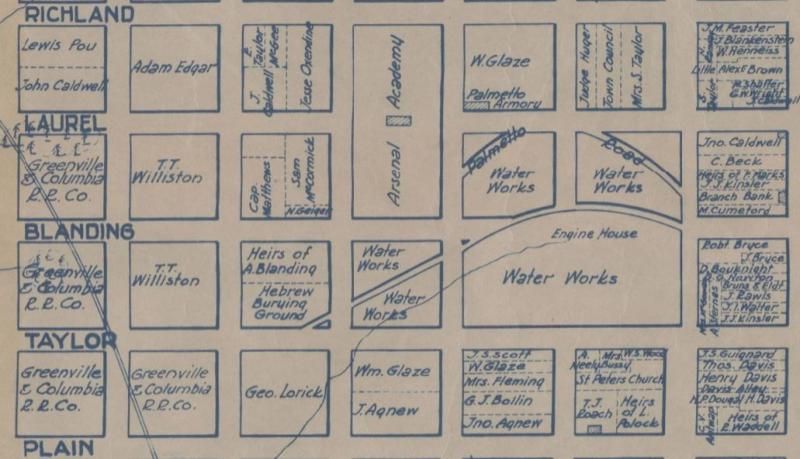
In the 1840s, a report to the city council described the area around the water works as a rough and unsightly red-clay hillside. The city aldermen moved to improve the area and turn it into a city park. City warden Algernon Sidney Johnston, a local printer, spearheaded efforts to plant trees and flowers near Blanding’s waterworks and to install paved pathways. In 1848, with Mr. Johnston looking on, a man named H. Winters planted the first tree on the slope in his new role as the "keeper of the park at the springs." Local Columbian Edwin Scott later wrote that Johnston turned an “eyesore” into a “pleasant” and “healthful” park.
In 1852, Johnston died suddenly, and the park was then officially named “Sidney Park” in his honor by Columbia’s city council. By then, the park had captured the hearts of Columbians. An annual Fourth of July fireworks show was held in the park for several years. Mr. Winters later recalled that there was music in the park twice a week during the summer months in the 1850s, attracting a large crowd.
Civil War Era
During the Civil War years of 1860 to 1865, a foundry located above Sidney Park was used to manufacture weapons and ammunition for the Confederate States Army. A blacksmith’s shop was located on the northeast corner of the block near Assembly Street. And a small cotton mill located on the lower end of the creek in Sidney Park was used to produce yarn for socks, an important commodity during the war.
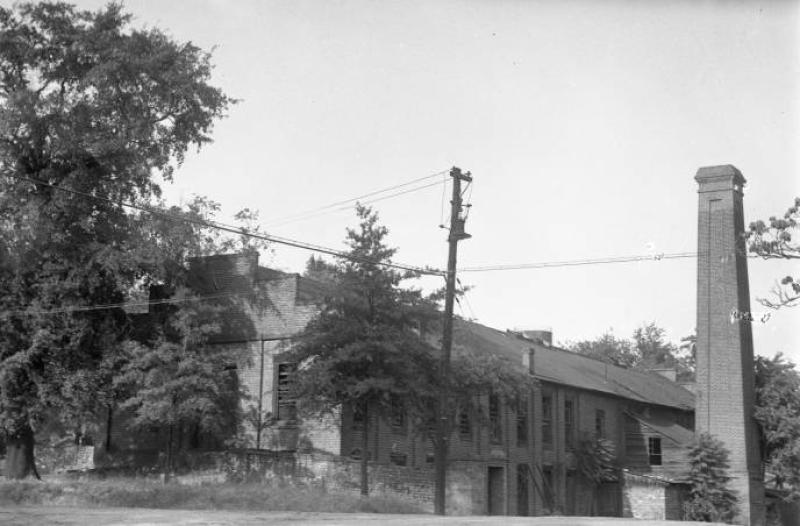
Yet, even during the Civil War, Columbia still maintained a lively atmosphere with Sidney Park hosting weekly band concerts. In August 1865, a U.S. Army band played to a war-weary local crowd in the park.
Reconstruction Era
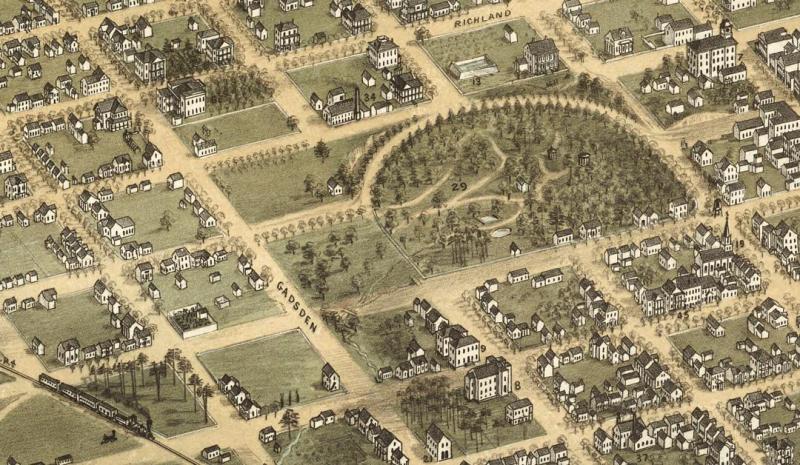
In 1869, a plot of land on Taylor Street overlooking Sidney Park was purchased by former Confederates with the hope of erecting there a monument to Confederate soldiers who died in the recent war. However, the selected spot was later deemed too unstable to hold the large stone monument that was desired. This monument now stands on the State House grounds near the intersection of Main and Gervais Streets.
In 1873, Senator T. J. Robertson presented the city with insect-eating English sparrows, which were released in Sidney Park. I’m not sure how effective the sparrow program was at eliminating mosquitoes or other bothersome bugs, but it’s a fun fact anyhow. And it shows that Sidney Park was still playing a role as Columbia’s meeting place during the Reconstruction era. In fact, the first public school for white children, Sidney Park School, was located near if not in the park, while the first public school for Black children, Howard School, was only a few blocks away.
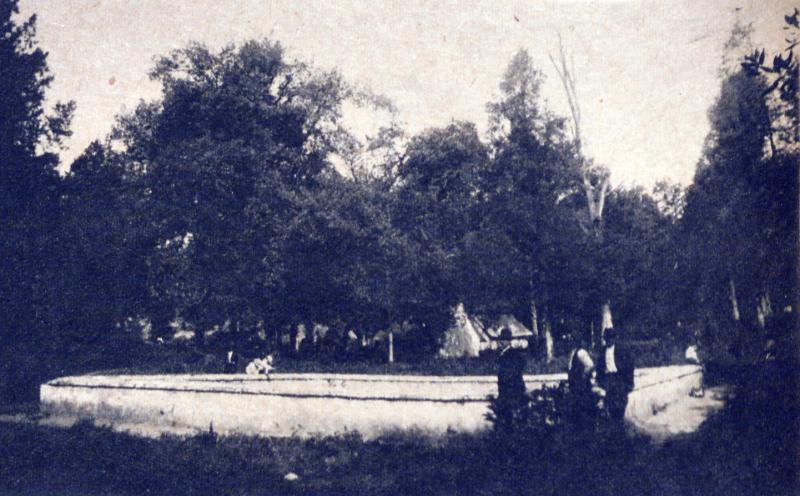
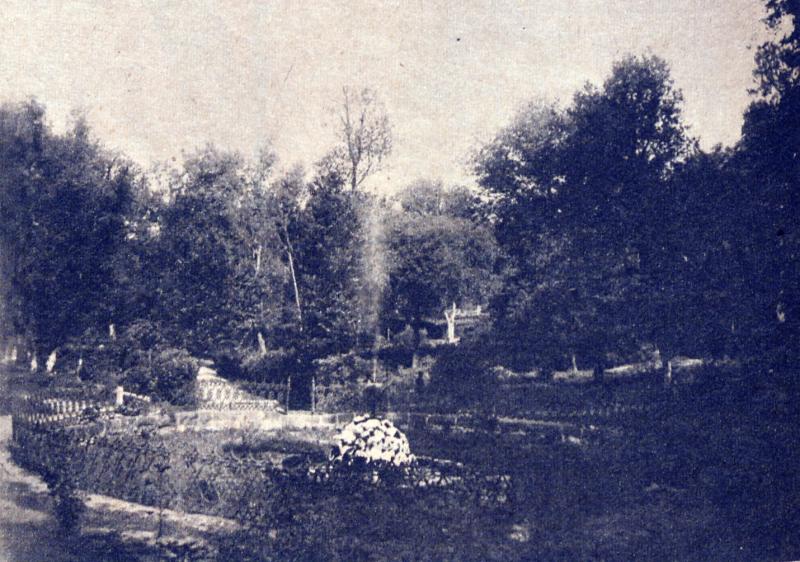
In 1893, improvements at Sidney Park included new fences, trees, and a fresh gate. A small zoo existed at the park at that time and included a hutch of rabbits, tame deer, tame squirrels, and a pen of guinea pigs. The following year a young alligator was added. There were also two goldfish ponds.
Industrial Age
In 1899, under pressure from railroad industrialists, the city leased Sidney Park to Seaboard Railway for its use as a railroad terminal, marking one of the most ill-fated turn of events for this land. Animals at the zoo were reported to be bewildered by the changes being made to their once-serene, wooded home in order to create this industrial railyard. The animals then included a Bald Eagle, a pair of monkeys, deer, a fox, an owl, and rabbits. Trees were removed, the ground leveled, and rail lines were added for a train terminal. The animals were later relocated to Hyatt Park in the nearby town of Eau Claire, ending the presence of a park and zoo in downtown Columbia. Despite no longer being a park in any way, the name "Seaboard Park" was given to this industrial plot for decades.
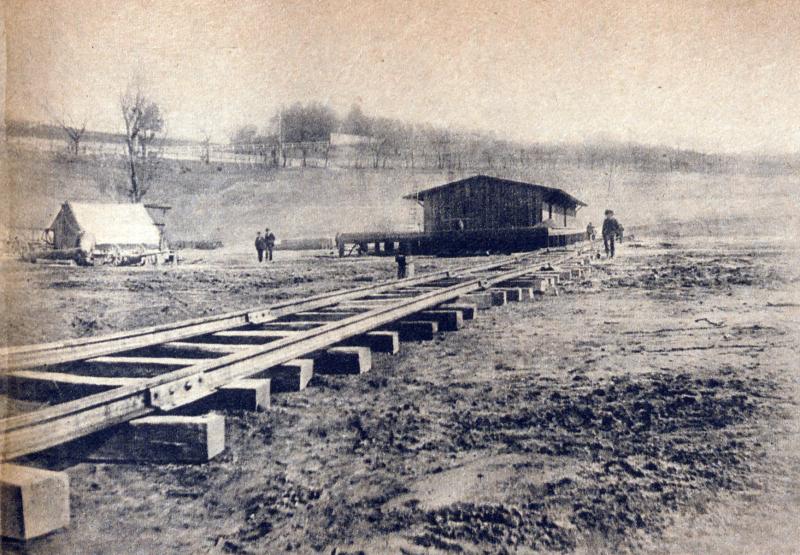
In 1901, a local reporter wrote that “Sidney Park… was transformed from an amphitheater of wild luxuriance to a railroad terminal.” The Seaboard terminal was short-lived, thus robbing the city of a park for no commercial gain.
From 1903 onward for several decades, other industries such as Reamer Ice, Columbia Ice and Fuel, and Magnolia Lumber Company were located in Seaboard Park, providing jobs for nearby residents and cementing the shift of the land into an industrial center.
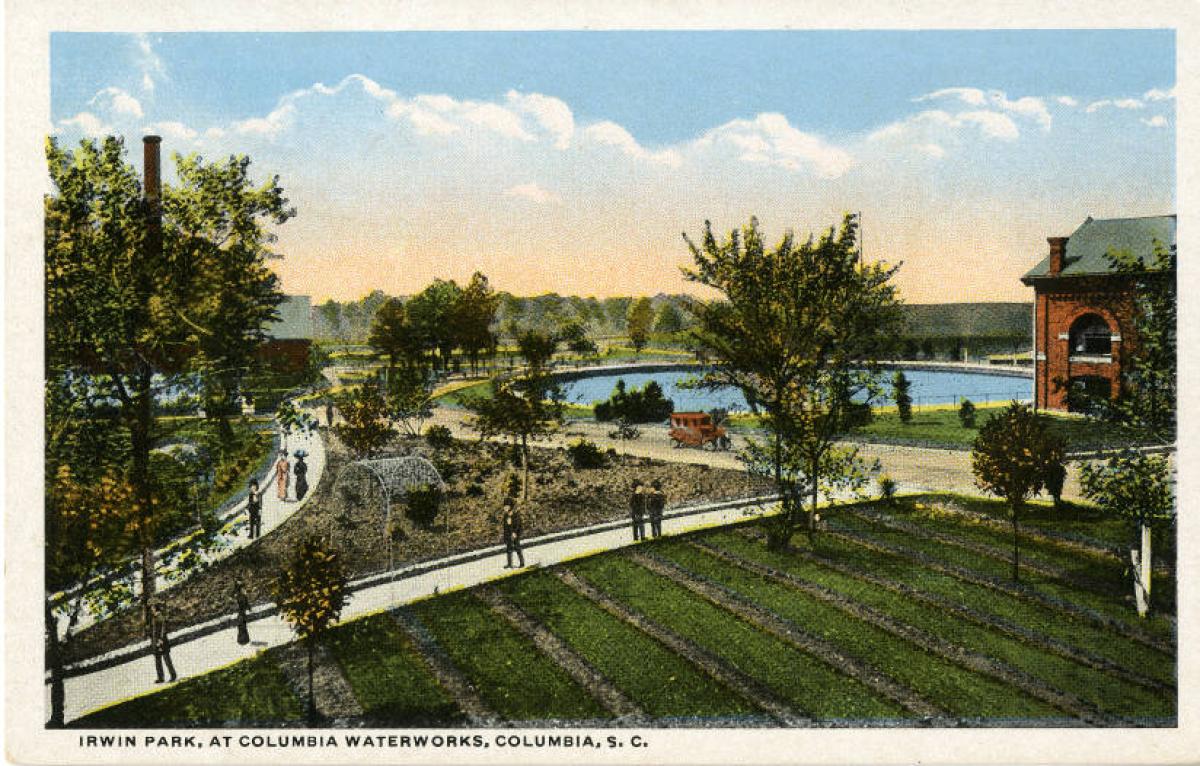
In 1913 the city planned a new park with a zoo, to be called Irwin Park, near the city’s new waterworks along the Congaree River. Quickly becoming a favorite spot, locals would stroll along the canal, pass the imposing State Penitentiary, and enjoy the view of the river at Irwin Park. This same year the city drained a “malarial” area near Seaboard Park called LaMotte’s Bottom - but gave no other word to the former park itself.
World War II
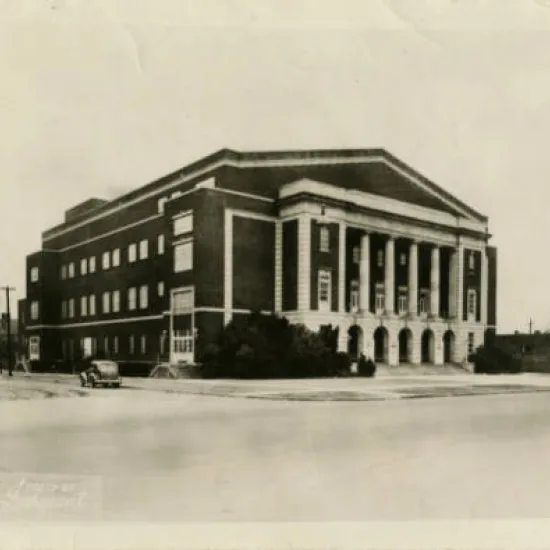
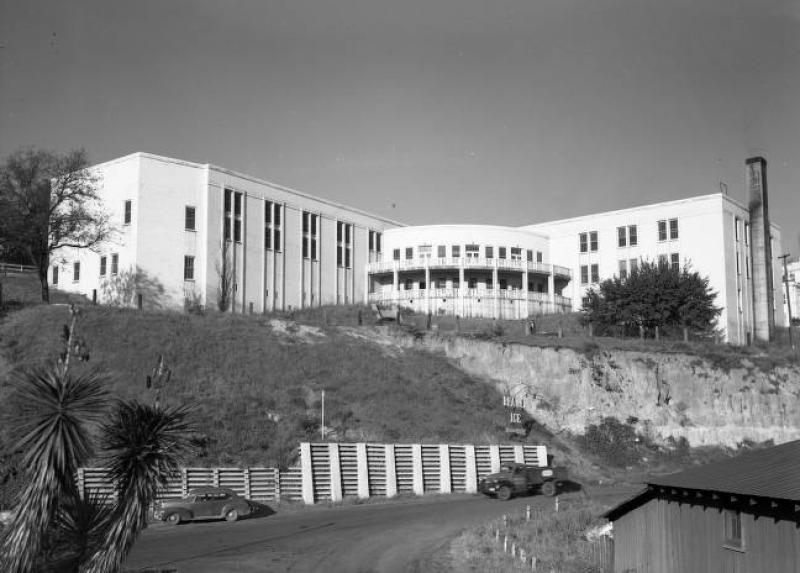
During World War II, the Laurel Street USO was constructed on the hill above Seaboard Park at the site of the former blacksmith’s shop. The Laurel Street USO served as a recreational facility for white enlisted men training at Fort Jackson and other military facilities near Columbia, while another USO operated on Pine Street for the recreation of Black soldiers.
The Laurel Street USO offered expansive views to the Congaree River and beyond from its back deck. A rather romantic view for those attending dances there at night.
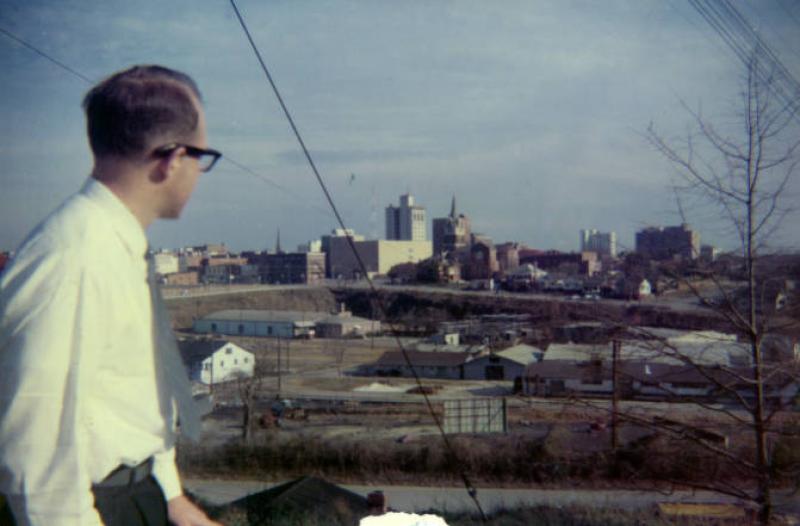
But the city was not proud of what people saw when gazing over Seaboard Park during the daylight hours. An article in the Columbia Record published in 1958 described Seaboard Park as “a crater-like depression in the topography of Columbia, 23 acres in size, that sinks just west of Assembly Street and stretches to Gadsden Street.” It was a problem for the city and no longer offering economic benefits as an industrial center.
All-America City
In 1965, the city received a shot in the arm when the U.S. Post Office selected a site on Assembly Street above Seaboard Park for the site of a new central U.S. Post Office. The post office was the first major investment in the area since 1899. Tragically, a landslide during construction killed 7 workers. But work pressed on. Columbia's impressive modernization and new post office helped the city earn its award as the 1965 All-America City.
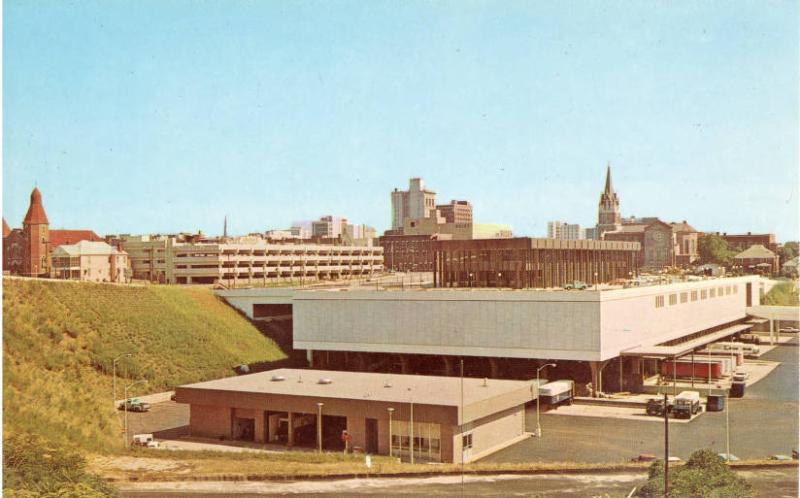
The following year the new United States Post Office opened on the east edge of the park to much acclaim, and the now-outdated Laurel Street USO was razed. An editorial in the Columbia Record at the time described the sad state of the remaining 18 acres of underutilized city property behind this shiny new post office. The editor suggested Seaboard Park could be put to use as a repository for construction materials, or as a transportation depot. There was no mention of restoring it to a recreational park.
Finlay's Vision
In 1974, Kirkman Finlay was elected to Columbia City Council. Finlay had a vision for the redevelopment of downtown Columbia that included making use of the river front, increasing pedestrian greenways, and redeveloping Seaboard Park. Following the construction of the Post Office, the federal government wanted to erect a multi-level parking garage in Seaboard Park. However, Finlay opposed the plan as such a facility would block the view to the vista that soldiers once enjoyed from the back deck of the USO. Finlay believed that Columbians should determine what their city would look like, and that its views were worth preserving.
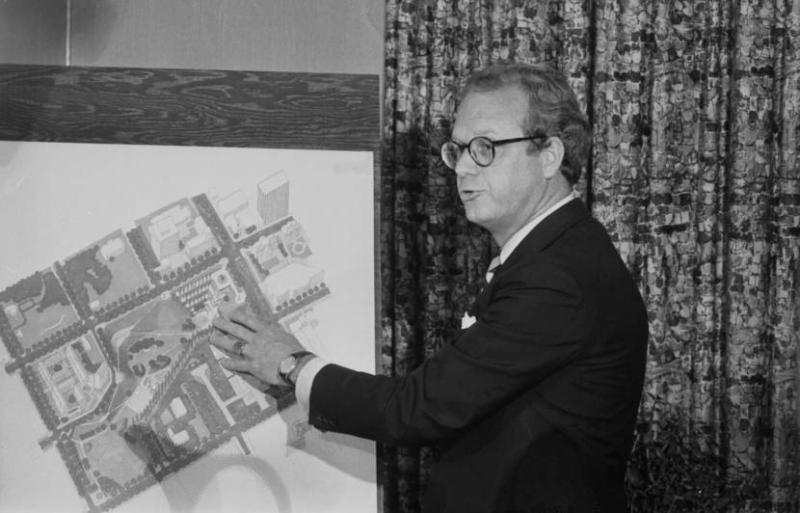
Finlay was elected mayor in 1978, and in 1981, he revealed the Seaboard Park Plan, an ambitious scheme to rejuvenate a fifty-block area from Arsenal Hill to the Congaree River, which included relocating railroad tracks, street-scaping, moving the State Penitentiary, and rebuilding the former Sidney Park, among other improvements in the area he newly designated as “The Congaree Vista.” Finlay served as mayor until 1986 and continued to press for the revitalization of downtown Columbia with the construction, or reconstruction, of Sidney Park as a centerpiece of his modernization plan.
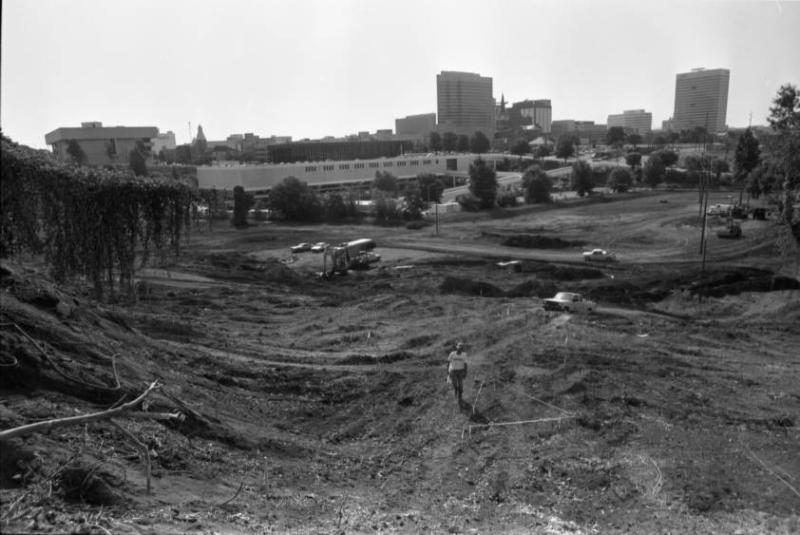
From 1987 to 1990, Sidney Park, designed by acclaimed landscape designer Robert Marvin, was reconstructed. But many times, the construction ran into cost overruns, collapsing walks, and criticisms. It was a massively complex and expensive project.
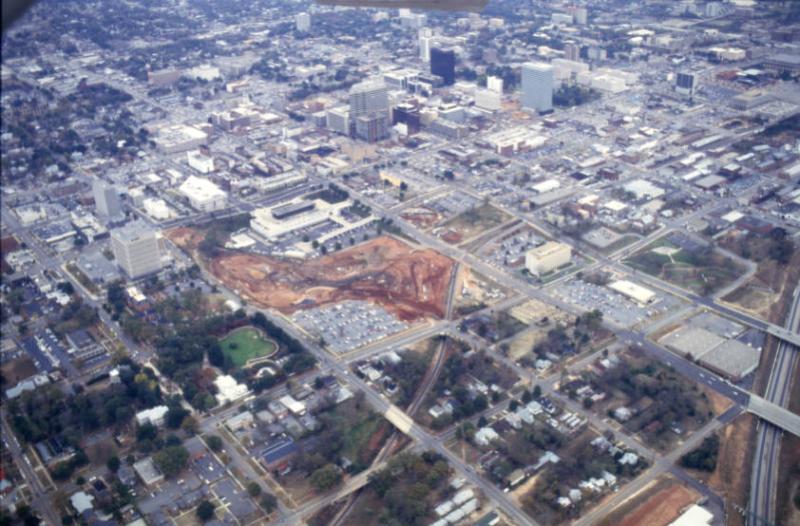
Despite the setbacks, Finlay’s successor as mayor, T. Patton Adams, pressed on and Finlay’s vision was finally realized when, in 1990, Sidney Park reopened after $8.3 million in investments. There was an innovative 27-foot spiral fountain, an amphitheater, swings, paths, an island, large greenspaces, playgrounds, and clean restroom facilities. Really everything that Columbians could want in a park. It was most definitely an enormous glow-up for the city.
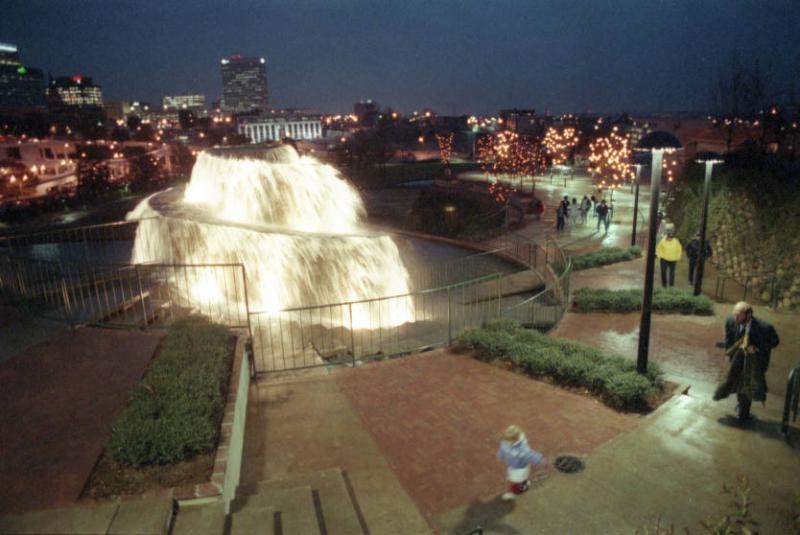
On June 30, 1993, it was announced that Sidney Park would be renamed Finlay Park in honor of its visionary, Kirkman Finlay, who died earlier that year at age 56. At the time the renaming was announced, Finlay’s son Kirkman Finlay III stated, "We just know that Dad would be thrilled. Sidney Park was his dream. He spent years developing it and, now that it's come to fruition -- to have it named for him -- I just think it's the greatest honor the city could have paid to him."
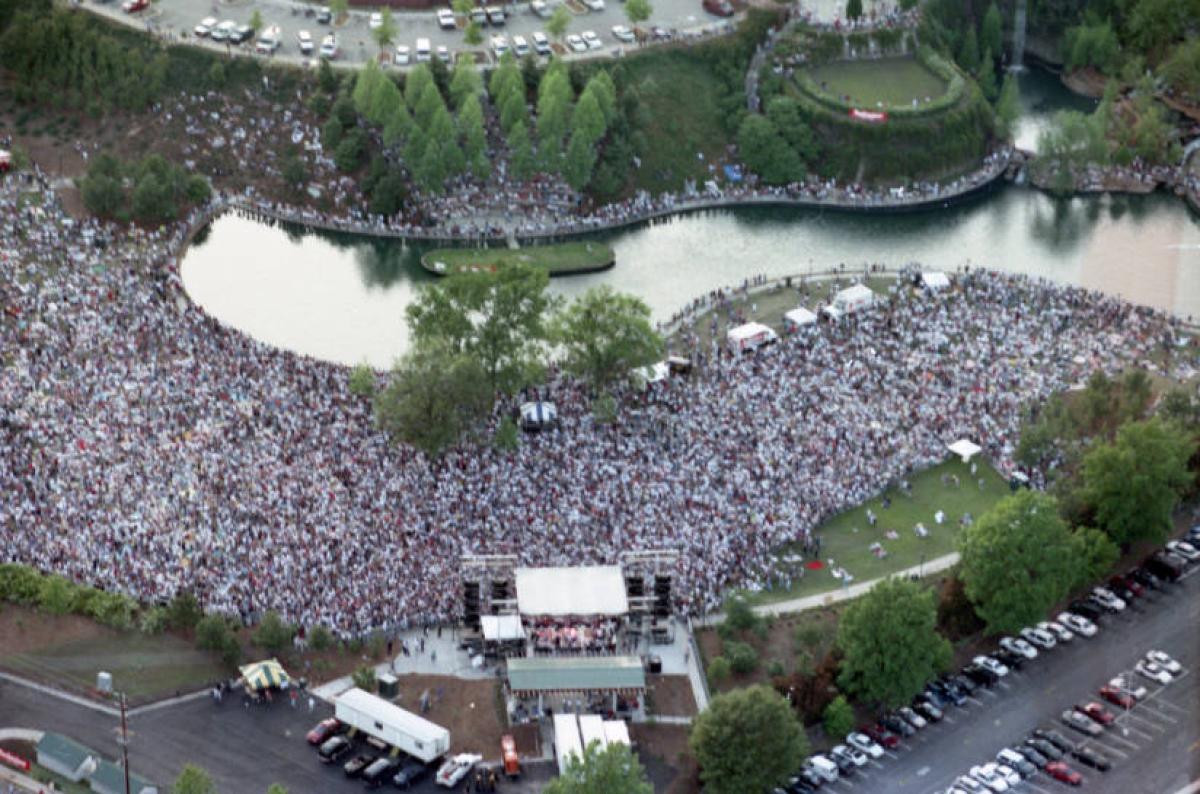
Finlay Park saw many events, large and small, during the 1990s and early 2000s. The largest may have been the Hootie & the Blowfish concert there in the spring of 1996.
Finlay Park Revitalization
However, the waterfall feature that made the park so distinctive had issues and, in 2015, it ceased to flow. As the park became less visited it became apparent that Finlay Park needed a major update. In 2019, the city planned an $18 million renovation to the park in the hopes of returning it to the crown jewel it once was. But the COVID-19 pandemic paused these plans, and post-pandemic price increases caused further delays. Finally, in 2023, city leaders began a complete renovation of Finlay Park.
This time, over $25 million will be spent to restore, if not exceed, the park’s former glory. The new park is set to open in the fall of 2025, and I am excited to see what’s next!
Research for this post was conducted in the collections of the Walker Local & Family History Center at Richland Library. Maps from the University of South Carolina and the Library of Congress were also consulted and are linked below along with a list of sources.
Select Sources:
- “Columbia: The capital city of South Carolina passes in historical review,” The State, June 25, 1941, pages 14-15B.
- Moore, John Hammond. Columbia & Richland County: A South Carolina community, 1740-1990. USC Press, Columbia, S.C. 1993.
- Hennig, Helen Kohn, ed. Columbia, Capital City of South Carolina 1786-1936. Columbia Sesqui-Centennial Commission, Columbia, S.C. 1936.
- “City Council Makes Change Official: It’s Finlay Park,” The State, November 11, 1993 p. 1B.
- Map of the City of Columbia by G. T. Berg [1869]. [sclmaps00623]
- First map of the City of Columbia, [1786]. Tomlinson Engineering Co. 1931. [sclmaps00065]
- Map of Columbia, S.C. and suburbs, c. a. 1850. From Arthur & Moore. Tomlinson Engineering Co. 1931. [scc28]
- Birds' eve view of the city of Columbia, South Carolina, 1872. C. Dries. [Library of Congress permalink]
- “Sidney Park,” The State, November 9, 1891, page 5.
- Bayne, Coy. “Seaboard Park to be Changed again, had ups and downs,” Columbia Record, December 3, 1958, page 3A.
- Richey, Staci and John Sherrer, “Historic Preservation Month: Columbia Water Works,” The State, May 20, 2005, page B2.
- “First tree in the park was planted by H. Winters Fifty years ago,” The State, July 17, 1899, page 8.
- Scott, Edwin. Random recollections of a long life, 1806 to 1876. Printed by C. A. Calvo, Jr. Columbia, S.C. 1884.
- “Columbia’s most popular resort: the park,” The State: Industrial Art Edition, July 8, 1901, supplement page 27.
- “One station for buses, trains?” Columbia Record, February 16, 1966, page 12A.
- “Sidney Park at the turn of the century,” The State Magazine, May 1, 1955, pages 4-5.
- Columbia, South Carolina March 1888. Sanborn Map & Publishing Company.