

Richland Library logo
  • Events
  • Locations
  • Get Email Updates
  • Contact Us
Library Policies© 2026 Richland Library, Richland County, South Carolina

Search Site

  • Events
  • Locations
  • Get Email Updates
  • Contact Us
Richland Library logo
    • Cardholder Services
      • Get a Library Card
      • Get a Recommendation
      • Get a ConnectED Student Card
    • Spaces & Equipment
      • Reserve a Room
      • Print Documents
      • Creative Spaces & Equipment
      • Library of Things
    • Community Services
      • Request an Obituary
      • Social Work
      • Community Resources
      • Earn Your High School Diploma
      • Library Residents
      • Educational Resources
      • Book an Appointment
      • Career Services
      • Writers & Local Authors
    • View All Services
    • Most Popular
    • Articles, Journals & Newspapers
    • Books & Literature
    • Business & Careers
    • Children
    • En Español
    • Genealogy & Local History
    • Health & Medical
    • History & Biography
    • How-To
    • Study & Test Prep
    • View All Research Resources
    • Resources A-Z
    • Recommendations
      • Suggest a Title
      • Broader Bookshelf Challenge
      • Book Club Resources
      • Help with eBooks & Digital Platforms
      • Local History Digital Collection
    • Staff Picks
      • Coming Soon
      • Just Checked In
      • Get a Recommendation
      • Browse Staff Picks
    • Browse by Type
      • Books
      • eBooks
      • Audiobooks
      • Movies & Television
      • Music
      • Library of Things
    • Browse by Audience
      • Adults
      • Children
      • Teens
    • Catalog Search
    • About Us
    • Give, Support & Volunteer
    • Work With Us
    • Our Team
    • Locations
    • Blog
    • Our Work & Programs
    • Newsroom
    • Equity, Diversity & Inclusion
    • Library Policies
    • Contact Us
Forgot your card number?
Forgot your PIN?

  • Reset your password

Get A Library Card

Breadcrumb

  • Home  
  • Blog  
  • DIY Horses (History of The Black Cowboy)
BLOG

DIY Horses (History of the Black Cowboy)

  • Richland Library
  • Monday, January 31, 2022
Share:
Share on Facebook Share on X Share on LinkedIn

Learn about the deep history of Black Cowboys in the United States while making your very own horse. 

MAKING EDUCATION FUN

The origin of the American Cowboy started off in the early southern colonies via the forced labor of African slaves. Ranching became an extremely profitable business in the Carolinas as they utilized the horses, cattle, and slaves that came through Charleston (the world's largest slave and trade port until the late 1800’s). These slaves were labeled as ‘cow hunters or cowboys,’ and they were tasked with managing and herding livestock.  

By the 1700’s, the Carolinas became one of the largest suppliers of salted meat to Barbados, Jamaica, and other British West Indian colonies. As profits rose, ranchers began seeking cheap land and moved into the Spanish (and, later, Mexican) territory of Texas during the first half of the 19th century. Though the Mexican government opposed slavery, Americans brought slaves with them as they settled the frontier and established cotton farms and cattle ranches. By 1825, slaves accounted for 25 percent of the Texas settler population. Once Texas joined the confederacy on March 2, 1861, many slaves were left to maintain the established ranches. After the Civil War ended with the victory of the Union, many black cowboys used their skills to make a life for themselves as free men. Some black cowboys chose to stay working for their former slave owners in the South while others chose to move further West to find land for themselves.  

During this time in history, there was an increase of black cowboys in rodeo, such as Bill Pickett who invented the rodeo technique of ‘bulldogging’ (which is now known as steer wrestling) and Nat Love who was known to be a 'crack shot' on the rodeo trail. Simultaneously, black inventors were making contributions to horsemanship. In 1892, Oscar E. Brown patented the horseshoe, and Lincoln F. Brown patented the horse bridle bits.

MATERIALS NEEDED

  • TP Role
  • Glue
  • Cardboard Square
  • Paint
  • Popsicle Sticks (4)
  • Paint Brush
  • Tissue Paper (2)
  • Scissors
  • Buttons (2)
  • Twine  

INSTRUCTIONS

1. Take your cardboard and trace the shape of a horse's head. When you have a shape that you like, cut it out. 
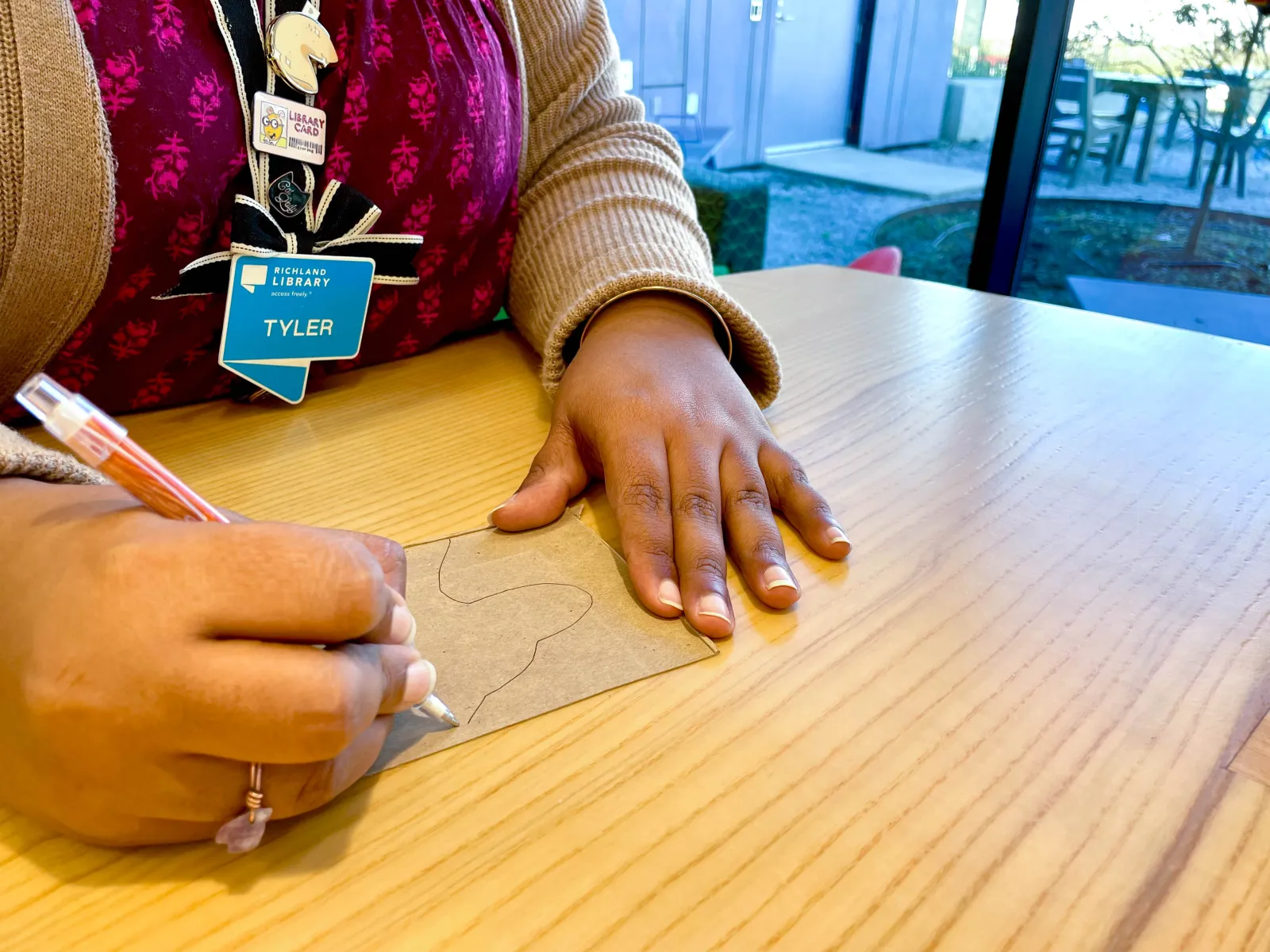
tracing a horse head on to cardboard square


2. Paint your TP role, popsicle sticks, and horse’s head your desired color. Set everything aside to dry.
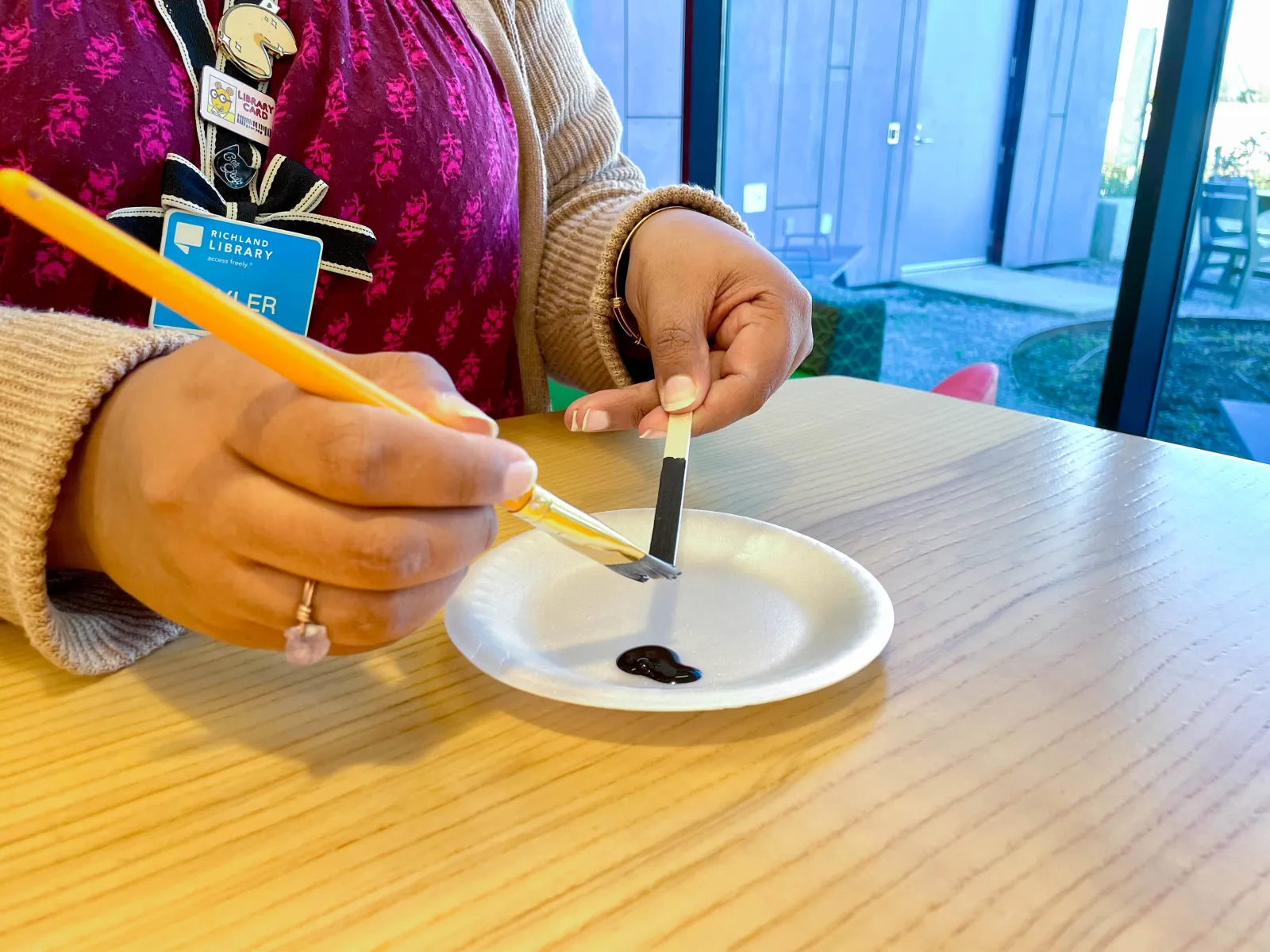
painting popsicle sticks


3. Use your scissors to trim off the tops of your popsicle sticks. These will be the horse’s legs. Be sure to make all legs the same length. 
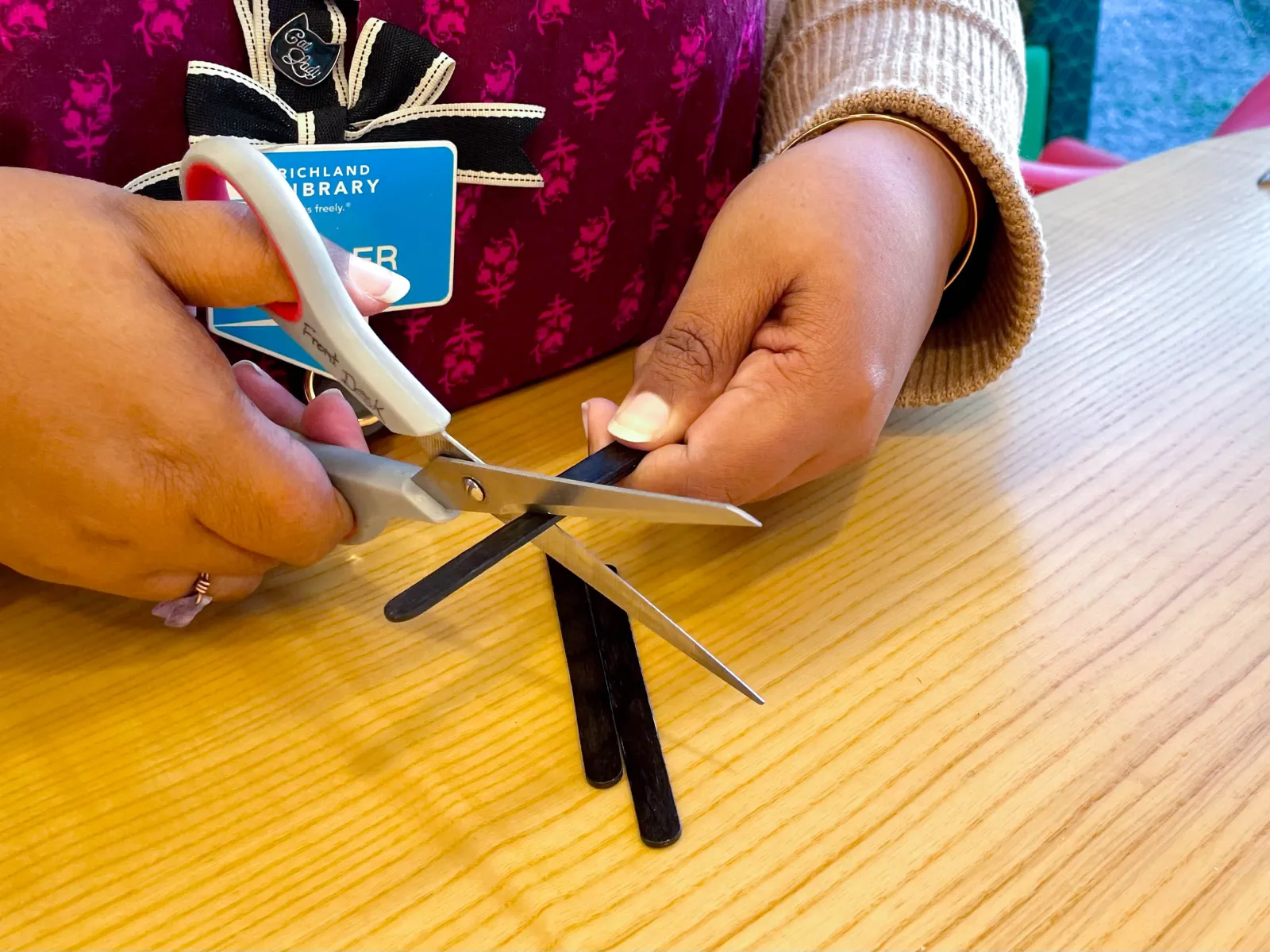
cutting popsicle sticks


4. Take your tissue paper and cut off one thick strip. With this strip, make shallow cuts all along one side. This will be your horse’s mane.
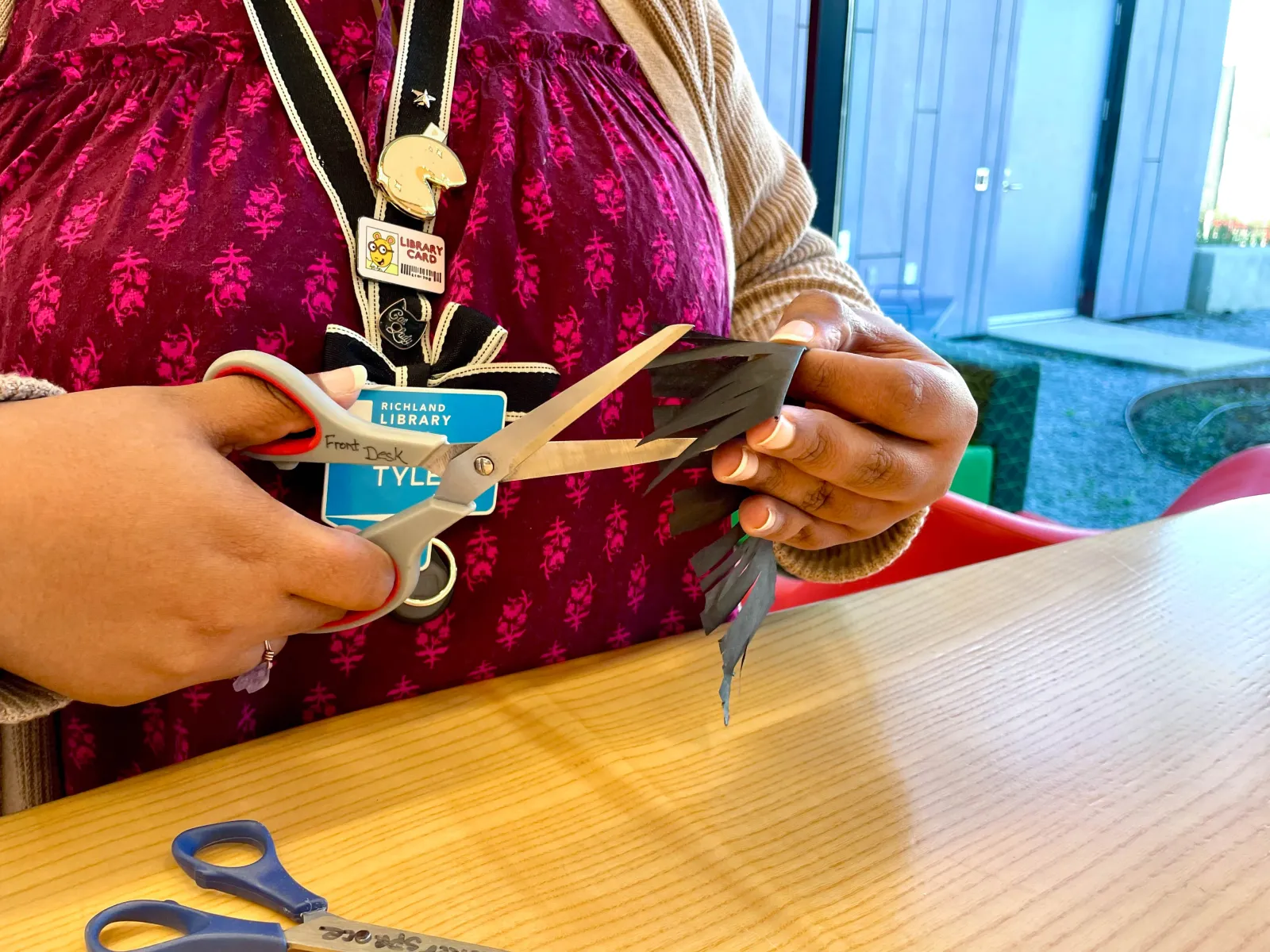
cutting tissue paper for mane


5. With the remainder of that first sheet of tissue paper, cut long strips with your scissors. This will be your horse’s tail.
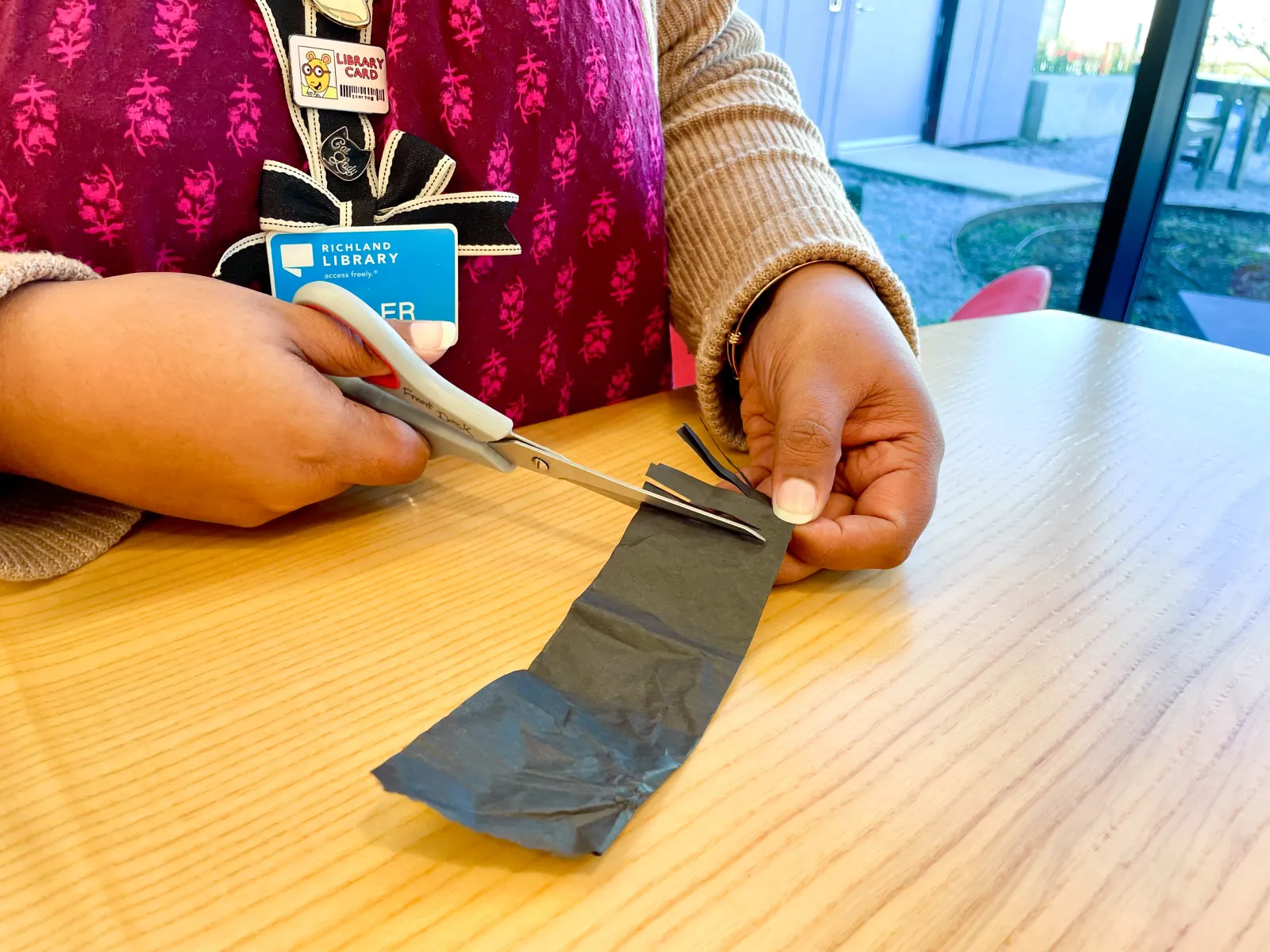
cutting tissue paper for tail


6. Once everything is dry, ask an adult to glue the legs on your horse’s body with the hot glue gun. You can regular glue instead, but it will take longer to dry.
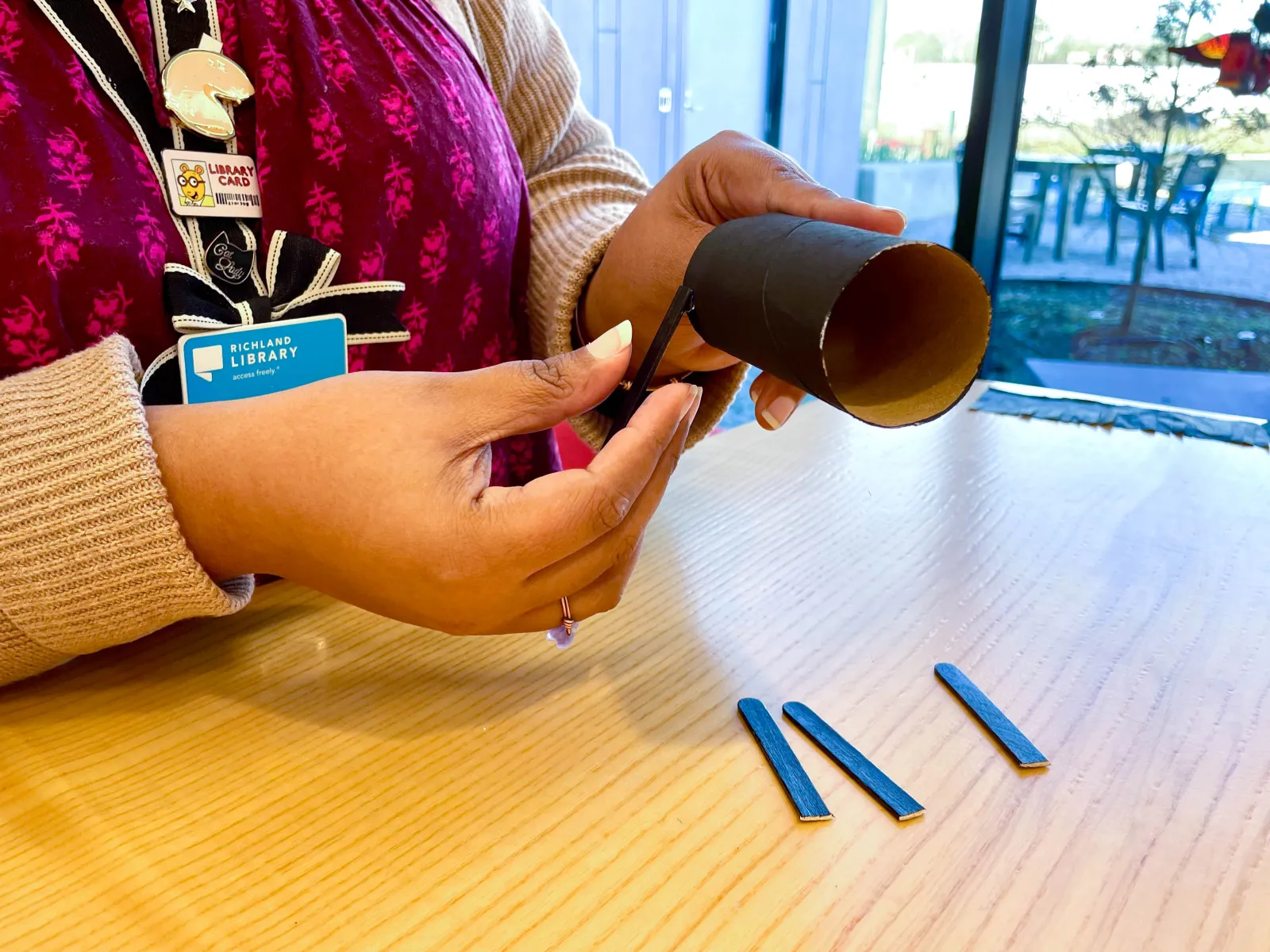
gluing popsicle sticks to toilet paper tube


7. Grab your horse’s head and glue the mane onto the back of the neck. 
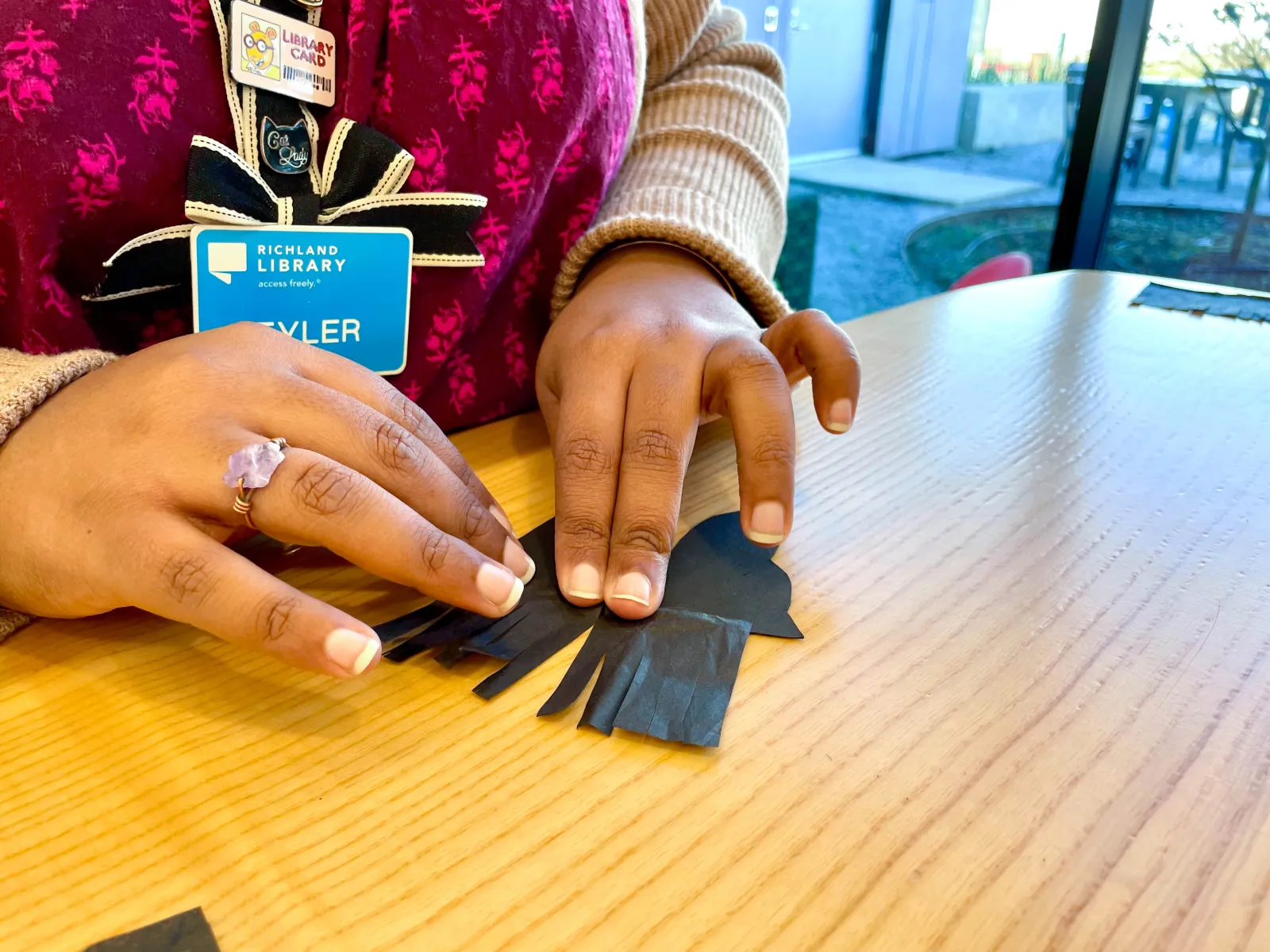
glue mane on to horse head


8. Take your buttons and glue one on each side of the horse's head. 
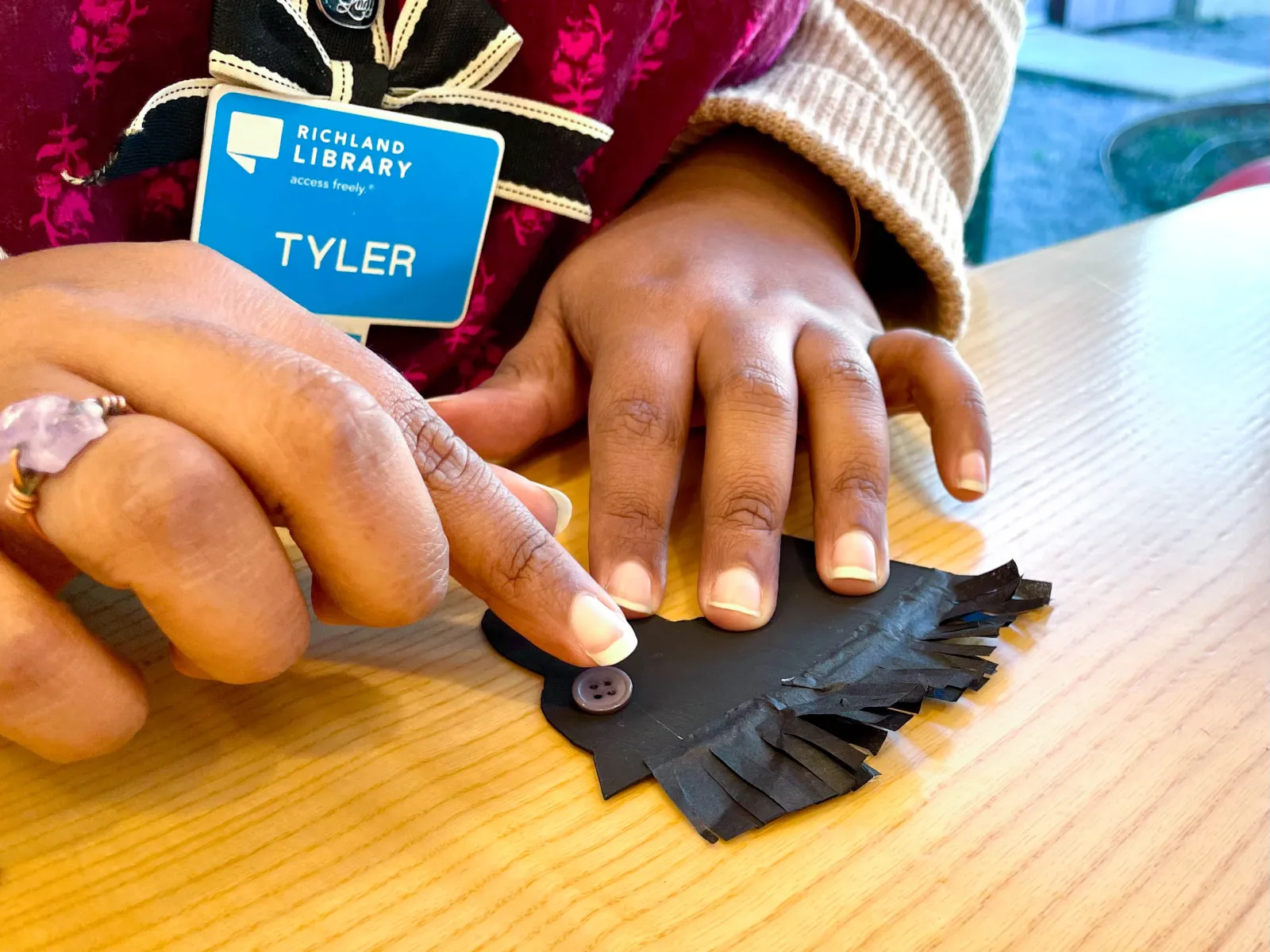
gluing buttons onto horse head for eyes


9. Once you are done with the mane and eyes, glue the head onto the body.
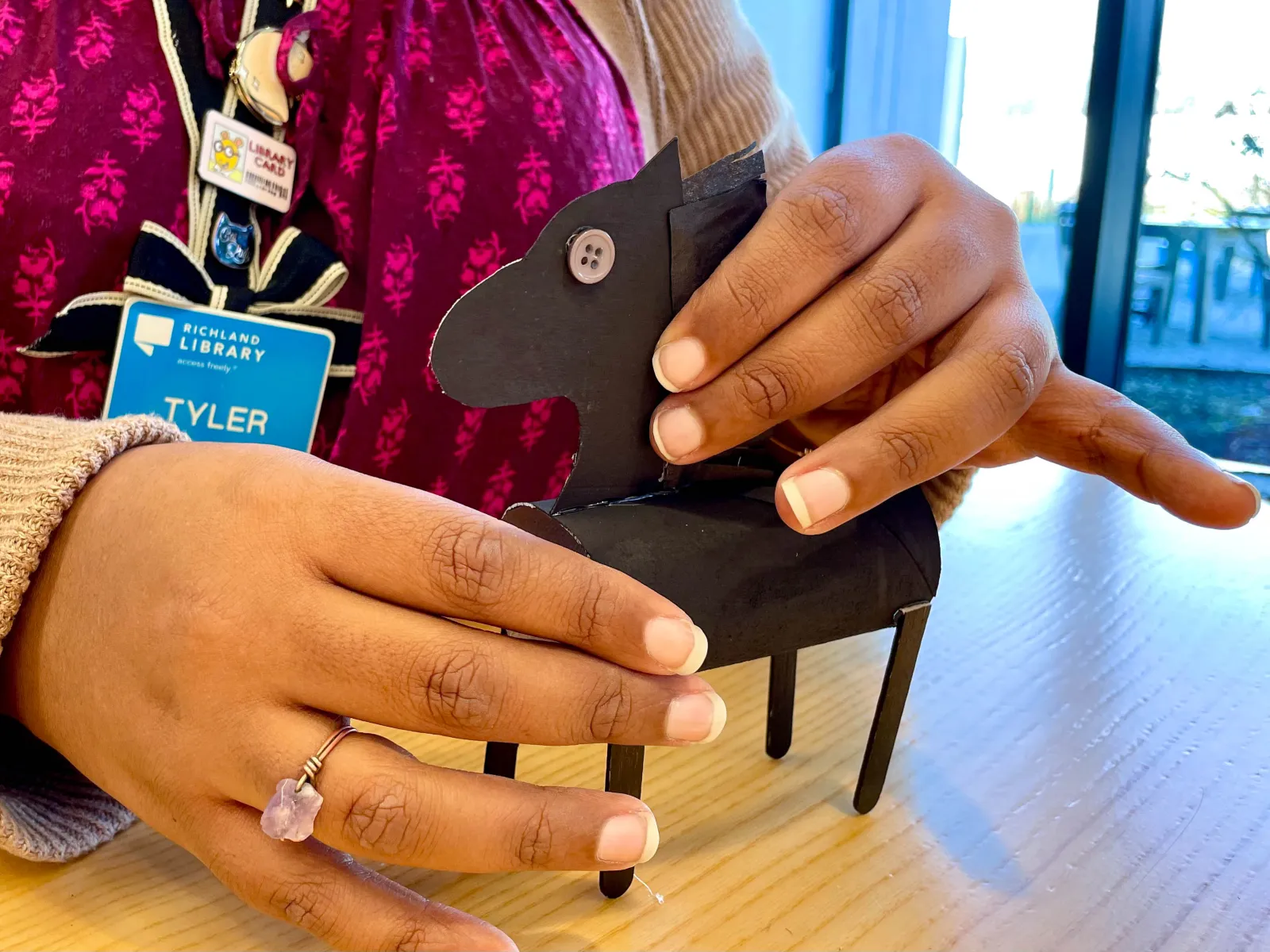
gluing horse head to body


10. Take the strip of cut tissue paper you created for the tail, roll them together, and add a drop of glue to the end you are holding.
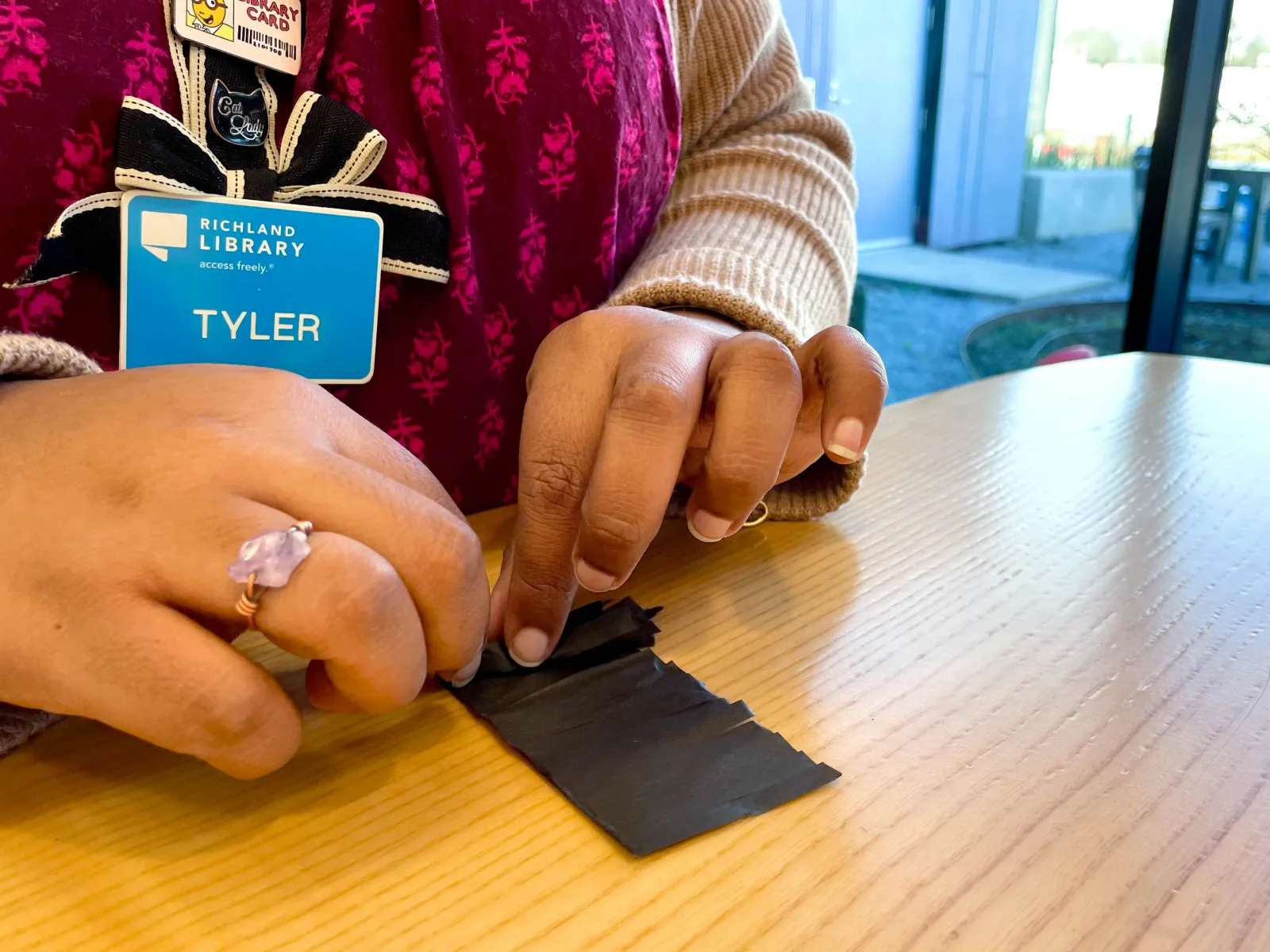
rolling tissue paper for tail


11. Add a dot of hot glue to the rear of the horse at the top inside of the tube. Carefully stick on the horsetail. 
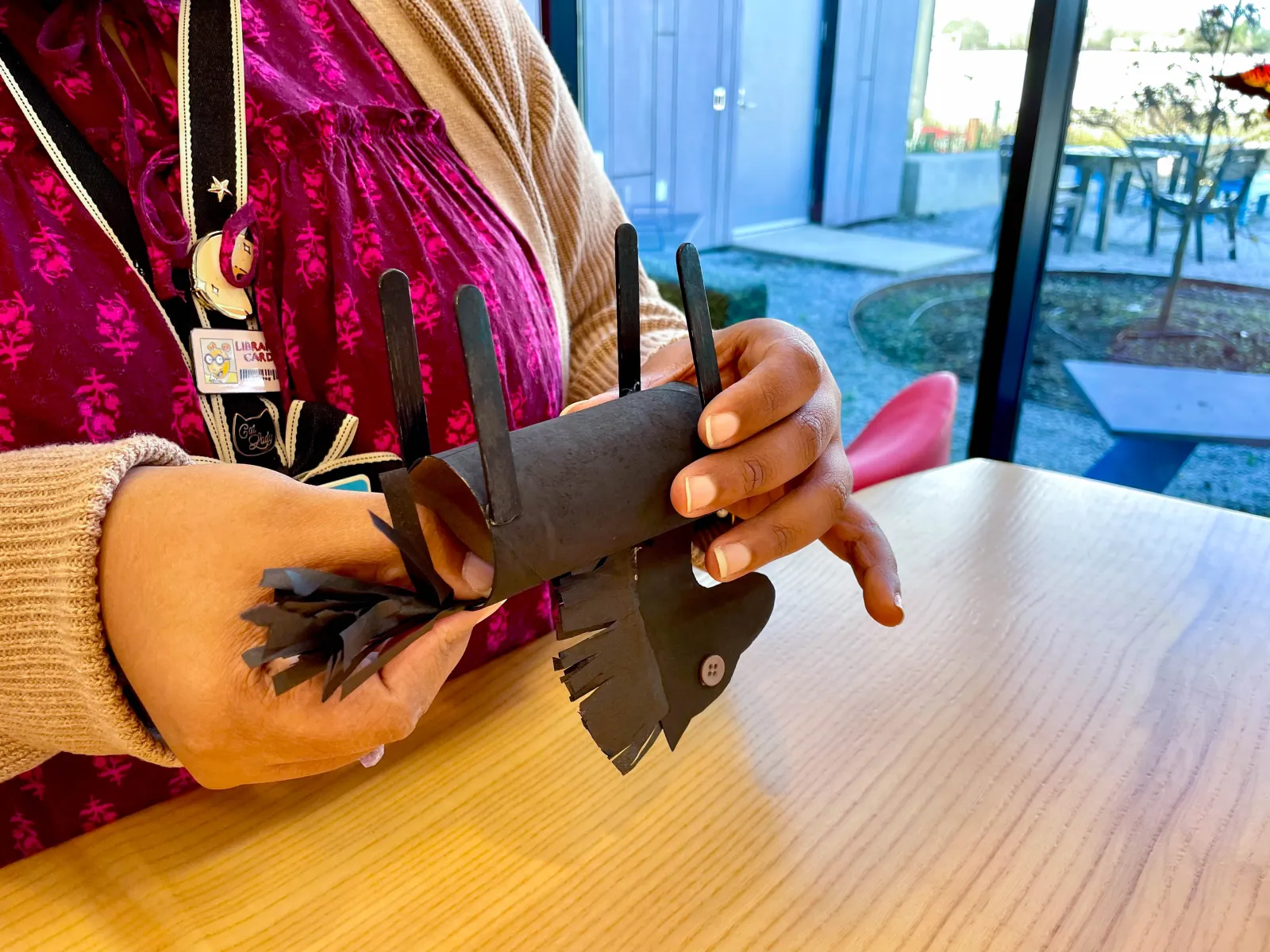
gluing horsetail to body


12. Take your second sheet of tissue paper and ball it up. Once you are done, place it inside the opening underneath the horse's head.
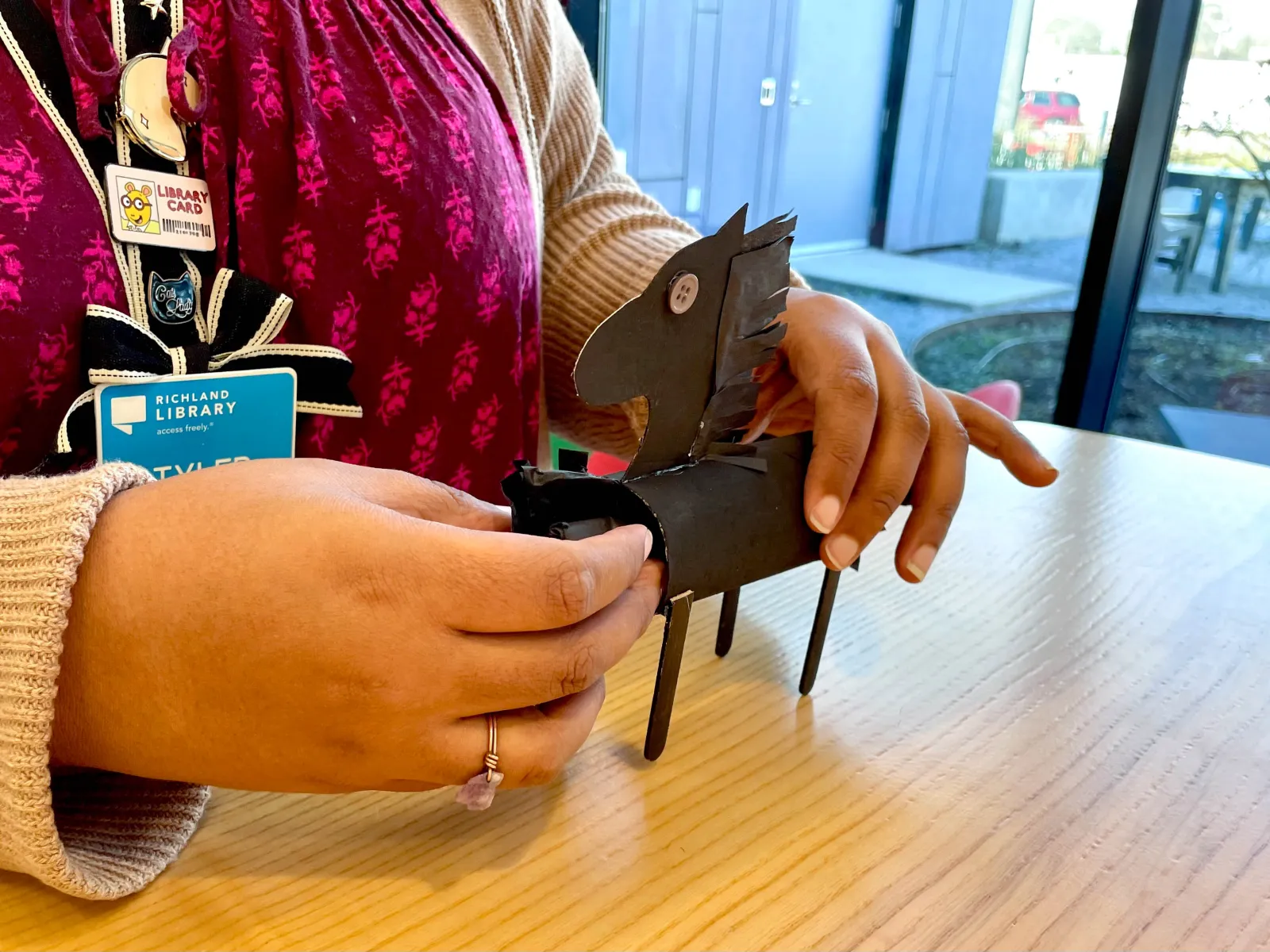
stuff horse with tissue paper


13. Use your twine to create a rein for the horse. Tie the ends in a knot and loop it around the neck. Make a second loop and place it over the horse’s nose and ears.
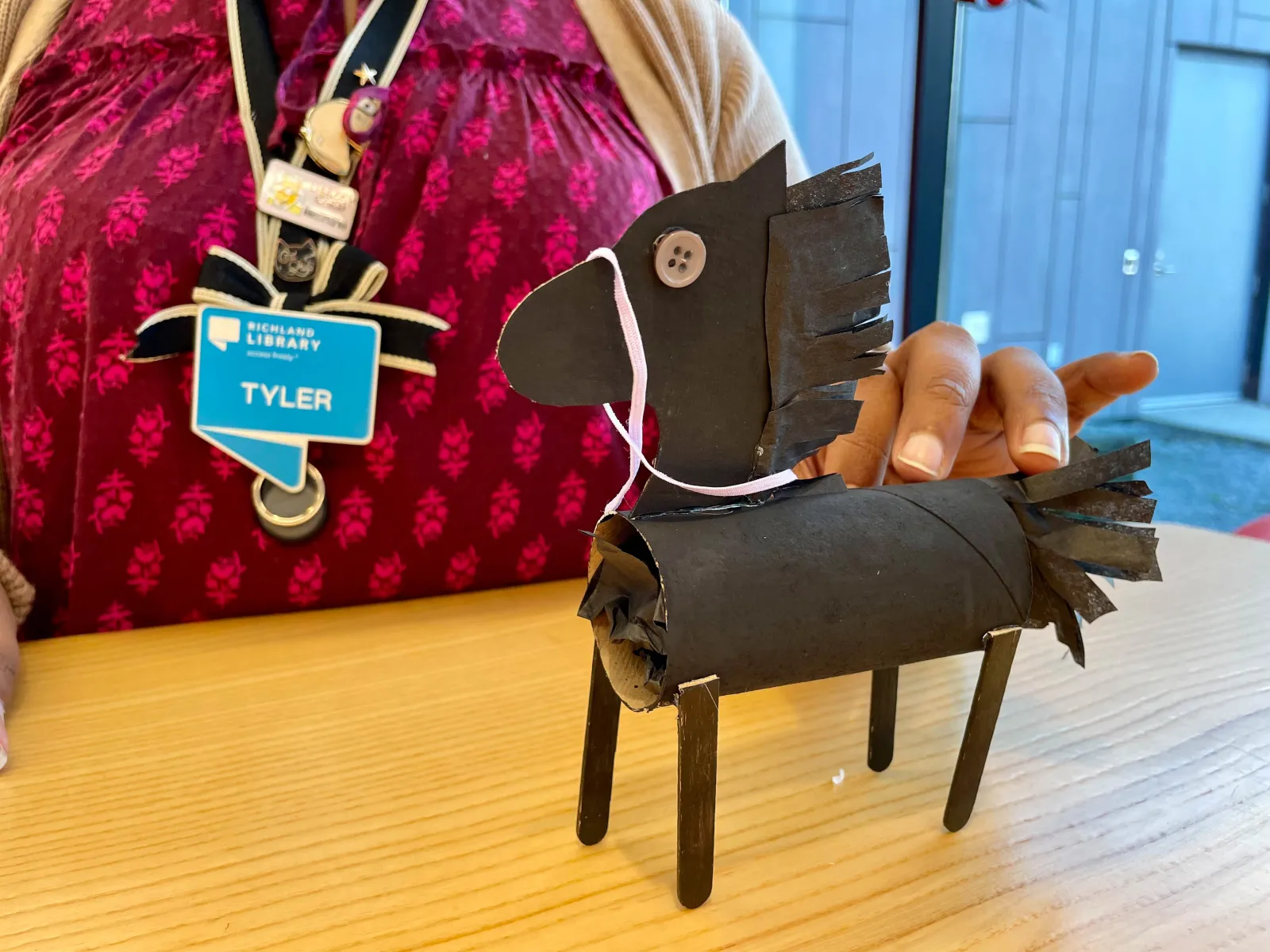
place twine reins on horse


FUN FACTS

One of the few representations of black cowboys in mainstream entertainment is the fictional Josh Deets from the television show Lonesome Dove. The 1989 miniseries was based on the Pulitzer Prize-winning novel of the same name. The show starred actor Danny Glover as Deets, an ex-slave turned cowboy who serves as a scout on a Texas-to-Montana cattle drive. Lonesome Dove was based off the life of Bose Ikard, an African American cowboy from the late-19th century.

Want to know more about black cowboy culture? Take a look at this interview with John Wright, Richland Library's resident cowboy. 

Author

Richland Library

Richland Library

Tags
Diversity, Equity and Inclusion
History
Learning Activities for Children
Learning Activities for Teens
Audience
Families
School age children (6-12 years)
6-8 years
9-12 years
Teens (12-18 years)
Like this
 940

Related Blog Posts

Image of five colorful birds sitting closely together on a branch.  The birds appear to be small parrots with longer tail feathers.  The farthest right bird is Garnet then teal then deep green followed by a yellow and orange bird.
Blog
Like this
Kids in Print 2026
Can’t Get Enough by Kennedy Ryan
Blog
Like this
 1
Broader Bookshelf 2026: Fullfill the prompts with books by Black authors
Cover to the audiobook edition of "Dollars and Sense" by Dan Ariely and Jeff Kreisler
Blog
Like this
 2
Financial Literacy Month: Making Dollars and Sense Out of The Odyssey

Need Help?

Get in Touch
Give

Footer Menu

  • About
  • Work With Us
  • Blog
Library Policies© 2026 Richland Library, Richland County, South Carolina
To Top

Social Media Menu

  • Facebook
  • Twitter
  • Instagram
  • YouTube
  • LinkedIn